Looking for middle school fundraising ideas? Find low-cost, fun, and high-impact ideas with tips to increase participation and results.

Almabase
Published:
May 6, 2026
Discover AI Summary
• To boost donor participation and keep everyone engaged, ensure your fundraising goals are super clear and shared consistently, showing how every contribution helps achieve a specific purpose. This transparency helps families feel a greater connection to your fundraising campaigns and encourages more giving.
• Consider low-cost, high-fun activities like "Penny Wars" or a "Tattoo the Teacher" event that inherently excite middle schoolers and encourage sustained participation. These easy-to-run ideas can significantly improve alumni engagement by making fundraising feel less like a chore and more like an experience.
• For smoother event management and better tracking, use a dedicated fundraising platform that centralizes donations and offers real-time progress updates. This helps your team spend less time on logistics and more on fostering community involvement, all while keeping your CRM data organized.
• Tap into natural enthusiasm by aligning fundraisers with existing seasonal events like a Halloween "Spooktacular" or holiday gift-wrapping services. These themed activities generate built-in interest, simplifying promotion and increasing overall participation for your fundraising campaigns.
Middle school fundraising comes with it’s own set of challenges. You have kids and parents with lots of energy and passion, but you might not always have the budget or staff to consistently host the ideal fundraiser you’ve been thinking about.
Sometimes a fresh set of inspiring ideas can help you find the perfect fundraiser that fits your team’s capabilities while meeting students, parents, and other constituents where they are.
In this blog, we’re walking through middle school fundraising ideas that work in real school settings. These are practical, easy to run, and designed to keep participation steady so your efforts lead to meaningful results.
Middle school fundraising ideas are structured activities that help schools raise money for events and classroom needs. Common options include bake sales, color runs, penny wars, educational challenges, and community-based campaigns.
These fundraising events help middle schools bridge the gap between available budgets and the actual cost of running well-rounded student programs. It allows schools to fund initiatives that go beyond core academics, improve learning environments, and support activities that would otherwise not be possible.
Fundraising also helps schools sustain programs over time instead of relying on one-time allocations. This makes it a critical part of how schools plan and deliver consistent student experiences.
Fundraising brings both financial and engagement-related benefits when planned thoughtfully.
Across the education sector, fundraising continues to play a central role in supporting institutions. In fact, CASE Voluntary Support of Education reports that US institutions received over $61.5 billion in voluntary support in FY24, which shows how essential fundraising has become in maintaining programs beyond core budgets.
The best middle school fundraising ideas are the ones that are easy to run and keep students involved throughout the campaign. In this section, we focus on ideas that work well in real school environments, where time and budget often shape what is possible.
These fundraising ideas for middle school work well when you need something practical that does not require a large budget or complex setup. The focus here is on ideas that are easy to launch, simple to manage, and still capable of bringing strong participation when executed thoughtfully.
Bake sales remain one of the most reliable school fundraising ideas because they are easy to organize and familiar to families. What makes the difference is how you structure participation. Instead of only relying on donations, you can assign themes, organize class-wise contributions, or pair the sale with an event to increase footfall.
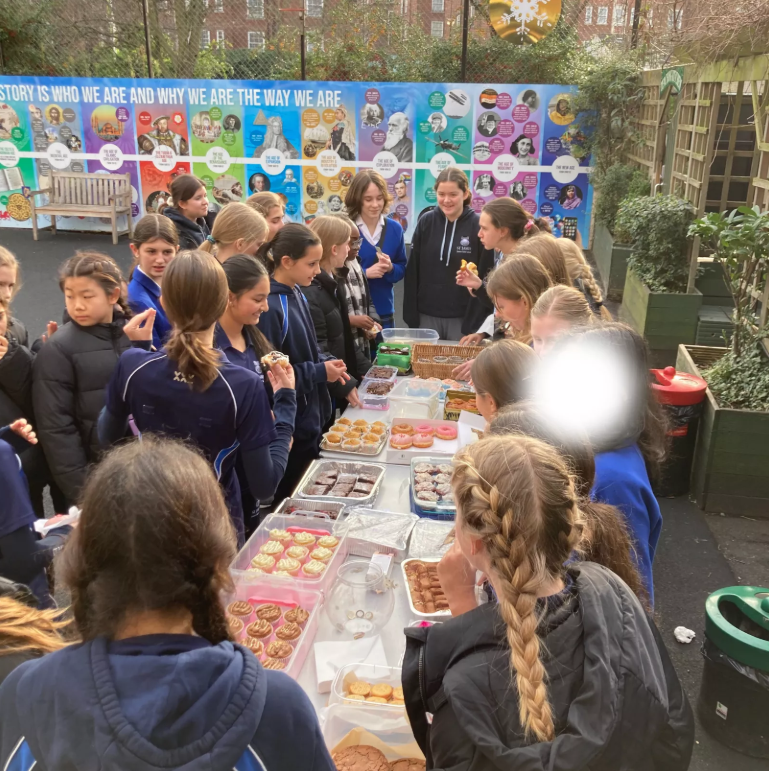
A good example comes from St James School, where students organized a bake sale to support charity. They managed contributions, set up sales during school hours, and created a simple but well-coordinated event. The result was a successful fundraiser that raised £122, showing how even small-scale efforts can deliver meaningful outcomes when executed well.
This idea works especially well in middle school settings because it adds a playful element that students enjoy. Students donate for the chance to place temporary tattoos on teachers during a designated time. It creates anticipation and encourages participation without requiring much setup.
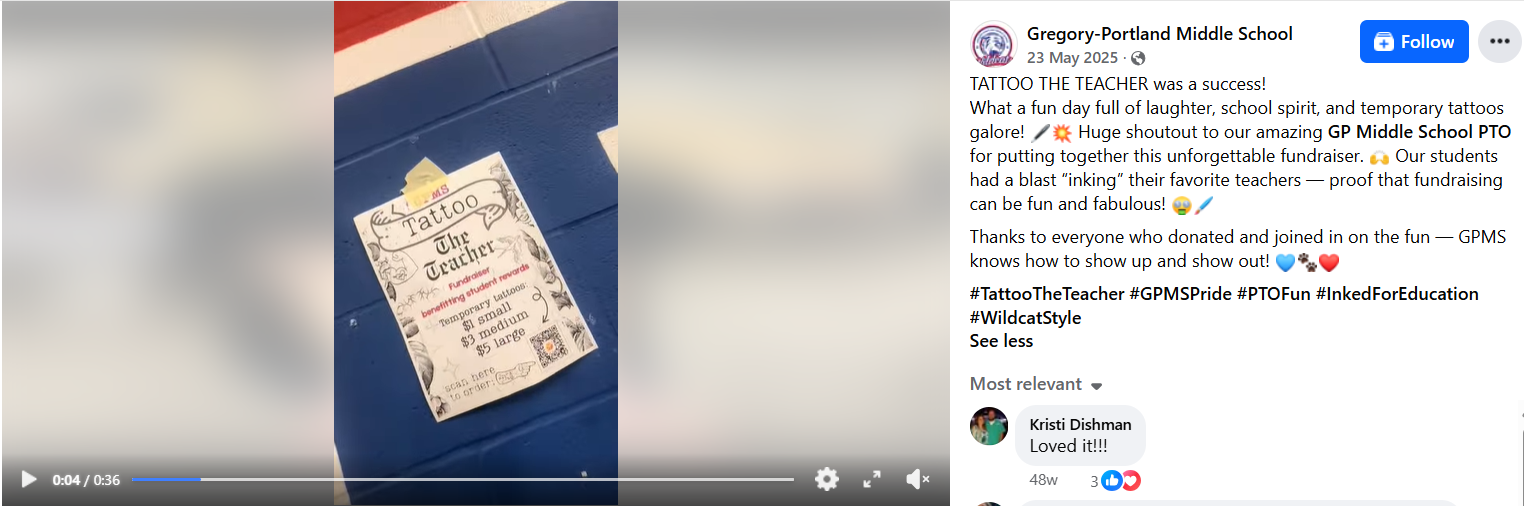
At Greenbrier Middle School, the “Tattoo the Teacher” fundraiser turned into a highly engaging event. Students contributed enthusiastically to take part, and the activity created a lively atmosphere across the school. The success of the fundraiser came from how simple the idea was to execute while still making students feel directly involved.
Recycling, cleaning, or waste collection drives combine fundraising with a sense of purpose. Schools can collect items such as old electronics, cables, or recyclable materials and partner with organizations that offer returns for collected items. This approach works well when you want to involve students in a cause while raising funds.
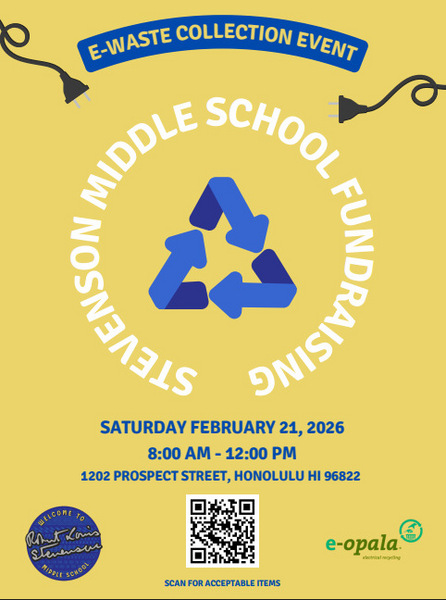
The Stevenson Middle School ran a e-waste recycling drive just this year. The school provided clear guidelines on which items were acceptable and which were not, making it easier for participants. The campaign not only raised funds but also built awareness around sustainability, showing how educational fundraising ideas can create both financial and learning outcomes.
Penny Wars introduce a competitive element that keeps participation consistent over several days. Each grade contributes coins to earn points while adding other denominations to competing grades to reduce their scores. The format is simple, yet it keeps students engaged because of the ongoing competition.
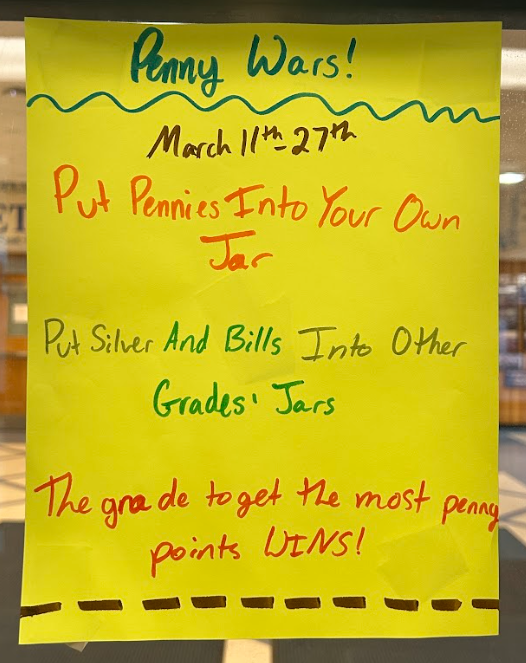
At Narragansett Middle School, a penny wars campaign was organized as a grade-level competition. Regular updates and visible tracking helped maintain excitement. The structure encouraged steady participation and showed how a low-cost fundraiser can stay active over time when competition is built into the format.
A fun run or jog-a-thon is a strong option when you want a low-cost fundraiser with high participation potential. Students collect pledges based on laps completed or distance covered. The event itself becomes a shared activity, which helps maintain energy and involvement.
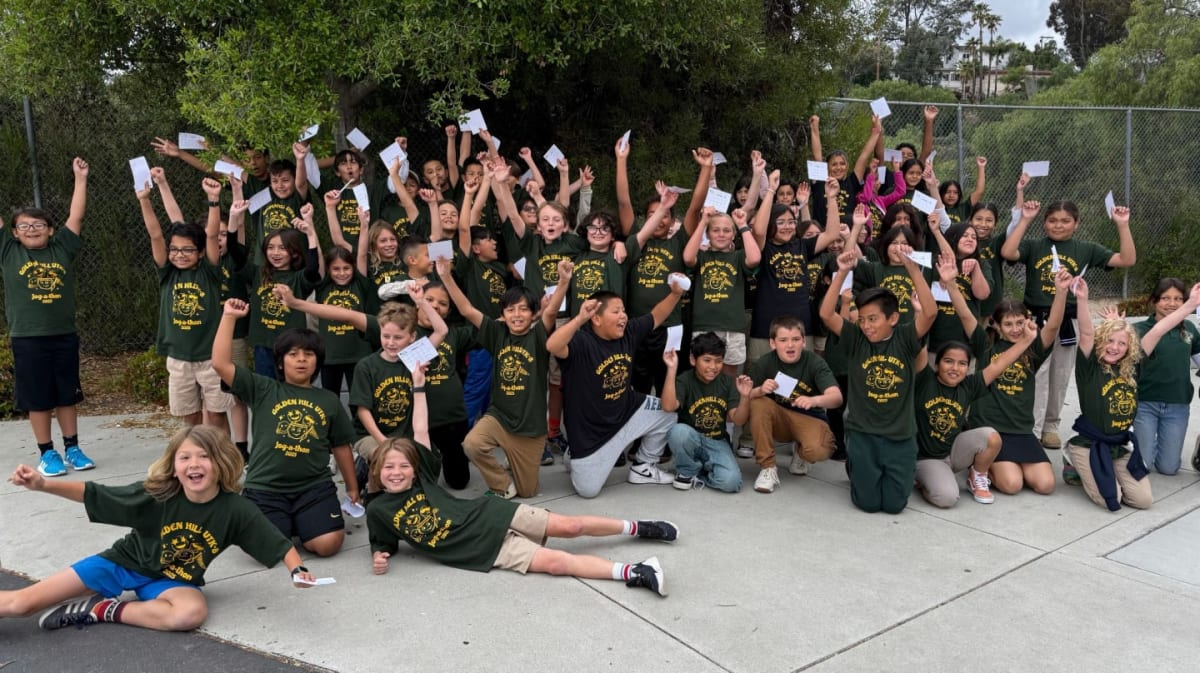
Golden Hill Elementary’s Eagle Fun Run is a good example of how this can work. The school structured the event around student participation and community support. By focusing on pledges and clear goals, they created a fundraiser that was easy to manage and capable of generating strong contributions through collective effort.
These middle school fundraiser ideas work best when participation is driven by experience. Students stay involved when the activity itself feels exciting and social, rather than something they have to do. The goal here is to create moments that bring energy into the school while still supporting your fundraising efforts.
A staff talent show shifts the spotlight to teachers and staff, which creates a different kind of excitement for students. Participation increases because students are curious to see familiar faces perform in a new setting.
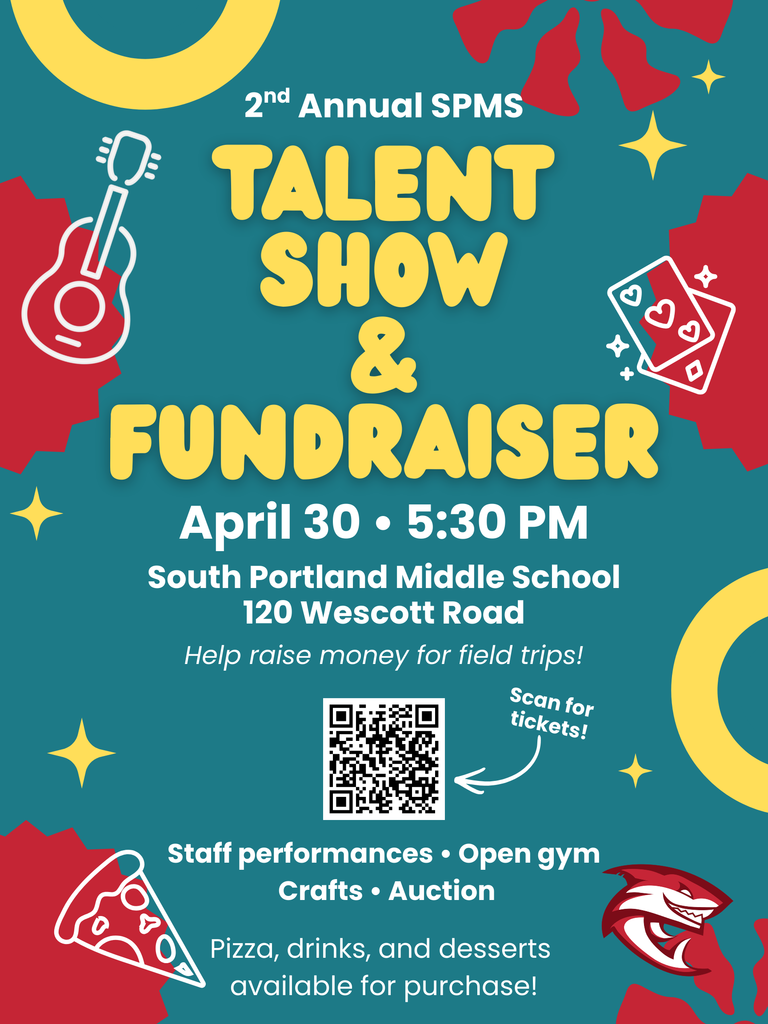
South Portland Middle School hosted a staff talent show to raise funds for grade-level field trips. Staff members performed for students, and the event drew strong attention across the school. This approach works well because it builds community involvement while keeping the setup manageable.
Sports-based fundraisers work well because they tap into existing student interests. A structured tournament allows students to participate actively while also attracting spectators who contribute through entry fees or small ticketed access.
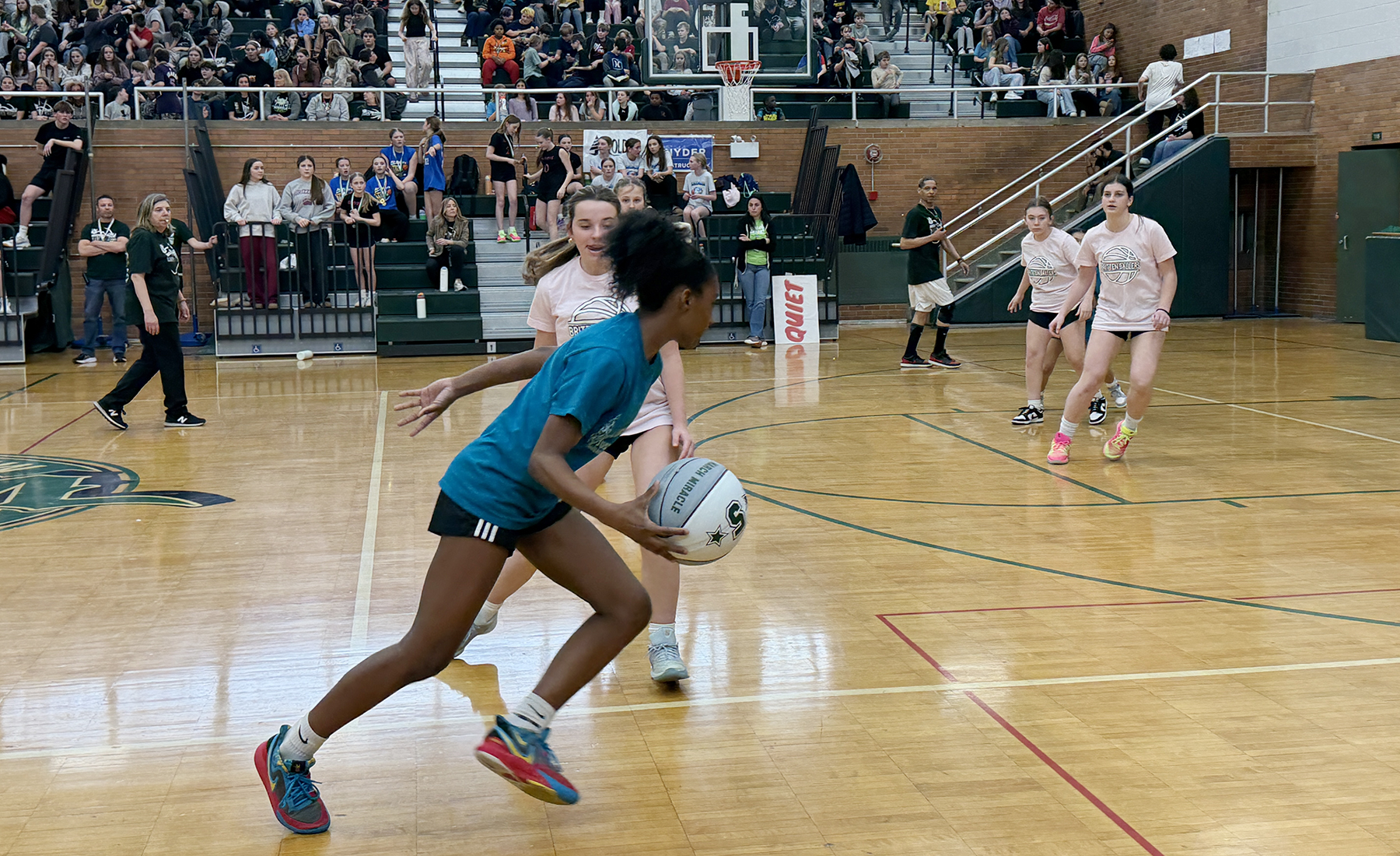
Anderson Middle School organizes a basketball tournament every year to support a charity of their community’s choosing. This year, they raised $15,000 for Camp Casey, a nonprofit organization. This format works well for schools that want to combine physical activity with community involvement.
A color run is one of the more engaging fundraising ideas for schools because it combines physical activity with a visually exciting experience. Students raise pledges and take part in a run where colored powder is used at different checkpoints, turning the event into something memorable.
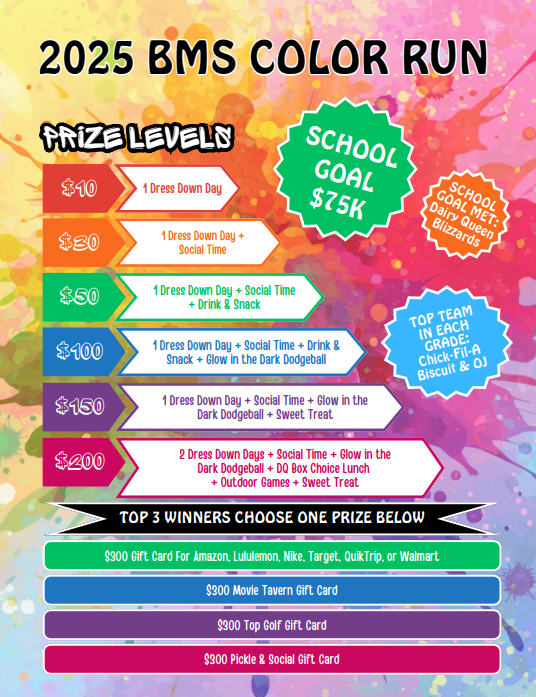
Buford Middle School set a fundraising goal of $75,000 for its Color Run event, positioning it as a key event to support student and teacher initiatives. The success of this approach comes from how the event itself becomes the main attraction, which helps drive both participation and contributions.
Interactive game-style events can bring families into the fundraising process without requiring a physical setup. Schools can host quiz nights or game show formats where families join, participate, and contribute through entry fees or donations.
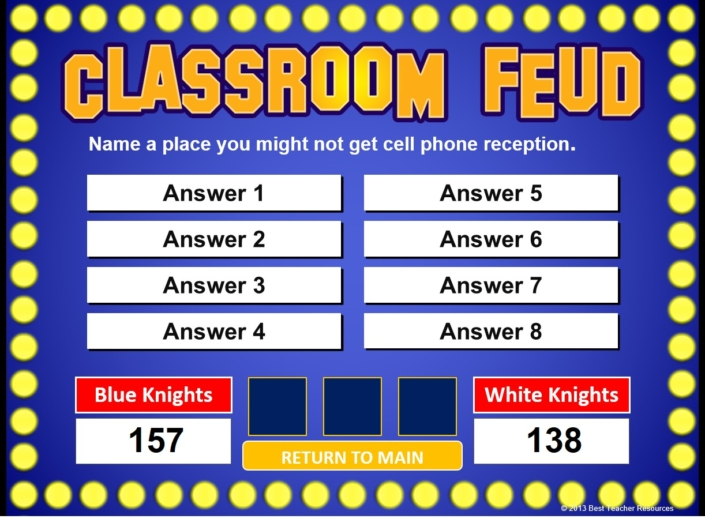
Chelsea School ran a virtual Family Feud-style event as part of its community programming. Families joined remotely, participated in live games, and contributed as part of the experience. This approach worked well because it extended participation beyond students and made fundraising feel like a shared activity at home.
A move-a-thon builds participation around physical activity while allowing flexibility in how students take part. Instead of limiting the event to one format, schools can include multiple activities and let students choose how they want to participate.
The Southeast Seattle Schools Fundraising Alliance organized a large-scale move-a-thon that involved around 6,700 students across multiple schools. Students participated in activities such as yoga, capoeira, and neighborhood cleanups. This approach helped increase participation because students could engage in ways that suited their interests, while still contributing toward a shared fundraising goal.
Educational fundraising ideas work best when the activity itself adds value to students. Instead of treating fundraising as a separate task, these ideas build it into learning. This makes participation more consistent because students are working toward both academic and fundraising goals at the same time.
A read-a-thon encourages students to build reading habits while raising funds through pledges tied to time spent reading. Schools can set collective goals and track progress publicly to keep momentum strong throughout the campaign.
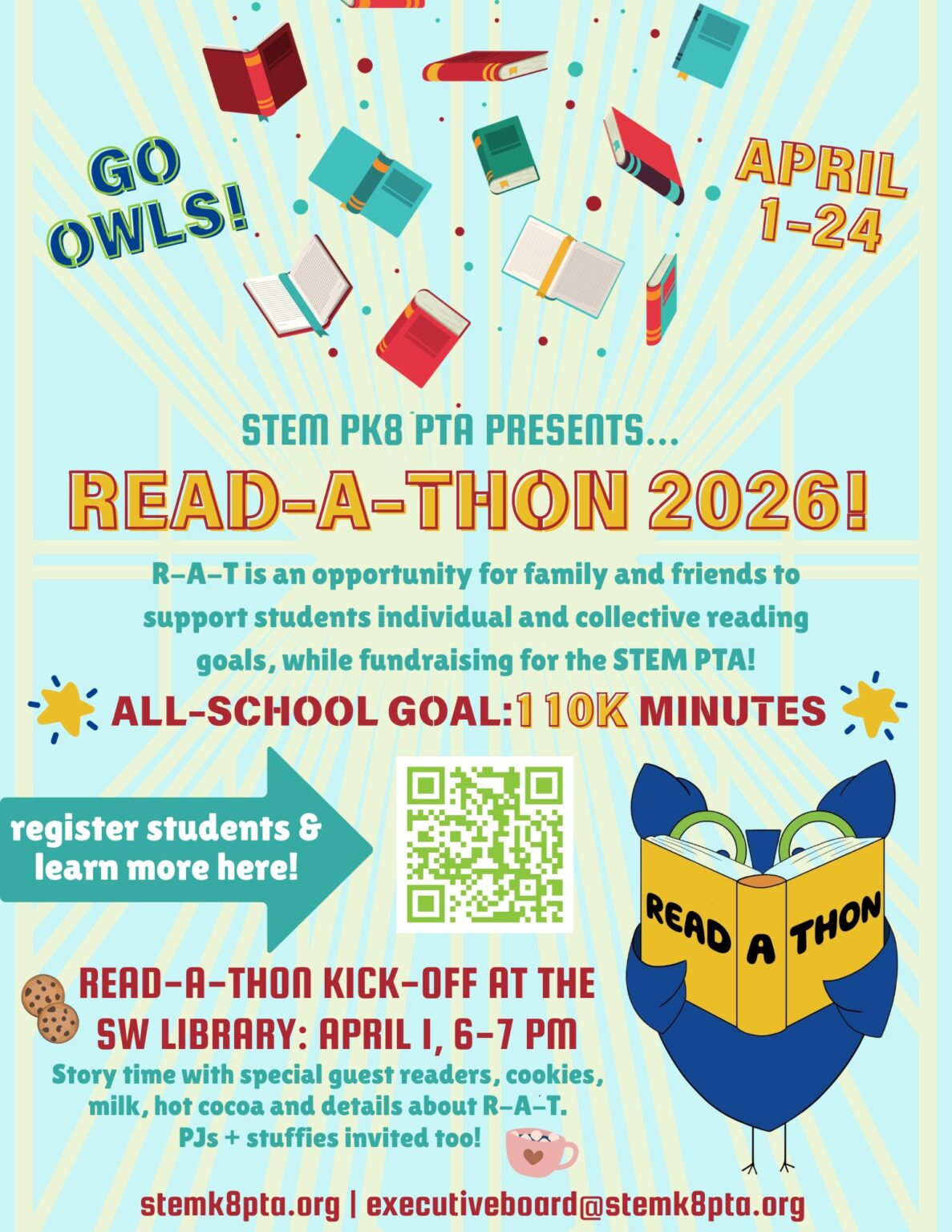
The STEM K–8 PTA organized a Read-A-Thon scheduled from April 1 to 24 with a target of 110,000 minutes. Students went beyond that goal and reached over 206,000 minutes of reading. The campaign also raised $20,854 to support PTA programs. This shows how combining a clear goal with visible progress can drive both participation and results.
A math-a-thon focuses on problem-solving instead of reading, making it a good fit for schools that want to promote analytical skills. Students complete structured problem sets and collect sponsorships based on participation or performance.
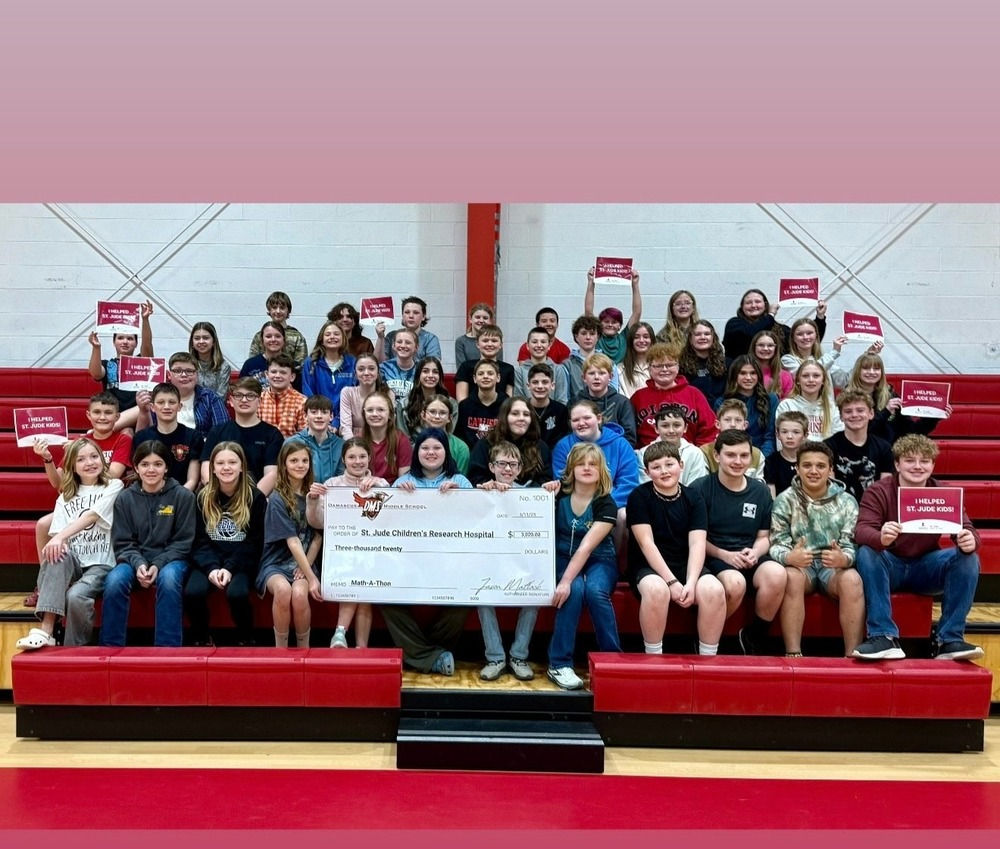
Damascus Middle School ran a Math-A-Thon where students worked through math “funbooks” and earned support through sponsorships. The format made the activity feel structured yet approachable, which helped maintain participation while aligning the fundraiser with classroom learning.
These fundraising ideas for schools focus on small, ongoing contributions rather than one-time events. The goal is to connect everyday activities with classroom support so fundraising becomes part of the broader school ecosystem.
Many middle schools often introduce a rewards-based system for the school year where local shopping contributes directly to funding teacher resources. This approach works well because it reduces the need for repeated campaigns and instead builds a steady flow of support tied to community participation.
Seasonal fundraising ideas for middle school work because they align with moments students already look forward to. When a fundraiser is tied to a holiday or time of year, participation feels more natural. The theme creates built-in interest, which reduces the effort needed to promote the event.
Halloween-themed events are effective because students already expect something fun around that time. Schools can build activities such as costume contests, themed games, or small group experiences and charge for entry.
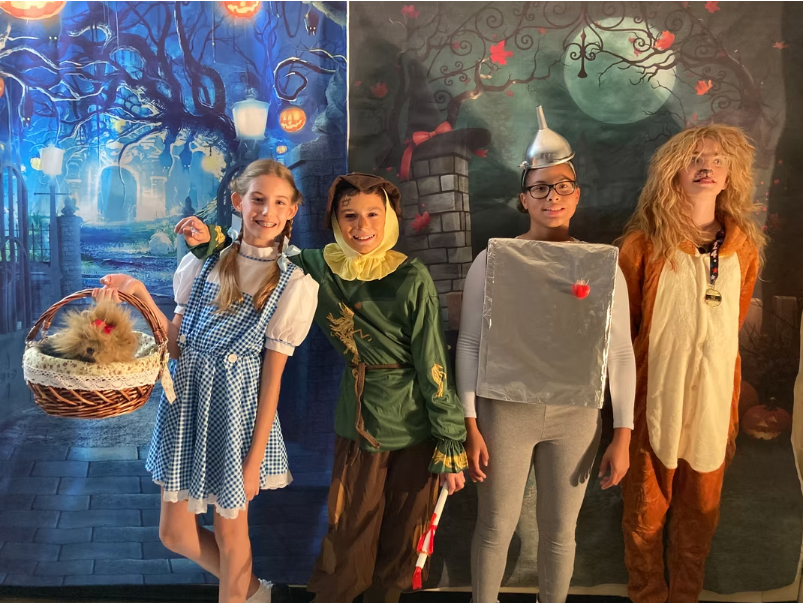
Rye Neck Middle School hosted a “Spooktacular” event with themed activities designed for students. The event sold over 190 tickets, showing how a well-timed seasonal fundraiser can drive strong participation when the experience feels unique and relevant.
Holiday fundraising ideas work well because families are already spending during this period. Schools can offer services such as gift wrapping or partner with vendors to sell seasonal products, making it easy for families to contribute while completing their own holiday purchases.
Boyce Middle School partnered with Charleston Wrap and Chestnut Hill Candle Company for their winter fundraising campaign. The initiative supported sixth-grade trips and allowed families to contribute through everyday holiday purchases. This approach works because it fits into existing seasonal behavior rather than asking for additional effort.
Fall festivals bring together students, families, and the wider community through a mix of activities and attractions. These events usually combine ticketed entry with paid activity stations, which helps create multiple ways to contribute.
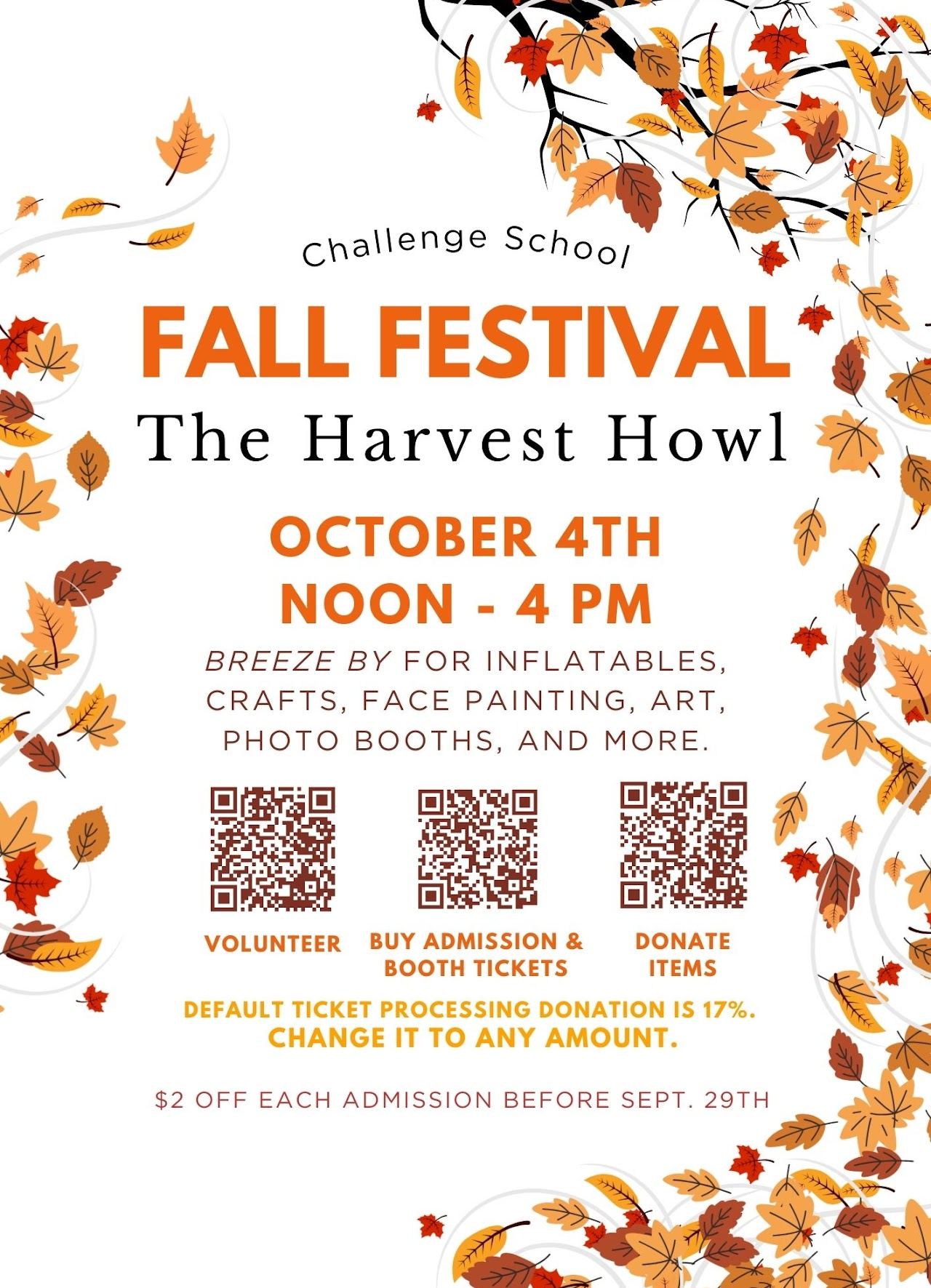
Challenge School hosts an annual “Harvest Howl” fall festival that includes attractions such as interactive games, performances, and themed activities. The school also offers early ticket pricing to encourage advance participation. This structure helps generate revenue early while building anticipation for the event.
Some fundraising ideas for middle school are designed to generate higher returns by combining participation with stronger intent to give. These work best when there is a clear purpose, structured execution, and multiple ways for the school community to contribute.
Cause-based fundraisers connect contributions to a specific purpose. When students and families understand what they are supporting, participation tends to feel more meaningful, which often leads to higher contributions
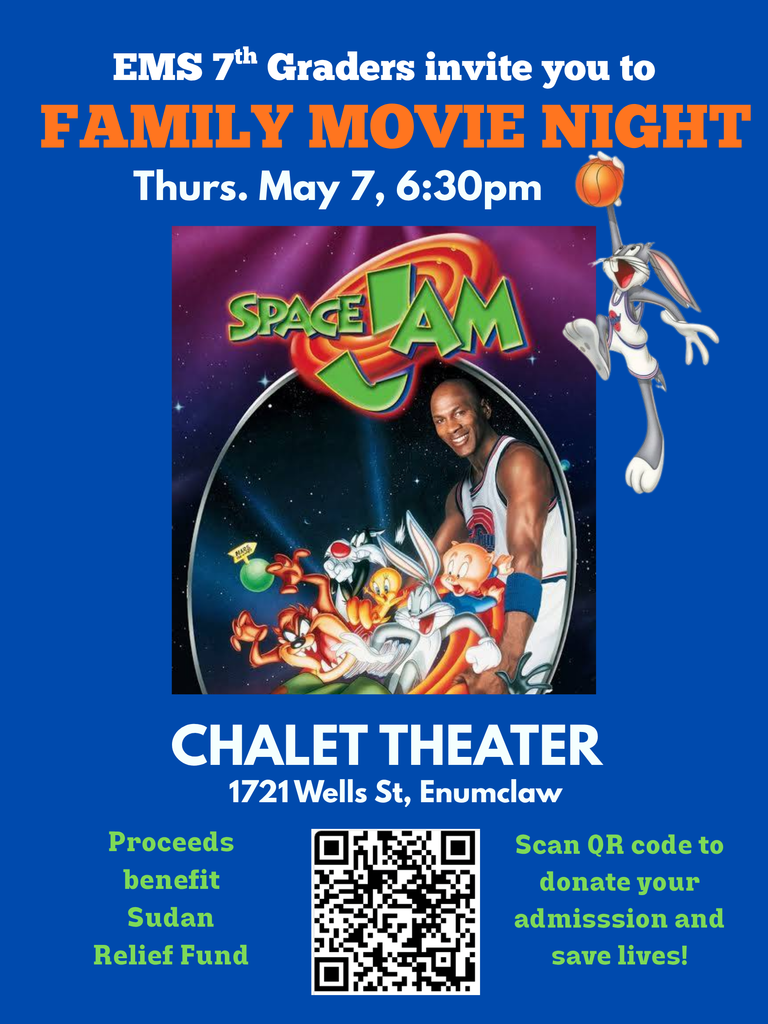
Enumclaw Middle School organized a fundraiser to support the Sudan Relief Fund. The school brought the community together around a shared cause and structured the event to encourage participation through awareness and involvement. This approach works because it gives fundraising a clear direction and helps participants see the impact of their contributions.
Instead of relying on a single event, schools can run a series of activities under one campaign. Each activity may be simple on its own, but together they create multiple opportunities for participation and contributions.
Cramerton Middle School, along with the wider Gaston County district, ran a multi-event campaign that included daily activities such as slushie sales, themed dress-up days, and teacher challenges. This combined approach helped the district raise nearly $132,000, making it their highest total. The success came from creating consistent touchpoints where students could participate in small ways throughout the week.
A direct donation model removes the need for product sales and focuses entirely on contributions. This works well when schools want a simpler structure that is easier to manage and track.
Creekside Middle School adopted a one-time donation approach with a goal of $50,000. By focusing on direct giving instead of physical sales, the school streamlined the process and made it easier for families to contribute. This approach works best when communication is clear and the purpose of the fundraiser is well defined.
A Fund-A-Dream model combines a traditional silent auction with a focused fundraising goal. Instead of raising money for general use, the campaign highlights a specific project that the school wants to complete.
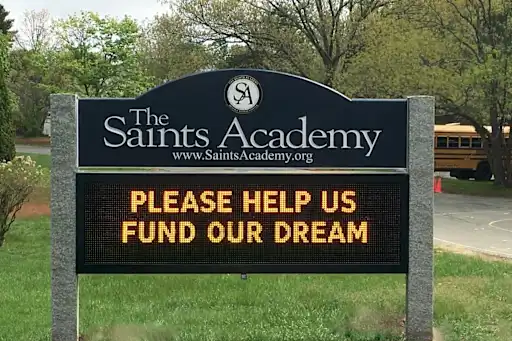
Saints Academy used this approach by linking their auction to a specific, tangible "dream" project, which helped create urgency and stronger participation. When contributors understand exactly what their donations support, they are more likely to give at higher levels. This model works well for schools looking to fund larger initiatives with clear outcomes.
A CASE study suggests that charitable support for education continues to show long-term resilience, even during periods of economic uncertainty, which makes well-structured fundraising efforts more reliable over time.
Also read → 15 proven school fundraising ideas for 2026
In order to run successful middle school fundraisers, the primary focus should be on how clearly the idea is planned before it begins. When the structure is simple and roles are defined early, teams spend less time managing issues and more time driving participation.
Every fundraiser needs a clear starting point. Without a defined goal, it becomes difficult to guide participation or measure success.
Start by identifying what the fundraiser is supporting. This could be a student program, a trip, or classroom improvements. Then set a specific target that reflects that need.
Visible and easy to follow fundraising goals are a must if you want participation to stay consistent.
Strong participation depends on how involved students and parents feel throughout the fundraiser. Clear communication and simple ways to contribute make a noticeable difference.
Students should feel like active participants rather than just contributors. Giving them small roles can help maintain interest.
For parents, clarity matters more than frequency.
Clear and relevant communication also improves response. McKinsey suggests that personalized outreach can significantly increase engagement, which means messages that feel specific to the audience are more likely to drive participation.
The platform you use plays a key role in how smoothly the fundraiser runs. Without the right setup, teams often spend time managing payments, updating records, and sending reminders manually.
A good fundraising platform helps by:
Crowdfunding platforms like Almabase are designed to support this kind of workflow. Schools can set up structured giving pages, manage campaigns, and track donations as they happen. Since it works alongside existing systems, it also helps keep records aligned without additional effort.
Choosing the right platform allows your team to focus on participation and engagement, which is where most fundraising outcomes are shaped.
Also read → 10 Best fundraising software platforms for schools in 2026
Even the best middle school fundraising event ideas need the right execution to deliver results. Small changes in how you promote, structure, and run your campaign can make a noticeable difference in participation and outcomes.
Here are a few practical ways to improve how your fundraiser performs:
A fundraiser needs visibility throughout its duration, not just at the start. Students and parents often miss the first announcement, so regular reminders help keep participation steady.
Use channels your school already relies on. Share updates through school newsletters, send short email reminders, and post progress updates on social media. When people see the fundraiser more than once, they are more likely to act.
Users have also found that fundraisers perform better when messaging stays consistent across all communication channels. Repeating the same core message instead of changing it frequently helps families recognize the campaign and understand what action is expected.
A defined timeline gives structure to your school fundraising campaign. When there is no clear end date, participation tends to slow down.
Set a start and end date before launching the fundraiser. Share these dates clearly with students and parents. You can also introduce small milestones within the campaign to keep attention focused and encourage timely participation.
Students respond well to shared goals. Adding a team element can help maintain energy during the fundraiser.
You can organize participation by class or grade level. Track progress and share updates regularly so students can see where they stand. When students feel part of a group effort, they are more likely to stay involved.
Recognition helps sustain participation without adding unnecessary complexity. Students are more motivated when their efforts are acknowledged.
This does not always require large prizes. Simple rewards such as certificates, announcements, or small privileges can be effective. The key is to make the recognition visible so others are encouraged to participate as well.
When these elements come together, fundraising becomes easier to manage and more consistent in its results.
Also read → Quarterly fundraising playbook for schools you’ll need in 2026
Managing a fundraiser becomes easier when your tools support execution instead of adding extra steps.
Almabase provides a crowdfunding platform that helps schools run structured fundraising campaigns in one place. Teams can set up giving pages, monitor donations as they come in, and manage the campaign without switching between tools.
This approach helps in a few key ways:
At Boyd Buchanan School, this structured approach helped connect engagement with fundraising results. The school surpassed its giving goal by 201%, had 60% of alumni sign up on the platform, and saw a 5X increase in engaged users within five months of onboarding. Almabase also helped the team use leaderboards, donor segmentation, goal thermometers, and Raiser’s Edge sync to manage the campaign more effectively.
The right middle school fundraising ideas make a clear difference in how a campaign performs. When the idea fits your school and is easy to run, participation stays steady and the effort feels manageable for everyone involved.
This guide shows that effective fundraisers do not need to be complicated. What matters is clear planning, consistent communication, and ideas that students and families are willing to support. Even simple fundraisers can deliver strong results when they are executed well.
Almabase helps bring structure to the process. It allows your team to manage campaigns, track donations, and stay organized without relying on multiple tools. Book a free demo to find out how this can work for your school's next fundraising event.

The most effective middle school fundraising ideas are those that are easy to manage and keep students involved. Examples include bake sales, fun runs, read-a-thons, and themed events. These work well because they combine participation with clear goals, which helps maintain steady contributions.
Quick fundraising ideas for middle schools usually involve simple setups and immediate participation. Options like spirit days, snack sales, or direct donation drives work well because they do not require long planning cycles and can generate funds within a short time.
The most successful fundraising ideas keep participation steady and are easy to run. Fun runs, read-a-thons, themed events, and multi-day campaigns work well because they keep students engaged over time and families have more chances to contribute, which leads to stronger overall results.
Participation improves when students feel involved and understand the purpose of the fundraiser. Clear communication, visible progress tracking, and small incentives can help maintain interest. Group-based activities such as class competitions also encourage more consistent involvement.
Online platforms help schools manage fundraising more efficiently. They allow teams to track donations, communicate with donors, and run campaigns without manual coordination. This becomes especially useful for larger or longer campaigns where organization and visibility are important.
Table of Contents
Subscribe
See how modern advancement teams bring alumni engagement and fundraising together.
Spring fundraiser ideas are campaigns and events that institutions run between March and June to raise money, grow donor participation, and bring their community closer together. Spring is one of the strongest fundraising windows of the year, and the reasons go beyond good weather.
Some of the best spring fundraiser ideas include:
In this guide, we’ll break down 25+ proven ideas across different formats and audiences. The goal is to help you identify ideas that align with your campaign goals and translate into measurable participation and fundraising outcomes.
Before we get into the details of each idea, it helps to understand why spring works so well for fundraising in the first place.
Spring is the perfect time for fundraising campaigns because donors are more willing to give, the institutional calendar is full of engagement moments, and the weather makes it possible to run event formats that other seasons cannot support.
Donors show up differently in spring. They are more social, more optimistic, and many have just received tax refunds. That is a hard mix to find at other times of the year. And because spring also lines up with graduation, reunions, homecoming, and end-of-year giving pushes, the ask lands when people already feel connected to your institution.
The weather plays a role, too. Outdoor events, hybrid formats, and in-person gatherings are all easier to pull off. That means your team can reach donors through real experiences instead of relying on emails and social posts to do all the heavy lifting.
The data backs this up. According to the 2024 CASE Insights Alumni Engagement Survey, 51.8% of institutions reported increased alumni engagement. A lot of that growth is tied to seasonal programming that gives people a concrete reason to show up and participate.
This is also why many advancement teams are starting to build spring into their annual giving strategy as a dedicated campaign window. When engagement is already high, pairing it with the right giving tools and campaign infrastructure can turn participation into actual donor growth. Almabase’s ‘planning a giving day’ ebook offers a guided explanation to plan a successful giving day and is a good place to get started with a spring fundraiser.
When it comes to planning, most teams start with a basic question: What format works for us? Can we do something outdoors? Should it be virtual? How much budget do we actually have?
Here are spring fundraiser ideas grouped by format to help you figure out what fits.
Outdoor fundraisers are some of the most popular spring fundraising event ideas because the weather finally lets you bring people together in person. And when people show up, they tend to give more.
Here are a few that work well outdoors:
The most important thing with outdoor fundraisers is making sure donations do not depend entirely on who shows up. If you pair your event with an online giving page, you can collect gifts before, during, and after the event. A registration-to-donation flow helps here. The person who signs up is already interested enough to give.
Cloud County Community College did this well. Their annual scholarship auction raised $67,000 and drove 3X click rates on alumni emails because event promotion and the giving ask were connected from the start. If you want to see how event and fundraising workflows can work together, the Almabase events platform is a good reference.
Virtual fundraisers take the venue and the weather out of the picture entirely. They cost less to run, they are easier to scale, and they often reach donors who would never show up to an in-person event.
Here are a few virtual spring fundraising ideas worth looking at:
With virtual fundraisers, the donor experience on the other end decides how well the campaign performs. If someone taps a link on their phone and the giving page takes too long to load or feels clunky, you lose them. The checkout needs to be quick, work well on mobile, and feel the same on every device. Teams using Almabase run their virtual campaigns by giving pages built around this kind of fast, clean checkout experience.
The other piece that matters is social sharing. When a donor can share their gift with one tap and tag someone else to give, the campaign starts reaching people your team would never have contacted on its own.
Not every spring fundraiser needs a big budget or a large team. Some of the most effective ideas are simple ones that can go from idea to launch in a few days.
Here are a few low-cost spring fundraiser ideas that are easy to get off the ground:
These ideas are a good fit for small teams with limited budgets who need to get something going quickly. The main challenge is that even simple campaigns create manual work when your team is handling receipts, tracking gifts, and following up with donors by hand.
Automating those steps changes the math. When gift receipts, thank-you emails, and donor tracking happen on their own, your team spends less time on admin and more time running the actual campaign. The Almabase eBook on eliminating inefficiencies goes deeper into how fragmented tools create extra work and what it looks like when you bring everything into one place.
Format is one way to choose a spring fundraiser. But the right idea also depends on who you are trying to reach, which is what we will cover next.
The best spring fundraiser idea for your team depends on who you are trying to reach. Schools do well with campaigns that get students and parents involved together. Colleges and alumni programs need campaigns that work across geographies and class years. Nonprofits lean on mission-driven storytelling. Sports teams and clubs benefit from the shared identity their members already have.
Here is how spring fundraiser ideas break down by audience.
Schools have a built-in advantage when it comes to spring fundraising. Parents are already involved, students are easy to rally around a shared goal, and the school calendar gives you natural moments to build a campaign around.
Here are a few that tend to do well:
School fundraisers work in the spring because students and parents are both engaged at the same time. When both groups are active, participation tends to take care of itself. Adding gamification, like progress bars and class rankings, gives people something to track and talk about.
Archbishop Riordan High School saw this play out at scale. After switching to a mobile-friendly giving experience with real-time campaign tracking, their giving day donations grew by 550%, going from $60,646 in 2017 to $338,724 in 2018. A big part of that was social giving, 20% of gifts were influenced by donors sharing their contribution and encouraging others to do the same. For more school fundraising ideas, this Almabase guide goes deeper into what works.
Spring fundraising for colleges and alumni programs looks different from school-level campaigns. Your donors are spread across geographies, they graduated at different times, and their connection to the institution varies. The campaigns that work here are the ones that make giving feel personal and tied to something specific.
A few ideas that fit this audience well:
The execution side matters a lot with alumni campaigns. Segmenting your audience by class year, location, or past giving behavior helps you send the right message to the right group. And peer-to-peer fundraising pages give your most engaged alumni a way to bring others in without your team having to do all the outreach.
Boyd-Buchanan School is a good example. Their first giving day on Almabase surpassed its goal by 201%. What made it work was that 60% of alumni signed up on the platform before the campaign even launched, and engaged users grew 5X within five months. When alumni are already active, the giving day becomes a moment to convert that activity into actual gifts. The Almabase annual fund page covers how this works in practice, and the State of Giving Days report has benchmarks from over 150 institutions.
Nonprofit fundraising in spring is less about institutional calendar moments and more about mission. Your donors give because they believe in what you do, so the campaigns that work best are the ones that make that connection feel real.
Ideas that tend to land well for nonprofits:
Storytelling is what ties all of these together. Donors want to see the impact of their gift, so building your campaign around a specific story or outcome makes the ask stronger. Reaching donors across more than one channel helps too. Running your campaign across email, text, and social at the same time gives you more chances to land the message. The Almabase multi-channel bundle is built around this idea, helping teams run coordinated outreach without managing each channel separately.
Sports teams and clubs have something most other groups do not: a strong shared identity. Members already see themselves as part of a team, which makes fundraising feel less like an ask and more like a group effort.
Ideas that work well for this audience:
Peer-to-peer fundraising is the strongest tool here. When each team member has a personal page and shares it with their own network, the campaign reaches far beyond the team itself. The competitive nature of sports also helps. Leaderboards showing which player or group has raised the most tend to push people to do more. Teams running campaigns through Almabase can set up these personal pages and leaderboards within the same system they use for tracking gifts and donor activity.
Choosing the right idea is one part of it. The next step is figuring out how to pick the best option for your specific goals and audience.
Picking a spring fundraiser idea is easier when you start with two questions: what are we trying to achieve, and who are we trying to reach?
Before picking an idea, get clear on what success looks like for this campaign.
The right idea also depends on who you are reaching and when they are most available.
Once you have the right idea picked out, the next step is making sure your campaign is set up to perform.
A high-performing spring fundraising campaign comes down to four things: a giving page that makes it easy to donate, a peer-to-peer structure that spreads the campaign beyond your team's reach, promotion across more than one channel, and tracking that shows you what is working while the campaign is still running.
Let's break down each of those.
Your giving page is where the campaign either converts or loses people. If it loads slowly, looks generic, or asks for too many steps before someone can complete a gift, donors will drop off.
A few things that make a real difference:
Almabase's giving platform is built around this kind of setup. Branded pages, fast mobile checkout, flexible gift types, and clean CRM syncing so advancement teams can focus on running the campaign instead of fixing data after it ends.
Your team can only reach so many people directly. Peer-to-peer fundraising solves that by turning your most engaged supporters into campaign ambassadors.
What that looks like in practice:
The numbers back this up. St. Ignatius College Preparatory saw an 80% increase in giving day donations by leaning into social giving, peer-to-peer fundraising, and personalized outreach. When donors can see others giving and share their own gift easily, the campaign builds momentum that your team could not create through direct outreach alone.
Email alone is not enough as most emails go unread. The ones that do get opened are generally competing with dozens of other messages in the inbox.
The campaigns that perform best use more than one channel to get the message across:
Teams using email, text, and video together through the platform have seen 3X the impact compared to running email-only campaigns.
Once your campaign is live, you need to see how it is doing while it is still running. Waiting until the campaign ends to look at the numbers means you have already missed chances to adjust.
What to keep an eye on:
Almabase gives advancement teams real-time reporting across engagement, events, and donations within the same platform. That means your team can track performance and act on it without pulling data from separate tools into a spreadsheet.
With the right idea, the right audience, and the right campaign setup in place, the last step is putting it all together.
Spring gives you a window where donors are more open, the calendar is on your side, and the format options are wide. The ideas are the starting point. The results come from picking the right campaign for your goals, reaching the right audience, and having the tools to execute it cleanly.
Whether you are running a giving day for alumni, a walkathon for parents, or a peer-to-peer challenge for students, what matters most is how easy you make it for people to give and how well you track what happens after they do.
If you want to see how that comes together in one system, book a demo with Almabase to see how it would fit your setup.
Giving days with matching gifts, auction events, and crowdfunding campaigns tend to bring in the most revenue. These formats create urgency and attract larger gifts, especially when paired with a clear goal and a deadline.
Read-a-thons, bake sales, classroom competitions, and dress-down days are easy to set up and run. They need minimal budget, get students and parents involved quickly, and can go from idea to launch in a few days.
Start by setting a clear goal, whether that is participation, revenue, or donor acquisition. Then pick a format that fits your audience and budget. Set up a branded giving page, plan your promotion across multiple channels, and build in tracking from day one.
Virtual 5Ks, online auctions, digital giving days, and livestream fundraising events all work well as virtual spring fundraisers. They cost less to run, scale easily, and reach donors who would not attend an in-person event.
Use peer-to-peer fundraising so your supporters spread the campaign through their own networks. Add leaderboards and challenges to create friendly competition. Promote across email, text, and social instead of relying on one channel alone.
Look for a platform that covers giving pages, peer-to-peer fundraising, event management, multi-channel promotion, and real-time reporting in one place. CRM integration matters too so gift data stays accurate without manual entry.

25+ Spring Fundraiser Ideas That Actually Work in 2026
Explore 25+ spring fundraiser ideas for schools, colleges, nonprofits, and clubs. Includes ideas by format, audience, execution tips, and campaign tools.
Fundraising
Almabase
May 22, 2026
12 minutes
Do you remember the first time you volunteered? I do.
It was for an NGO where I volunteered to teach kids at a school that was running low on staff. I remember walking into that classroom for the very first time, taking my first-ever class, and feeling a sense of connection I had never felt before. It genuinely felt like I had made a difference. And as I continued over the years, giving back to that organization financially became the easiest decision I ever made. Not because anyone asked me the right way, but because I had seen the work firsthand. I believed in it. I was part of it.
Through that experience, I also built something I hadn't expected: lasting friendships and a network of people who were equally passionate about making a difference. When that organization makes an ask today, I don't think twice.
That's a personal story. But when you extrapolate it, volunteering is a life-changing experience for many. No matter the form it takes. From participating in a small fundraiser to serving on an advisory committee, volunteering quietly paves the way to some of your most loyal and generous donors.And most institutions are leaving this pathway almost entirely untapped.
This isn't based on feeling alone. The 2026 National Alumni Survey, led by Howard Heevner and Sarah Kleeberger and co-sponsored by Almabase, surveyed over 82,000 alumni across 31 colleges and universities. The findings on volunteering are striking.
Alumni who recently volunteered with their alma mater are, simply put, a different category of donor.

The connection isn't coincidental. Volunteering builds the exact conditions that make giving feel natural: emotional investment, awareness of impact, and a sense of belonging. Alumni who volunteer don't give because they're asked well. They give because they care deeply, and they care deeply because they showed up first.
💡RISD’s “Life after RISD” initiative, for example, created flexible ways for alumni to mentor students, participate in career conversations, and support networking communities. [Learn More]
The honest answer is that most volunteer programs were designed for a different era. Traditional offerings like alumni events, leadership committees, and reunion committees were built around older models of engagement that assumed alumni had the time, proximity, and interest to commit to open-ended roles.
Today's alumni, particularly younger ones, don't see themselves in those formats. They want flexibility. They want to contribute a skill, not fill a seat. And critically, they want to see the impact of what they do. Not months later in an annual report, but in a way that feels immediate and personal.
When those conditions aren't met, volunteering quietly falls off the list. And with it, so does the pathway to giving.
The shift doesn't require a program overhaul. It requires rethinking what "volunteering" means and who it's designed for. Here's where to start:
Short, virtual, time-bound engagements like a one-hour career conversation, a Giving Day ambassador role, or a single mentoring session lower the barrier dramatically for younger alumni and first-time volunteers who aren't ready to commit to standing roles.
💡Pacific Northwest University, featured in CASE Insights on Giving Day 2026, expanded Giving Day participation beyond donations by introducing opportunities like mentorship, admissions support, and preceptor roles, reinforcing the idea that engagement often comes before giving [Read More]
Career advising, project-based consulting, and issue-focused advocacy align closely with how many alumni want to contribute today. Findings from the 2026 National Alumni Survey suggest that alumni interests vary across communities and lived experiences, with some gravitating toward career-focused engagement and others toward service-oriented involvement. Offering multiple pathways allows institutions to meet alumni where they are.
After every volunteer interaction, close the loop. Share what happened as a result. Connect their contribution to a student outcome, a program milestone, or a real story. Volunteers who see their impact are far more likely to return and to give.
Once an alumnus has volunteered and seen the work, the transition to giving should feel like a natural next step, not a separate ask. Design the journey intentionally, from first engagement to first gift.
💡Institutions like Concordia College have focused on creating more continuous and accessible alumni engagement experiences through digital communities, events, and ongoing participation opportunities. The result is a stronger sense of connection over time, where fundraising becomes part of an existing relationship rather than a one-time campaign ask. [Read more]
Timely, personalized acknowledgment matters more than formal recognition programs. Peer shoutouts, digital acknowledgment tied to specific impact, and authentic storytelling go further than plaques and event mentions.
The 2026 National Alumni Survey makes one thing clear: alumni haven't disengaged from generosity. They've simply redirected it toward causes and organizations that make them feel connected, informed, and like they genuinely matter.
Volunteering is the fastest, most human way to create that feeling.
Your best future donors may not be donors yet. But there's a good chance they're willing to show up, if you give them the right reason to.
👉 Explore the full 2026 National Alumni Survey findings on how volunteering shapes donor behavior.

How Alumni Volunteers Become Donors
Learn how alumni volunteering drives alumni giving, strengthens engagement, and builds long-term donor relationships according to the 2026 National Alumni Survey.
Fundraising

Sushmitha
May 19, 2026
12 minutes
I fall right between Gen Z and Millennials, a Zillennial, if you want to get specific.
I'm not starting my day with matcha every morning, but I appreciate the vibe. Memes are definitely a love language, but so is a well-organized Excel sheet.
Writing this piece felt oddly personal. Because I am both generations at once.
So when the data on alumni giving from younger graduates landed in front of me, I didn't just analyze it. I recognized myself in it.
Here's what the numbers actually say, and what university fundraising teams need to hear.
The short answer to why Millennials and Gen Z aren't giving to their alma mater: they are giving. Just not to you.
And before you take that personally, it's worth understanding why.
The 2026 National Alumni Survey, gathered from over 82,000 alumni voices across 31 colleges and universities, makes the picture clear:
That's a signal right there.
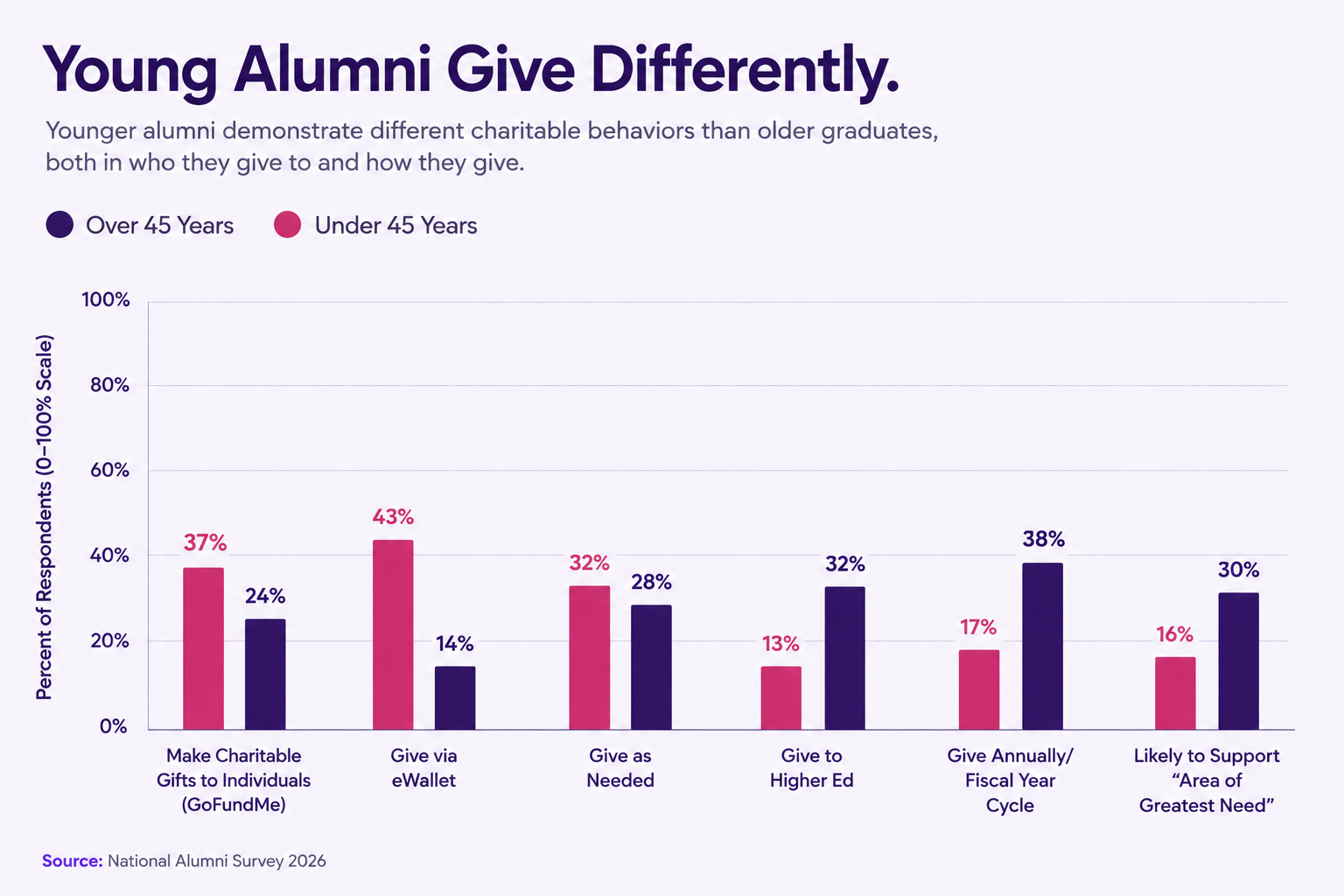
When Millennials and Gen Z give, they give to causes that feel immediate, personal, and visible.
Here's what that looks like in practice:
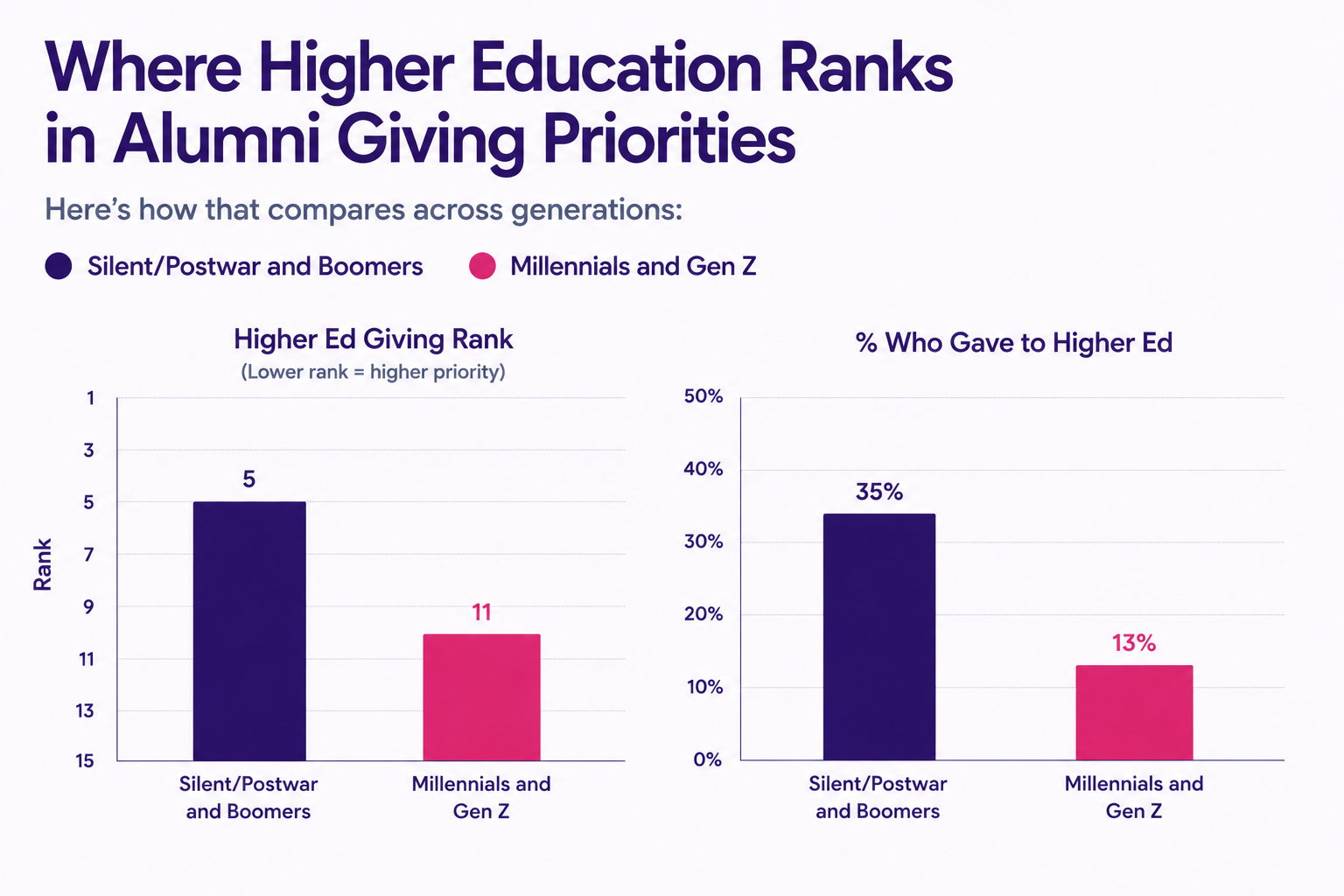
The pattern is clear: younger alumni gravitate toward giving that feels direct. They want to see a face, a story, a specific person whose life changed because of their contribution. Broad, abstract institutional appeals simply don't compete with that.
This isn't a generational quirk. It's a logical response to how younger alumni experience the world and institutions.
Let's break it down:
1. They need to see visible impact.Younger alumni don't give out of tradition or obligation. They give when they can connect their contribution to a real, tangible outcome, like a scholarship that put a first-generation student through graduation or an emergency fund that kept someone from dropping out. When the impact is invisible, so is the motivation to give.
💡For example, the University of North Carolina School of the Arts moved from a “one day, one fund” model to offering over 40 donor-choice funds during Giving Day. [Read More]
2. They prefer immediacy over schedules.Nearly one in three younger alumni give on an "as needed" basis, responding when a cause needs support right now. Only 17% give on a regular schedule, compared to 38% of older alumni. Annual fund cycles and fiscal year deadlines don't map to how this generation thinks about generosity.
3. Institutional trust isn't automatic.Older giving models assumed loyalty. Younger alumni don't start from a place of institutional trust. They extend it based on evidence, transparency, and whether they feel genuinely seen. According to the 2026 National Alumni Survey, 40% of alumni feel disconnected from their institution, and nearly half feel ill-informed about what it's doing. That's not a foundation for giving.
🔥In our recent webinar with Dr Amanda Shoemaker, we unpack what drives young alumni to give. [Watch here]
4. They expect frictionless, digital-first giving.43% of younger alumni give via digital wallets like Apple Pay or Venmo, compared to just 14% of older graduates. If your giving process has friction, you've already lost them.
Here's what you need to know: most advancement teams are still running playbooks written for a different generation of donors.
Annual fund appeals, broad unrestricted messaging, and campaigns built around institutional pride may work for older alumni but they land flat with younger ones. Generic outreach doesn't answer the question younger alumni are silently asking:
"What does this have to do with me, and what will actually change because of my gift?"
Impact storytelling is often delayed, buried in newsletters, or framed around the institution rather than the people it serves. That's the opposite of what works.
The good news is that the data doesn't just diagnose the problem. It points clearly toward what moves younger alumni.
1. Lead with cause-based campaigns.Replace broad annual fund appeals with specific, values-driven opportunities like student emergency funds, mental health services, first-generation initiatives, and campus food pantries. These are the areas where younger alumni see themselves and their values reflected.
Here's what the data shows about which funding areas resonate most by age group:
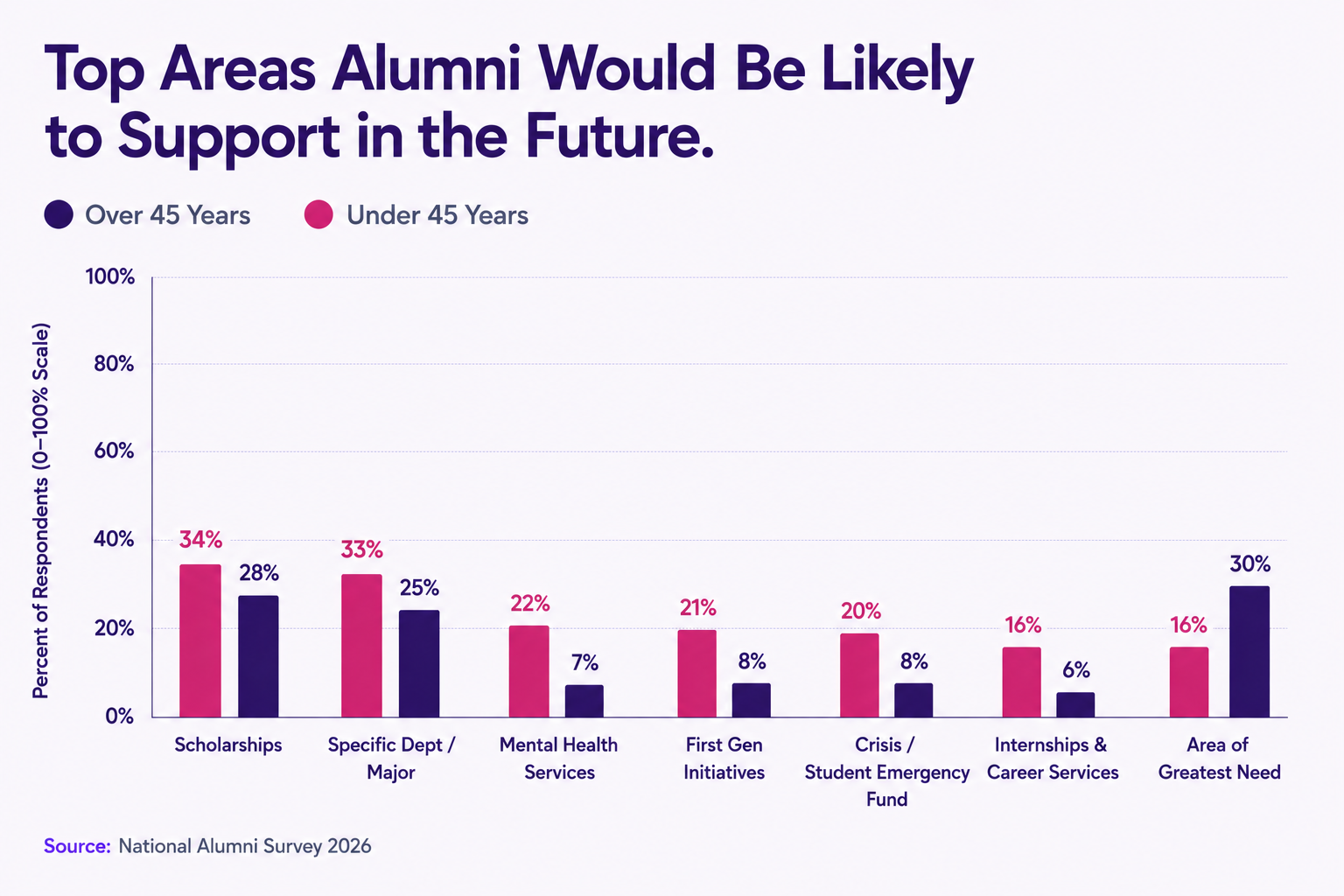
The gap on mental health services, first-gen initiatives, and emergency funds is especially telling. These are causes younger alumni care about deeply, often from personal experience, and they are chronically underpromoted in most alumni giving campaigns.
2. Tell real stories about real people.The shift toward GoFundMe-style giving is a signal, not a trend to dismiss. Younger alumni want to know who they are helping. Put a name, a face, and a specific situation at the center of your ask. The institution is the vehicle. The person is the story.
💡Alumni Association of the School of Medicine of Loma Linda University saw success by tying campaigns to real outcomes and beneficiaries, helping donors understand not just what they’re giving to, but who they’re helping. [Learn more]
3. Make online giving frictionless.Offer digital wallet options and mobile-first experiences that simplify online giving. Create time-bound, shareable campaigns like Giving Days that feel communal and immediate. Younger alumni are more likely to give in the moment than on a schedule, so meet them where they are.
4. Acknowledge debt without making it awkward.Student loan debt is a real factor for younger alumni, particularly alumni of color and women. But here's what the survey found: 77% of those burdened by debt still give to other organizations. The barrier isn't financial capacity. It's relevance and trust. Acknowledge competing financial pressures in your messaging without pressure or apology, and focus the ask on collective impact rather than individual sacrifice.
💡Is Your Higher Ed Website Meeting Gen Z’s Expectations? Audit your higher ed website with this self-assessment.
The 2026 National Alumni Survey puts it plainly: younger alumni haven't disengaged from generosity. They're selective about where it goes, and they're directing it toward causes and organizations that earn their trust, show their impact, and respect their agency.
Higher education hasn't lost their goodwill. It just hasn't earned their giving yet.
The gap is closeable. But it closes through relevance, transparency, and real human connection.
👉 Curious about what motivates alumni giving across institutions? Explore the full 2026 National Alumni Survey findings to see how your institution compares.

Why Millennials and Gen Z Aren't Giving to Their Alma Mater (And What Actually Works)
Why Millennials and Gen Z aren’t giving to their alma mater and what actually works. Insights from the 2026 National Alumni Survey on how younger alumni give differently.
Alumni Engagement
Sushmitha
May 11, 2026
12 minutes

.svg)
.png)
%20(1).png)
