School fundraising is no easy task. Learn how four schools turned their alumni engagement into fundraising success as well as what you can learn from them.

Anwesha Kiran
Published:
July 30, 2025
Updated:
April 1, 2026

Discover AI Summary
• Prioritize building genuine relationships before asking for donations: Don't treat alumni like ATMs. Schools that focus on connecting with their community first, offering value like mentorship or networking, see donations follow naturally, reducing common solicitation fatigue.
• Leverage digital platforms to capture engagement and inform your asks: Disconnected data means missed opportunities. By using integrated digital tools, you can track alumni activity (event attendance, profile updates) to tailor your outreach and make fundraising appeals feel timely and personal, boosting participation.
• Turn Giving Days into competitive, mobile-first experiences: Outdated donation forms and generic asks are holding back your campaigns. Make your Giving Day mobile-friendly, add class-year challenges, and use live leaderboards to tap into alumni pride and generate excitement for incredible results, as one school saw a 550% increase.
• Offer diverse ways for alumni to contribute their time and talent: Financial giving isn't the only metric. Providing opportunities for alumni to volunteer their expertise or mentor students builds a stronger connection to the institution, which often leads to financial support down the line.
• Build an "always-on" digital community, especially for dispersed alumni: Geographic distance shouldn't mean disengagement. Creating a comprehensive online platform with professional networking, job boards, and class groups keeps alumni connected year-round, fostering consistent engagement that drives giving.
• Segment your communications beyond blanket appeals: Generic messages lead to alienation, not engagement. By segmenting your alumni based on their interests, class year, or past involvement, you can deliver more relevant content that resonates and makes them feel valued, not just another number.
Despite an increase in the amount of donations, the number of donors continues to decline, a worrying trend that just goes to show the importance of engaging and retaining donors. This brings us to the question of engaging and retaining supporters in a way that translates to financial support. Essentially, how do you bridge the gap between alumni engagement and actual donations?
Today, we’ll be looking at four schools that managed to provide this bridge and not only engage their alumni but also turn engagement into meaningful gifts.
First, it’s essential to understand why the transition from engagement to giving often fails
Giving Days are often the centerpiece of institutional fundraising, but many schools struggle to drive significant engagement. Traditional national participation rates remain low even after focused campaigns.
Overall, alumni giving participation has declined from 8.5% to around 7.8% in 2023. While alumni may engage with Giving Day emails, social media content, or livestreams, most don’t convert into donors.And the broader context reveals why: solicitation fatigue is real. According to recent data, 72% of alumni report experiencing “solicitation fatigue,” and 68% feel they are asked for donations too frequently. This overexposure not only diminishes the effectiveness of Giving Days, but also reduces the likelihood of alumni giving at all.
Contributing factors include:
Without these elements, Giving Days become missed opportunities, or just disconnected fundraising moments that fail to build on the genuine relationships alumni crave with their alma mater.
A major driver of declining alumni giving is emotional disconnection. While institutions often assume that engagement ends at graduation, the data shows otherwise. According to Ruffalo Noel Levitz, alumni who feel a strong sense of connection to their alma mater are 23× more likely to give than those who don’t. Similarly, those who report being satisfied with their college experience are 4× more likely to donate.
This reinforces a crucial point: the seeds of generosity are sown long before an ask is made. Schools that cultivate meaningful relationships during and after college, through community, relevance, and shared purpose, see dramatically better outcomes. Conversely, younger alumni who feel alienated from institutional priorities or disconnected from impact areas are far less likely to give.
Despite access to better tools and data, most alumni offices continue to default to mass communication strategies such as newsletters, blanket appeals, and generic event invites that fail to reflect the diversity of alumni interests, experiences, and life stages. The result is predictable: 93% of alumni teams admit that the “benefits” they offer carry little or no perceived value. Although 81% of organizations track alumni satisfaction through Net Promoter Score (NPS), less than half do so consistently, which means negative feedback often goes unaddressed.
Perhaps most telling is this: the number of institutions with opt-out rates of 10% or higher (alumni actively asking not to be contacted) has grown 79% since 2015. That’s not disengagement; that’s alienation.
The takeaway is clear. Generic messaging could be actively harming your prospects by deteriorating trust over time. Without segmentation, relevance, and intentional feedback loops, even well-meaning communication strategies can push alumni further away.
Worse, a poorly timed or impersonal ask can make alumni feel like they’re only being contacted when the school needs money.
Social media engagement may look strong on the surface, but it rarely leads directly to action. Only 30% of social media followers ever convert into event attendees or donors. One major reason: the data sits in silos. Alumni data often lives in disconnected tools: email platforms, event apps, outdated spreadsheets, CRM systems, social media analytics. Without integration, advancement teams lack the full picture of an alum’s journey.
Even when engagement happens, it doesn’t inform the timing or content of fundraising asks. When alumni RSVP to a webinar, like a Facebook post, or update their contact info in a directory, those signals are often not integrated into the institution’s CRM or donor pipeline. Advancement teams miss the opportunity to respond with timely, context-aware outreach. That means schools are often “flying blind”, or missing chances to act on interest or, worse, sending irrelevant asks that erode trust. As a result, interest dissipates and potential donors quietly disengage.
Each of these problems points to the same core issue: many schools still treat engagement as a separate function from fundraising. But in reality, engagement only gains value when it leads to action.
The schools you’ll read about next found a different path. They understood that successful advancement means treating alumni as more than donors-in-waiting: as long-term community members. And in doing so, they turned passive followers into active supporters who, in turn, became lifelong donors.
❗Tired of facing the same roadblocks? Request a demo and we'd love to know how we can help!
These case studies show how personalized outreach, digital integration, and clear value exchange can transform alumni relations and fundraising outcomes.
The Challenge: Boyd-Buchanan's advancement team inherited boxes of handwritten alumni notes with no digital system in place. With just two staff members, they faced a choice: spend months manually entering outdated data or build something entirely new.
The Strategy: They chose innovation over administration. Rather than chasing alumni with immediate fundraising appeals, Boyd-Buchanan committed to a relationship-first philosophy. Their core belief: meaningful connections must come before financial contributions.
How They Built Their Community:
The Payoff: When Boyd-Buchanan finally launched their inaugural Giving Day, they weren't asking strangers for money, they were inviting an engaged community to support a cause they already cared about. The result was significantly higher participation rates and sustainable fundraising momentum that continues today.
Boyd-Buchanan proved that schools don't need extensive resources or donor databases to succeed. They need patience, authentic relationship-building, and technology that makes engagement natural rather than transactional.
🔍Check out the case study here.
The Challenge: The school was stuck with outdated fundraising infrastructure. Their donation forms weren't mobile-optimized, they had no real-time campaign tracking, and they couldn't harness the power of peer networks during critical giving moments.
The Strategy: They transformed their Giving Day into a mobile-first, competition-driven experience. Class-year challenges turned alumni into enthusiastic fundraising ambassadors for their peers. Live leaderboards and real-time donation updates created infectious energy that spread throughout their alumni network.
The strategy worked because it met alumni where they actually were: on their phones and tablets, connected to their classmates, and ready to engage in real-time.
How They Transformed Their Campaign:
Riordan tapped into fundamental human psychology: competition, community pride, and instant gratification - while making the giving experience seamless across all devices.
🔍Check out the case study here.
Merchant Taylors' School demonstrates how institutions with limited resources can maximize impact by prioritizing meaningful engagement over immediate fundraising asks.
The Challenge: Merchant Taylors' School in the UK operated with just one staff member responsible for alumni relations, advancement, and events. With such limited capacity, they needed a strategy that would deliver maximum engagement without overwhelming their small team.
The Strategy: Rather than focusing solely on donation requests, Merchant Taylors' chose to build a comprehensive culture of alumni contribution that went far beyond financial giving. They recognized that alumni wanted to contribute their expertise and experience, not just their wallets.
How They Built Sustained Engagement:
The results validated their patience-first approach:
Merchant Taylors' earned the right to ask for financial support by first demonstrating genuine investment in their alumni's continued connection to the school community.
🔍Check out the case study here.
Punahou School's approach shows how institutions can overcome geographic barriers by creating digital infrastructure that transforms alumni from passive recipients into active community contributors.
The Challenge: Punahou School in Hawai'i faced a unique obstacle: maintaining meaningful connections with a large, geographically dispersed alumni network. With more than half their graduates living outside the islands, traditional engagement methods like reunions and local meetups couldn't provide the consistent touchpoints needed for sustained relationships.
The Strategy: Their solution was Ka 'Ohana Punahou (The Punahou Family)—a comprehensive digital ecosystem designed for year-round alumni engagement. They recognized that digital engagement needed to be an everyday experience, not a campaign-driven effort.
How They Built Always-On Community:
The scale of engagement was remarkable:
Punahou created digital infrastructure that served real community needs. Alumni became active contributors, connectors, and mentors.
🔍Check out the case study here.
Although the four schools profiled in this article approached alumni engagement differently, varying in size, geography, and available resources, certain strategic patterns consistently emerged.
Generic, one-size-fits-all outreach continues to be a widespread pitfall. Yet schools that segmented alumni by class year, past involvement, or affinity groups consistently saw stronger outcomes.
At Archbishop Riordan High School, real-time tracking was a defining feature of their 550% Giving Day revenue increase, demonstrating the motivational power of peer identity when coupled with competition and visibility.
Similarly, Almabase enabled Boyd-Buchanan to capture and act on fresh data from specific alumni segments, dramatically improving targeting and conversion.
These institutions didn’t treat giving as the first step in the relationship. Instead, they led with meaningful experiences such as mentorship, volunteerism, networking opportunities, and allowed financial contributions to follow organically.
Merchant Taylors’ School, for instance, focused first on time and talent by establishing mentorship hubs and advisory boards. Only after building community and trust did they see donations triple year over year.
In a mobile-driven world like today, alumni engagement must be designed for accessibility and continuity. Punahou School’s digital alumni portal, Ka ‘Ohana Punahou, offered job boards, class communities, and directories that kept alumni engaged month after month. The result? Over 7,000 monthly users and a 70% content engagement rate in Year 1.
This kind of always-on infrastructure shifts engagement from event-driven spikes to sustained digital presence, which is an essential foundation for any modern fundraising pipeline.
These four schools prove that declining alumni engagement is a solvable challenge. The solution is to flood inboxes with more appeals or to create flashier campaigns. Instead, it requires a fundamental shift toward strategic relationship-building powered by the right digital infrastructure.
Each institution succeeded by understanding a core truth: sustainable fundraising flows naturally from sustained engagement. Whether it's Boyd-Buchanan's patient community-building, Archbishop Riordan's mobile-first competition, Merchant Taylors' value-driven volunteerism, or Punahou's always-on digital ecosystem, the common thread is clear: technology should amplify authentic relationships.
The advancement teams that thrive in today's landscape are those who can segment alumni meaningfully, create seamless digital experiences, and position giving as the logical next step in an already-valuable relationship.
The most effective strategies are those that go beyond communication and foster real, ongoing relationships. These include:
These strategies work because they create value for alumni first, before any fundraising ask is made.
Successful Giving Days are built on more than just mass emails or nostalgia. High-performing campaigns often share four characteristics:
Giving Days that are integrated into a broader strategy and not treated as one-off asks are far more likely to generate meaningful participation.
Conversion happens when engagement is continuous, meaningful, and measurable. The most successful institutions follow a clear progression:
As shown in the Merchant Taylors’ and Punahou case studies, when alumni feel their time, voice, and expertise are valued, they’re more likely to give, even without needing a hard sell.
Still have questions? Talk to an expert and get your own personalized demo! →
Table of Contents
Subscribe
See how modern advancement teams bring alumni engagement and fundraising together.
Institutions and organizations host many fundraising events throughout the year. And while your team might have certain events that have become a mainstay of your calendar, sometimes you just want to switch things up and try something new, or maybe you want a budget-friendly option for a particular event. In that case, a few fresh event ideas might be just what your team needs.
To help you brainstorm your next fundraiser, we’ve curated 28 fundraising event ideas across six essential categories from budget-friendly, low-lift options to high-impact campaigns (backed by real life examples) designed to energize your community and elevate your story.
Not all fundraisers need to be a fancy gala. Sometimes the best event for the occasion can be as simple as having a clear ask, a bit of social energy, and ideally, something that makes giving feel like part of the fun.
One challenge with student giving is making it feel immediately worthwhile. A simple way to do that is by turning a class gift into something students use.
Instead of asking for a one-time donation, position the gift as entering a shared experience. Tie it to a price that feels personal (like their class year), and pair it with a tangible benefit, like something that fits naturally into their daily routines.
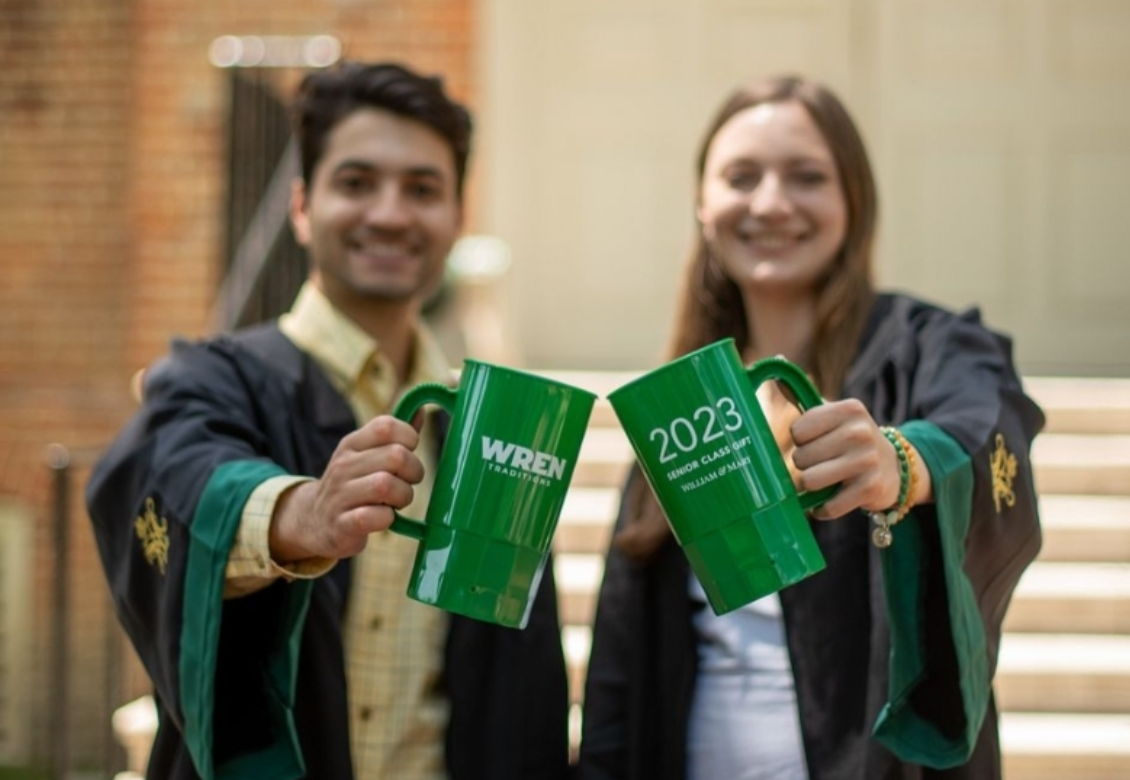
An example in action is William & Mary’s Mug Club. Seniors make a class-year gift (donating $20.26, for example) and receive a mug that unlocks rotating deals at local businesses: everything from discounted meals to drink specials. By expanding local partnerships each year and keeping the offer relevant to student life, the program stays useful, visible, and easy to say yes to.
Any institution with a graduating cohort can build a version of this. All you need is a student-led committee to drive peer engagement, a giving page with flexible fund designation, a small group of local business partners willing to offer simple, repeatable deals, and a clear participation goal set at the start of the year.
Trivia nights have become one of the most reliably successful fundraisers, and ticket sales just make up a part of the funds raised. By layering in small "pay-to-play" options like raffles, mid-round hints, or a fee to reverse a wrong answer, guests have plenty of fun ways to keep giving all through the evening.
When guests can contribute in the moment, it keeps the energy high and the giving consistent. This steady stream of small donations adds up quickly, all within an event that feels more like a fun night out than a fundraiser.
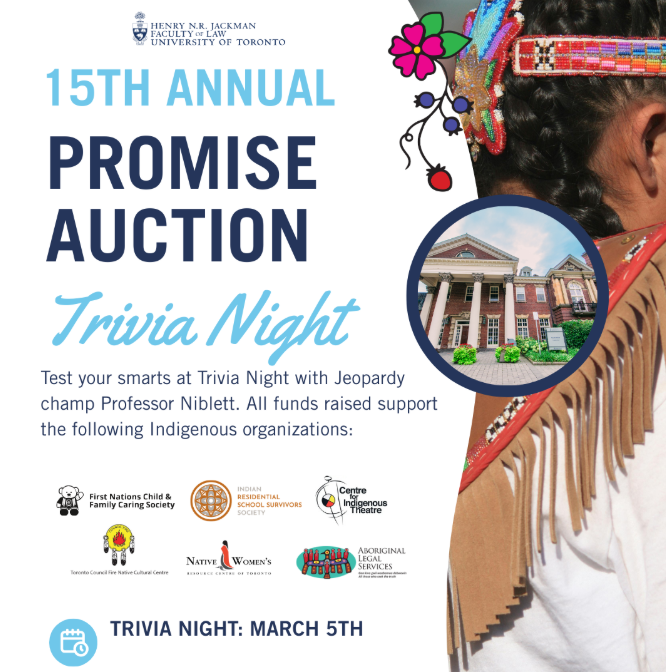
The University of Toronto’s Faculty of Law hosts an annual trivia night to raise funds for several causes.
A key advantage of a trivia night is also format flexibility. While in-person is the classic setup, hybrid versions where some teams join via livestream while others sit in the venue have become increasingly common.
What you need for your own fundraising trivia night is a host (can be someone internal), a venue with basic AV, answer sheets or a mobile quiz platform, a raffle or auction component, and a payment method set up in advance.
Karaoke nights are a low-lift way to turn energy and participation into steady, incremental giving, which works especially well with younger or campus-based audiences.
Charge a simple entry fee, then layer in pay-per-song and optional add-ons like “donate to skip the queue.” Keep the vibe casual, the song list broad, and the giving options easy to access, such as quick, mobile-friendly payments that guests can complete in under 30 seconds without interrupting the flow of the night.
An ice cream social is a familiar, community-friendly format that works especially well during spring and summer seasons.
You can sell tickets for servings or partner with local vendors for a percentage of sales and add a clear donation touchpoint like a QR code or short giving moment during the event. Keep it easy, visible, and family-friendly to maximize attendance and add-on gifts.
Restaurant nights are one of the simplest ways to fundraise without taking on operational complexity. They work because they’re extremely accessible: a regular meal turns into a reason to give.
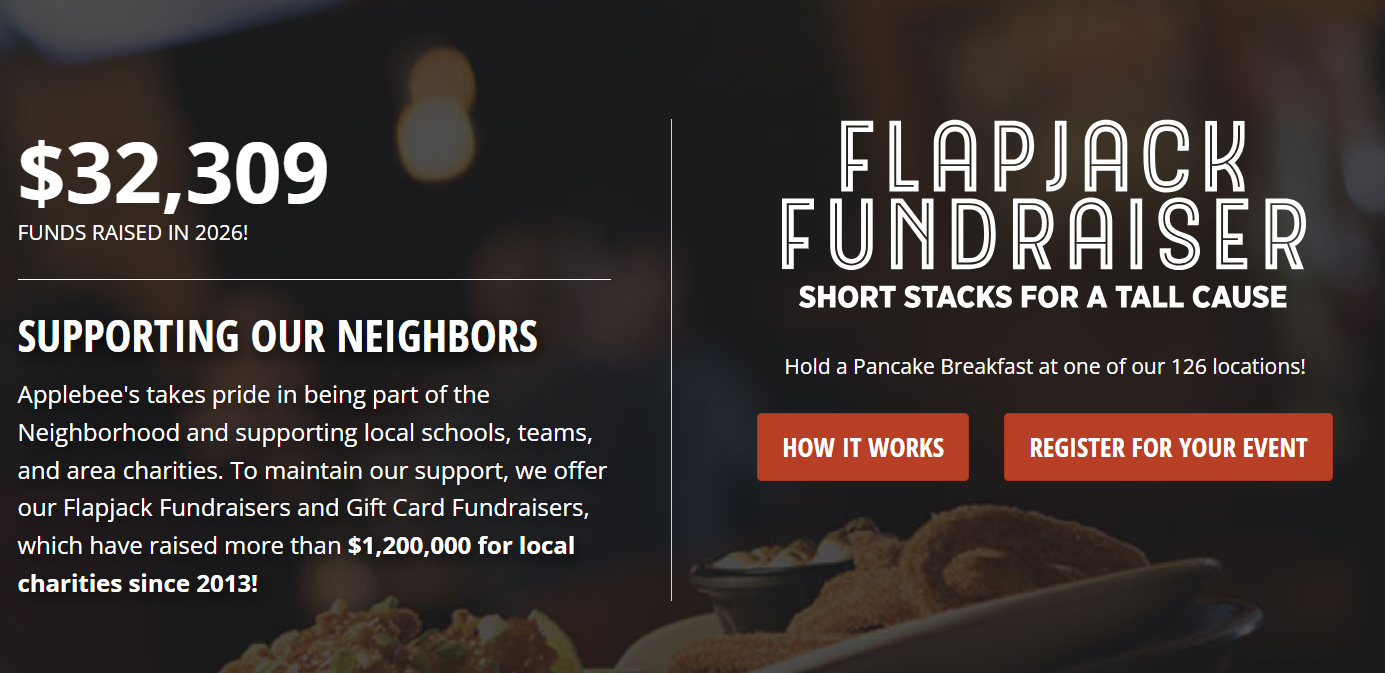
Applebee's Flapjack Fundraiser, for instance, lets groups take over the restaurant for a breakfast shift and keep most of the ticket revenue. But you don't need a chain; a local spot with a community-minded owner works just as well.
Great returns don’t always require a big investment. The most cost-effective reframe the ask and find a more creative way to invite people to give.
Even old everyday items have fundraising potential. You can work with a social enterprise or nonprofit partner to collect gently worn, used, or new items. This makes it easy for supporters to give. This removes the barrier of a cash ask, and anyone can join by simply giving items they already have.
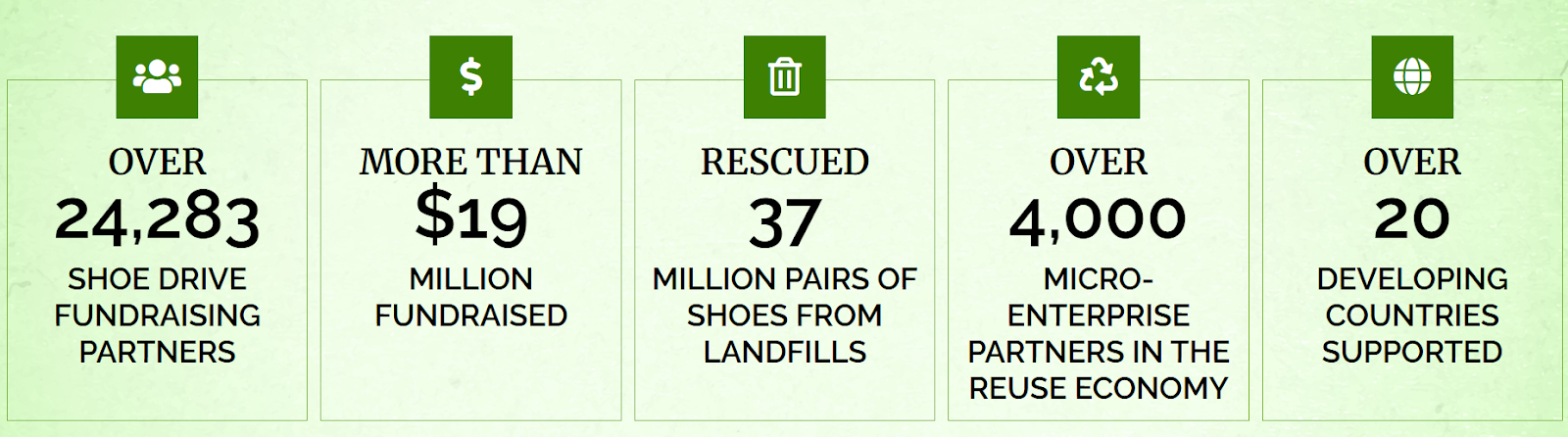
Funds2Orgs runs a Shoe Drive fundraising program where schools, nonprofits, and community groups collect gently worn, used, and new shoes from their networks and get paid by weight. Funds2Orgs handles the pickup and logistics.
You can pitch it to your community as simply cleaning out their closet for a cause. Those who might feel uncomfortable with a cash ask are suddenly able to contribute meaningfully.
To set one up, sign up with Funds2Orgs, choose a collection period (60 days is typical), promote collection points at your campus or organization, and coordinate pickup with their logistics team.
Transform a regular donation drive into a high-energy, community-wide challenge by having teams or departments compete to raise the most money or collect the most items. Competition drives promotion and motivation, while giving remains simple.
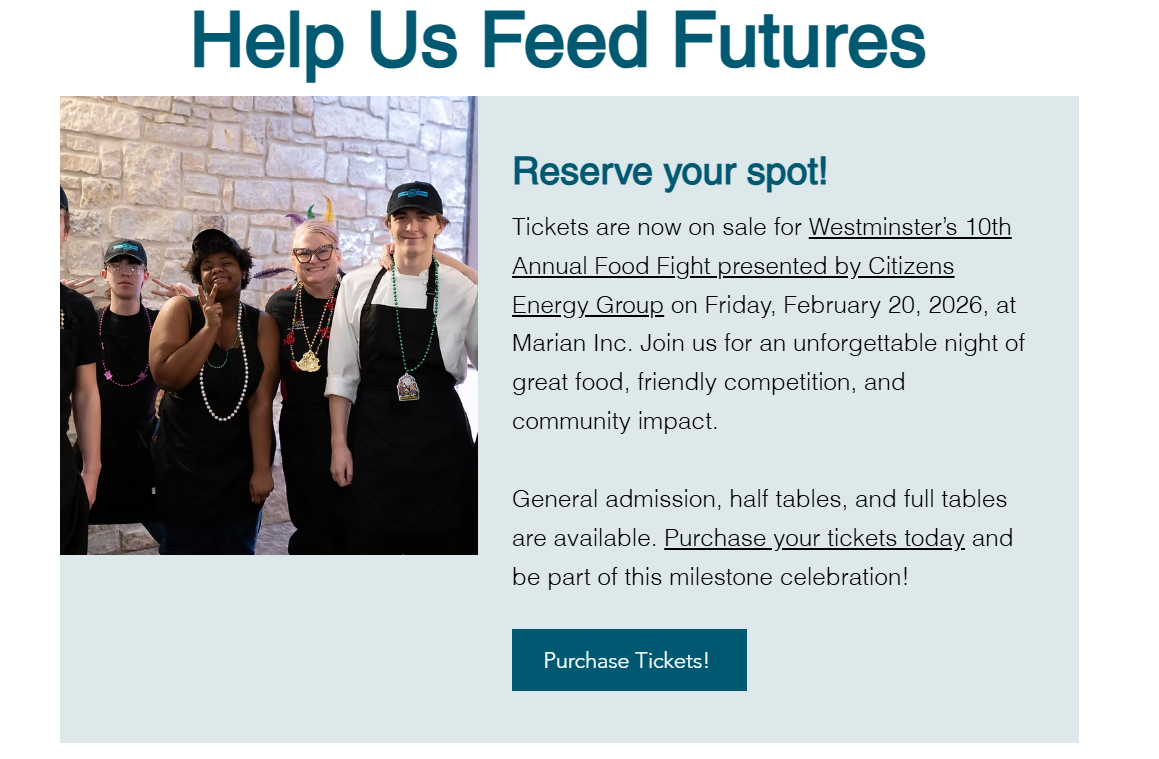
Westminster's Food Fight is a competitive, community-wide food and fund drive that elevates a straightforward donation campaign into a fun event. Seeing exactly where contributions go keeps people engaged, and the competitive format naturally encourages participation without heavy supervision or involvement.
This format is quite adaptable: any organization with internal teams or departments can run a version of this.
You could also play around with a number of budget-friendly additions to create buzz - a leaderboard, a small prize for the winning team, or even just a deadline.
Announce the mission, set the competition, the deadline, and let peer pressure do the rest.
A car wash is a quick, low-cost way to raise money while engaging your community. It works because people enjoy supporting a visible effort.
All you need for this is a weekend, a car park, a hose, and a group of enthusiastic volunteers. Charge a flat fee per vehicle or accept donations. This works particularly well for school sports teams, student clubs and local communities.
Movie nights are a simple, repeatable way to fundraise while giving your community a fun experience. Outdoor screenings or themed nights can tie into your mission and draw larger crowds. Rent a projector, pick a movie everyone loves, and sell some snacks. It’s a classic fundraiser format that’s easy to theme around your mission, plus, an outdoor summer screening is always a hit.
A secondhand sale turns donated items into fundraising revenue while emphasizing sustainability, an idea that resonates strongly with younger donors. Host a pop-up market with items donated by your community. It’s a great way to lean into sustainability, a big win with younger donors, and while it takes a bit more legwork, the proceeds are usually well worth the effort.
Virtual fundraising is the go-to for those trying to reach donors who cannot show up to an in-person event.
Tap into the power of online communities by letting supporters give while engaging with content in real time. This approach works especially well for younger audiences and alumni networks who are active on streaming platforms.

St. Jude PLAY LIVE has raised more than $75 million through one of the most distinctive virtual fundraising models out there: gamers and content creators livestream themselves playing while their audiences donate in real time to St. Jude Children's Research Hospital.
When streamers bridge a cause with their content, their communities naturally show up. By letting viewers pay to trigger challenges or vote on what happens next, donation becomes an interactive part of the show.
To set up a similar campaign, create a dedicated fundraising page, recruit enthusiastic streamers or content creators, define a clear goal, and build in real-time incentives to keep donors engaged.
Transform a standard giving day into an immersive, all-day virtual experience that energizes your community and encourages frequent, small donations. This format works because it makes giving visible and fun, sparking friendly competition and community pride.
Because it’s entirely virtual, anyone can participate from anywhere, making it easy for alumni and supporters worldwide to join in.
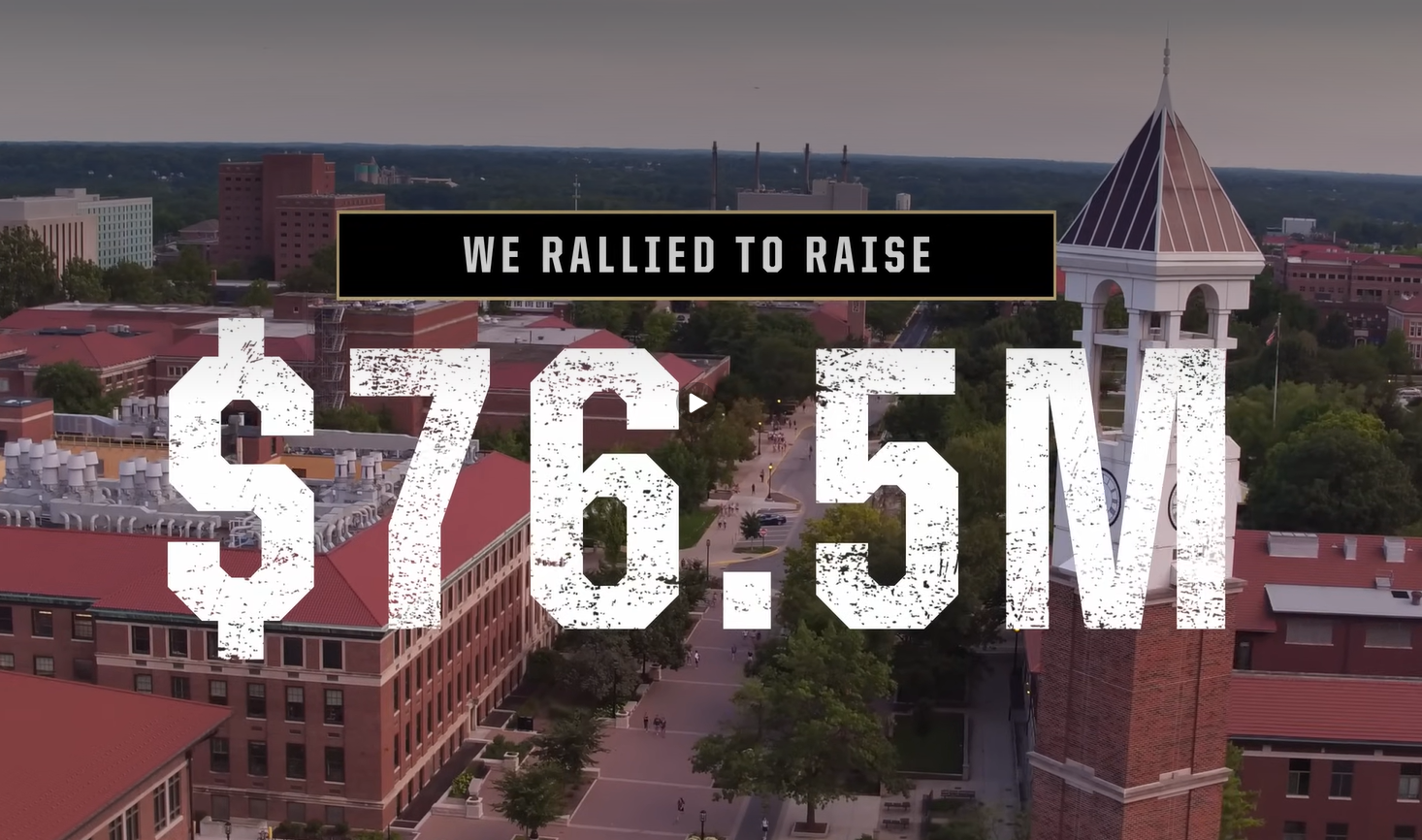
Purdue University has turned the traditional giving day into a global digital event, raising a staggering $76.5 million in just 24 hours during their 2024 campaign. It shifts the focus from a simple "ask" to an all-day social media celebration. By using live leaderboards and hourly social media challenges like posting photos of pets in Purdue gear, the campaign keeps energy high and participation consistent.
To replicate this, you'll need a dedicated 24-hour window, a "social ambassador" toolkit for your supporters, and a platform that can show real-time progress to create friendly competition and sustain momentum.
A virtual game night is a great way to bring people together without anyone having to leave their couch. Formats like digital Bingo or board game tournaments keep participants engaged while making giving part of the fun.
You can raise funds by charging a small "buy-in" for entry, selling extra Bingo cards, or even letting players pay for "mulligans" and power-ups that help them stay in the game.
Every event hosted by a nonprofit is, in some way, a trust exercise. Donors give money to a cause they believe in, and the event needs to honour that. The best nonprofit fundraisers know how to tell their story.
A gala can be the perfect stage for your mission. Use it as an opportunity to immerse guests in your mission, showing them exactly how their support makes a difference. Blend storytelling, visuals, and strategic moments of impact into the evening to turn donations into a shared experience that inspires both generosity and long-term loyalty.
The 2024 Children's Gala hosted by Sanford Health Foundation exemplifies this approach. Beyond the $1.2 million raised, this event served as the launchpad for the announcement of South Dakota’s first dedicated pediatric emergency department.
The gala also gave donors the chance to witness the change they’re influencing. Guests experienced the daily reality of care: the equipment, the families, the staff. When it was time to make donations, the room knew what the donations would do.
The takeaway here is to build your gala around moments of mission visibility. What you need to achieve this is a venue, a clear messaging around your mission, a paddle raise or live ask element, a smooth check-in and payment system, and ideally a headline announcement or challenge gift to create a moment.
A fun run or walk can be used to achieve more than just getting people to move. It's a way to rally your community around a cause everyone can see and feel. Team-based challenges and multiple distance options make it inclusive, letting anyone participate while giving them a sense of impact.
Miles for Moffitt is a community fitness event that has developed over 20 years with a clear mission. What started as a local running race in Tampa has grown into one of Florida's largest annual charity events. The 20th annual event drew more than 11,000 participants and raised over $1.6 million for cancer research.
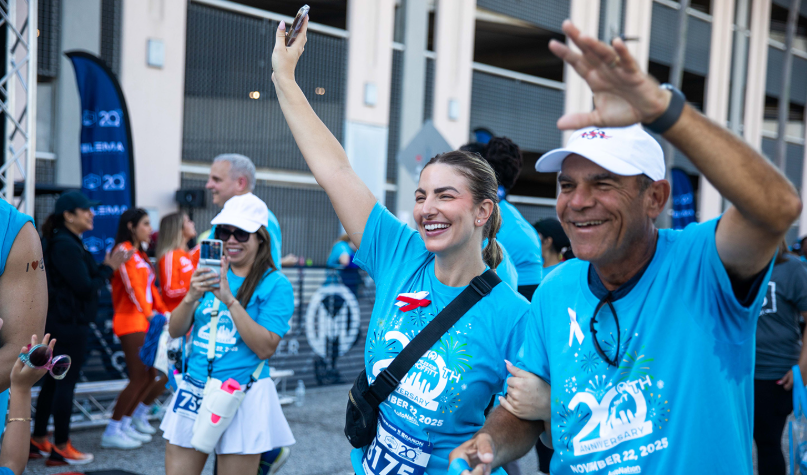
This setup is inclusive by nature. With a 10K, 5K, and even virtual options, anyone can join in, regardless of their fitness level. The peer-to-peer element is what really lets the event scale. Supporters can build their own pages and rally their own networks, turning the fundraiser into a friendly competition to see which team can make the biggest impact.
To bring this to your institution, you’ll need a solid venue, a few distance options, and a reliable peer-to-peer platform to handle registrations. It all comes together with a strong, recurring brand that your community can recognize and look forward to every year.
A fundraising classic, silent auctions almost gamify the giving experience. Guests bid on items or experiences at their own pace, and the competition naturally drives generosity.
Focus on unique or high-interest items like trips, behind-the-scenes access, or themed packages, and make bidding easy and accessible with a mobile platform. Whether paired with a gala or hosted on its own, a well-curated auction keeps energy high and funds flowing.
The final months of the year are a massive window for donations. A themed event or digital campaign makes it easy for supporters to give while riding the wave of end-of-year excitement.
Plan a festive gathering or online push, highlight clear impact goals, and set a hard deadline (like December 31) to inspire action. Add small touches like holiday-themed incentives, ‘thank you’ goodies or shareable content to make participation fun and visible.
This isn’t a fundraiser in the usual sense, but sometimes the best investment is to simply say ‘thank you’.
Bringing your top supporters together to share the real impact of their gifts makes them feel truly valued. Keep it personal and intimate, with stories and visuals that show impact. Whether in person or virtual, make the evening memorable, gather feedback, and reinforce the sense that every gift truly matters. The payoff shows up as long-term loyalty in your next campaign.
Schools and universities enjoy the fundraising advantage of built-in communities with a shared identity. Between alumni nostalgia and student pride, there is already a deep connection. The most successful campaigns lean into this shared identity and friendly competition.
You can sustain and encourage small, regular donations by connecting them to a story or historical milestone. Framing giving as part of a legacy makes donors feel like they’re contributing to something bigger than themselves, and turns it into a tradition.
The Warwick Schools Foundation runs a monthly giving circle called the 914 Society, open to anyone who donates £9.14 or more each month. This figure signifies the year the first school was founded. It's a small detail, but the impact shouldn’t be dismissed; it gives donors a story to tell.
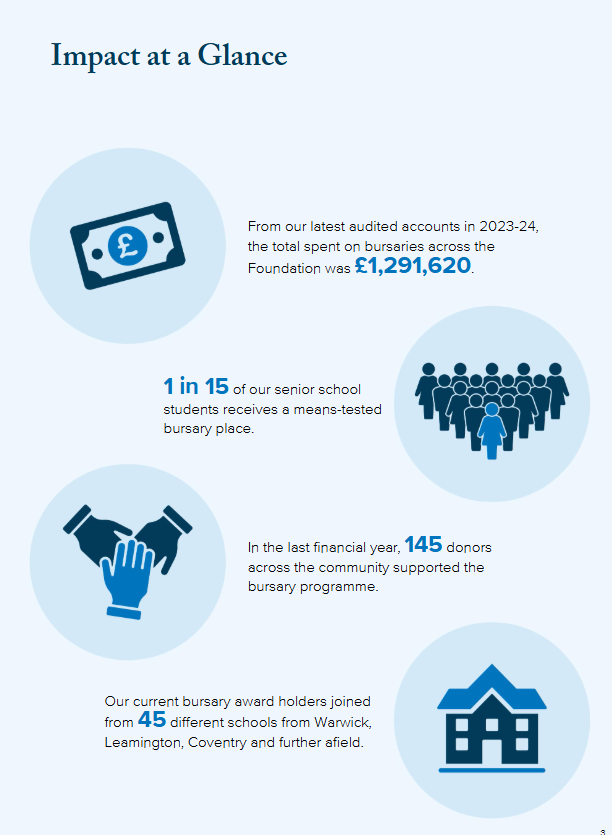
Recurring giving programs perform better when donors feel like a part of the story. A fair price point with a story attached is one of the simplest ways to create that feeling.
All you need to recreate this is a historically significant number, a clear cause to fund (bursaries, scholarships, a specific program), a recurring giving setup on your donation platform, and messaging that frames the gift as part of an ongoing legacy.
Turn your campus into the site for a game that raises funds and makes participation meaningful for your students. As they search for hidden codes and solve challenges, tie each interaction to a donation, turning excitement and curiosity into real support for your cause.
UBC's annual Giving Day has grown into one of Canada's largest university-wide giving campaigns, and in 2025 it added a physical activation on the Okanagan campus that's worth borrowing: a campus-wide scavenger hunt where participants tracked down QR codes hidden across campus, scanned them to answer trivia questions, and unlocked secret code words to redeem for prizes.
Once students are engaged with the event, the donation ask lands in a completely different context.
This format works particularly well as part of a broader giving day. Pair it with team challenges, faculty matching gifts, and a leaderboard, and the physical activity feeds energy into the digital campaign all day.
What you need to pull this off: a giving day or campaign framework to anchor it to, QR code generation (free tools work fine), trivia questions tied to your institution's history, prize sponsors or donated items, and a central HQ point for participants to report to.
Channel the energy of a graduating class into a lasting legacy. Let students have a say in where the gift goes, such as scholarships, equipment, or named spaces, which gives them ownership and pride.
Even if the amount per student is usually small, the collective impact makes the difference.
A carnival turns the campus into a high-energy hub where families and neighbors can connect for an afternoon. The fundraising success comes from a "pay-to-play" model, using a mix of game booth tickets, local food stalls, and raffles, which brings in much more than a simple entry fee would.
A 24-hour giving sprint is a powerful way to rally your alumni around a date that actually matters, like homecoming or your school's founding anniversary. Using live trackers and friendly department competitions keeps the energy high and makes the deadline feel real.
These are your "big swing" formats: signature events that have the potential to define your brand. They require more coordination and a larger team, but the payoff in high-level sponsorship and visibility can work wonders for your fundraising goals.
Turn your fundraising event into a celebration of what your alumni and your institution do best. By letting graduates demonstrate their skills or share their work, you create an experience that feels like a reunion or professional showcase with a donation ask that follows.
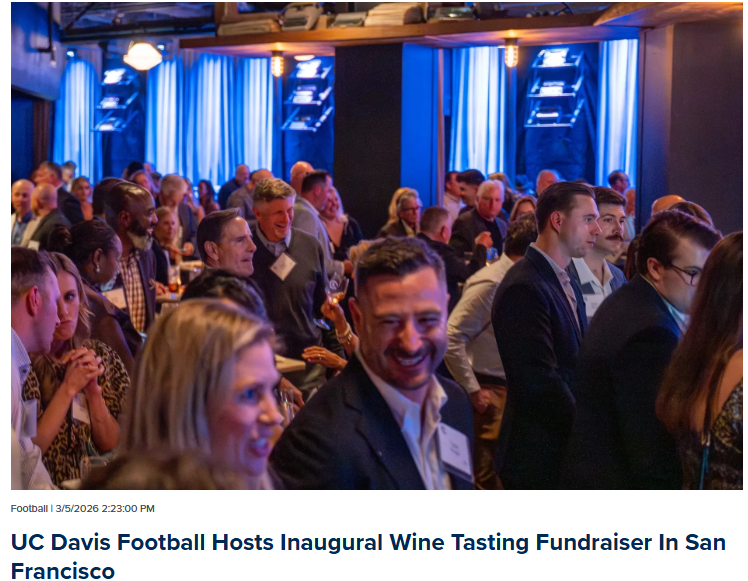
In March 2026, the UC Davis football program in California skipped the usual "meet the coach" dinner and launched an inaugural wine-tasting fundraiser in San Francisco. They invited alumni winemakers to pour their own vintages, turning a donor event into a high-end showcase of what a UC Davis degree can actually produce. The event was a massive hit, raising over $100,000 in a single night. Because the "entertainment" was provided by the alumni themselves, the evening felt more like a professional reunion than an ask.
The takeaway here is to lead with your institution’s "superpower." Whether your school is known for tech, nursing, or the arts, find a way to let your alumni show off their expertise. By keeping the focus on alumni success, you naturally attract donors who value networking and peer-to-peer connection.
What you need to replicate this for your institution: alumni "experts" willing to showcase their work, a venue that fits the theme, and a guest list targeted at mid-to-senior level professionals.
Create a fundraiser that does double duty: supporting your mission while creating networking opportunities for donors, alumni, and local businesses alike. Signature events build momentum and credibility over time, giving participants something to look forward to year after year.
Stockton University’s Golf Classic is proof that a strong tradition can weather any storm. Even a rainy day in 2024 didn't stop 200 golfers, local business owners and faculty, from raising over $105,000 for student scholarships. They topped that the following year by raising $115,000, showing just how much momentum a signature event can build.

The real draw here is the connection: local businesses value networking and visibility, while participants enjoy a consistent, engaging experience that ties directly to student impact.
Once an event becomes a tradition, people look forward to it, so consistency is key. You just need to make sure the networking is worth the ticket price. If you lock in sponsors early to cover the overhead, every dollar raised on the day goes straight to your students or community.
What you need to build your own version of this: A local venue partner, a sponsorship packet for businesses, and a clear "fund-a-need" moment during the post-event lunch or dinner to tie the day back to student impact.
A benefit concert works best when the artist has a real connection to your mission, like an alum, a local band, or even a talented faculty member.
You can layer in ticket sales and merchandise, but a live giving moment in the middle of the set is what draws in the funds. To keep the overhead low, try to land a sponsored venue or a corporate partner before you sign any contracts.
A friendly cooking competition is a warm, comforting setting with the power to bring a community together. Use entry fees for the chefs and "taster" tickets for the guests to keep your budget minimal while the energy stays high. If you can get a local business to sponsor the prize, you’ve got a repeatable event that people will look forward to every year.
A dodgeball tournament or an obstacle course taps into natural rivalries, like faculty versus students or department against department. These competitive formats drive sign-ups on their own, and you can easily add spectator tickets for the crowd.
Give your community a specific number to hit and a clear reason why it matters, like funding one specific scholarship or hitting a 40% participation rate. These targets give your team a clear goal to chase and show donors exactly how much more is needed to get you across the finish line.
Every hurdle between a donor’s decision and their gift costs you support. Stick to one clear CTA, a mobile-friendly page, and a two-minute checkout. If people have to search for the donation link, many will simply give up.
Most events are under-promoted. A six-week head start followed by a final push is the floor, not the ceiling. Word-of-mouth needs time to build, so give your community plenty of room to spread the news.
A match simply doubles every donation, making even a small gift feel like a big deal. It gives donors the satisfaction of knowing their money is doing twice as much work for the cause.
Long lines and tech glitches leave a bad taste that sticks around after your campaign is over. Test the process early and walk your volunteers through the flow so everything is seamless on the day.
Send a note while the energy is still high. A message that shows real impact is your best tool to make those donors come back, year on year.
The dollar amount is only half the story. Tracking new donors and retention rates tells you if your community is actually growing, which is the number that matters most for the future.
The best event is the one your community actually shows up for. Peer-to-peer campaigns, giving days, and events with a social or competitive element such as trivia nights, walk-a-thons, team challenges, scavenger hunts, tend to perform consistently well across the board.
High-ticket galas, golf tournaments, and large-scale peer-to-peer campaigns tend to raise the most. But they also carry the most overhead and planning time. For most teams, a well-run giving day tied to a strong matching gift will work just as well, and it's easier to repeat year on year.
Trivia nights, 50/50 raffles, bake sales, and virtual walks are all manageable with a small crew and a limited budget. If you're working in a school or university setting, incentive-based models tend to drive strong participation without requiring much overhead.
Online auctions, peer-to-peer livestream campaigns, virtual walks, and gameshow-style trivia nights all translate well to a digital format. The key is building in enough social energy to recreate the momentum of an in-person event.
Fun runs, senior giving campaigns, talent shows, and alumni giving days all have strong track records in school and university settings. Incentive-based models and peer-to-peer team competitions tend to drive higher participation than a straight donation ask.
Galas, community walks, and service-based fundraisers like shoe drives consistently perform well. The common thread in the strongest nonprofit events is that the mission stays visible throughout.
Coming up with a great fundraising event is just the start. Getting people to register, donate, and come back year after year is the true measure of a successful campaign. That’s where the right tools make all the difference.
Almabase brings together everything your team usually has to juggle across different systems: event management, online giving, donor engagement, and reporting. You can build giving pages for each campaign, handle registrations, and send targeted emails, all in one place.
For giving days and alumni campaigns, having everything connected means less time on manual admin and more time focusing on the parts of fundraising that actually need a human touch. You can see who participated, which donors are giving for the first time, and how each campaign performed. Having all this information in one place helps your team understand engagement patterns, identify what works, and plan stronger fundraising efforts.
If your team is running events across a patchwork of tools, a lot of effort doesn’t add up. Almabase is built to make it all stick.
Want to see how it all comes together for your next fundraiser? Request a demo today.

28 Fundraising Event Ideas That Drive Donations and Giving
Looking for fundraising event ideas in 2026? We've compiled 28 creative ideas for different causes, budgets, and event types to help you plan your next event.
Events
Anwesha Kiran
March 31, 2026
12 minutes
Not long ago, Giving Days were simple.
They were calendar events.
They were email-heavy.
But in 2026, Giving Days have become something else entirely.
Today, Giving Days connect fundraising, engagement, and community-building in a giving world that is more complex, focused on fewer donors, and driven by relationships than ever before.
In partnership with CASE, we surveyed 150+ colleges, universities, and independent schools to understand how Giving Days are evolving and what advancement teams are doing differently in response to today’s realities.
What we found was not just a set of tactical changes but a deeper strategic shift. Giving Days are no longer treated as standalone fundraising events. They are becoming central to how institutions engage communities, rebuild donor pipelines, and sustain philanthropy over time.
Across education and the nonprofit sector, giving is holding steady. Institutions are raising meaningful support, major gifts are increasing, and global giving remains strong.
In the UK and Ireland, institutions secured £1.52 billion in new commitments, an increase over the previous year. Australia and New Zealand have also seen steady growth over the past five years. In the U.S., independent schools raised $2.82 billion in 2024, with parents and guardians contributing a quarter or more of total funds.
At the same time, a quieter challenge remains: fewer people are taking part.
Data from the Fundraising Effectiveness Project shows that the sharpest drop is happening among the small-dollar donors.
This tension of more dollars and fewer donors is the context in which Giving Days are being reimagined.
Giving Days used to focus mainly on alumni. Messages relied on shared memories, school pride, and the idea of “giving back”.
Today, donors are more diverse. Parents, families, foundations, donor-advised funds, faculty, staff, students, and community members all play a bigger role.
As a result, institutions are turning Giving Days from alumni-only campaigns into events for the whole community.
The question has shifted from “How do we get alumni to give today?” to:
By including more people, Giving Days are becoming open entry points, not exclusive events.
One clear takeaway from the CASE data is that institutions are changing how they define success.
When asked what drives their Giving Day:
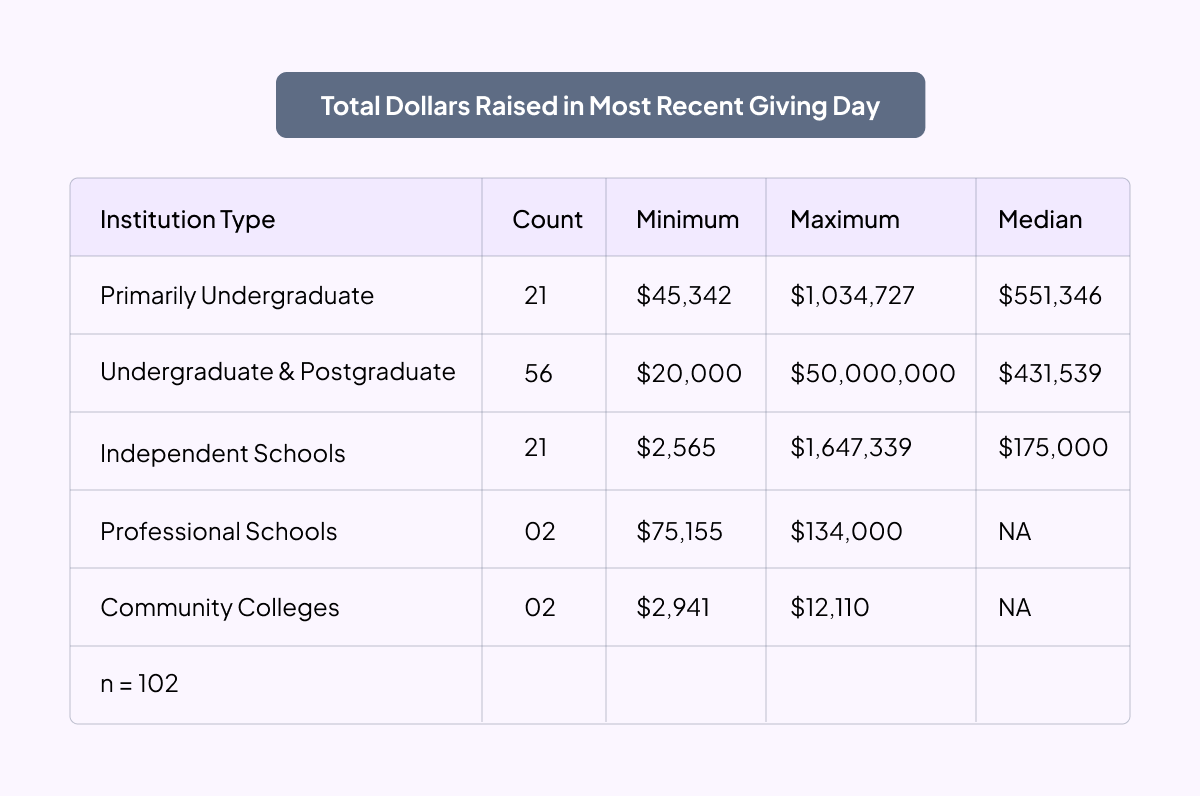
Giving Days now account for a meaningful share of annual fundraising:
In short: Giving Days can do what traditional campaigns often can’t. They make it easy for lots of people to participate.
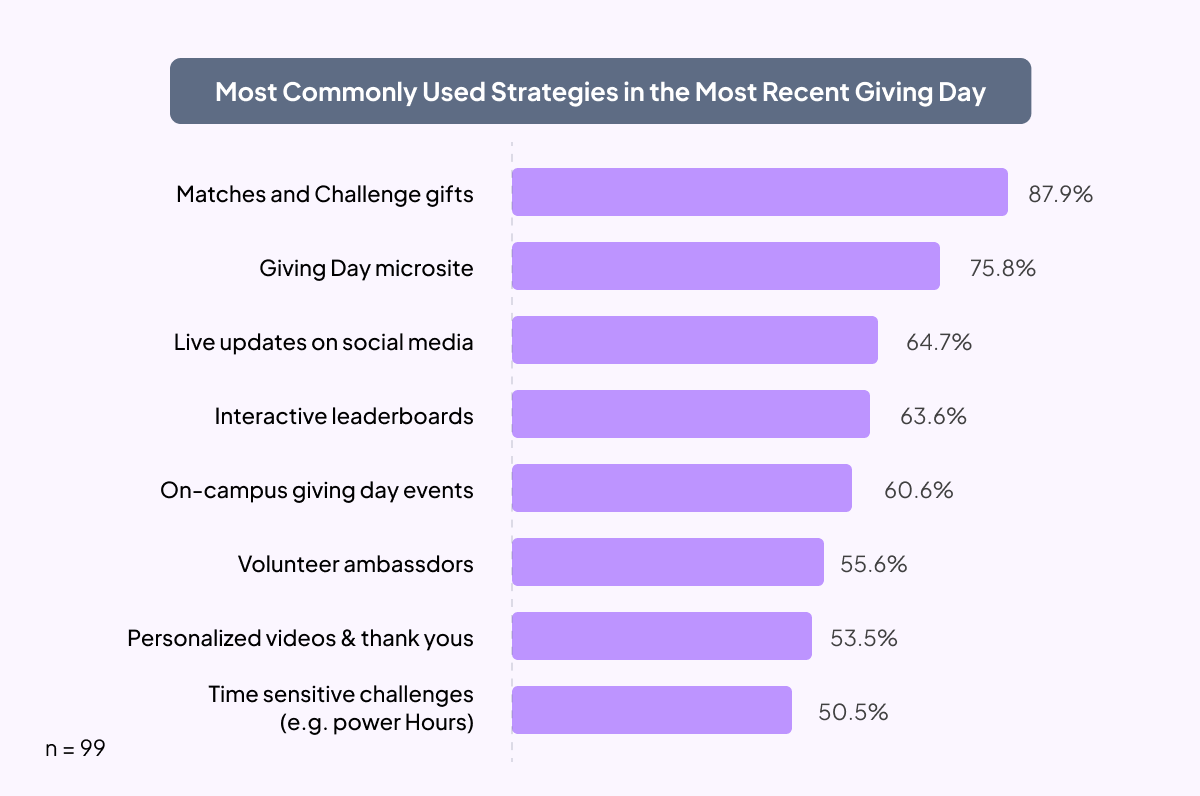
As Giving Days grow, institutions are using smarter strategies.
Digital tools are key:
But Giving Days aren’t just online.
The goal is to make Giving Day feel personal, celebratory, and human, so donors can see themselves as part of the story.
One of the biggest changes is how institutions measure success.
Instead of just looking at total dollars, most now track:
Looking ahead, many plan to track even more: retention, donor upgrades, gifts from ambassadors, leadership giving, and which email subject lines work best.
The takeaway: Giving Days are no longer just experiments. They are data-driven opportunities to learn and grow the donor base year after year.
Looking at the bigger picture, Giving Days in 2025 tell an important story about philanthropy.
They show how institutions are responding to fewer donors, but not by inviting everyone to take part. They show a focus on engagement as a long-term goal, rather than chasing quick spikes in donations.
Most importantly, they reveal a change in mindset:
Colleges and universities doing Giving Days differently understand this. They aren’t just raising money; they are building a culture of giving, one person and one Giving Day at a time.

Giving Days in 2026: What 150+ Institutions Are Doing Differently Now
In partnership with CASE, we surveyed 150+ institutions to understand how Giving Days are changing in 2026.
Fundraising

Sanna Bara
March 31, 2026
12 minutes
If you’ve run fundraising campaigns, you know that email is crucial for sending reminders, continuing donor conversations, and broadcasting updates. And yet, writing those emails over and over again isn’t always easy. Keeping them clear, relevant, and worth opening without slipping into repetition can be annoying and time consuming. That’s where having fundraising email templates starts to help by giving you an easy to follow starting point.
We’re bringing you 10 practical templates you can use across different scenarios with alumni fundraising examples. Along the way, we’ll also look at best practices that can improve open rates and responses without adding more complexity to your workflow, and get results.
Even with the rise of social media, texting, and peer-to-peer apps, email continues to be one of the most reliable ways to reach and inspire donors. Alumni may scroll past a post or miss a text, but emails land in their inbox and give them space to read, reflect, and act. Its strength lies in:
To help you get started, here are 10 fundraising email templates you can adapt across different campaign scenarios, depending on who you’re writing to and when you’re reaching out.
This usually goes out at the start of your annual fund campaign or early in the cycle when you’re setting the tone. A good donation request email at this stage keeps it simple and gets the campaign moving. A clear ask, a quick line on where the money goes, and a direct link to give.
What makes this email work is its simplicity. There’s no competing message, no urgency to explain everything. It gives the reader just enough context to understand where their contribution goes and lets them decide without friction. That clarity is what drives early participation.
Hi [First Name]
Each year, alumni support plays a crucial role in sustaining student experiences across [Institution Name]
This year, the Annual Fund is focused on supporting [scholarships / student initiatives / a specific area] where consistent funding makes a difference
If this is something you’d like to be part of, you can make your gift here
[CTA: Make your gift]
Every contribution helps keep this moving forward
Warm regards
[Name]
This goes out on D-Day itself or in the final lead-up, when momentum matters. What works here is showing that something is already happening; people are giving, progress is moving, and there’s a shared push.
What makes this effective is the timing and the momentum. People are more likely to act when they see others already participating and when the window to join is short. The email works because it feels current rather than planned.
Hi [First Name]
Giving Day is underway at [Institution Name], and we’re already seeing strong participation from alumni across batches
Today’s support is going toward [specific area scholarships student programs a named initiative], and the early response has helped us reach [progress update if available]
There’s still time to be part of this
You can make your gift here
[CTA: Give now]
We’re working toward [goal] before the day ends, and every contribution helps carry this forward
Thanks for being part of the community
[Name]
This goes out in the lead-up to a reunion, often alongside event communication or just after registrations open. At this point, alumni are already thinking about their time on campus, their batch, and whether they’ll show up.
What makes this work is the shift from an individual ask to a collective moment. Reunion emails that perform well usually do three things: remind alumni of a shared experience, show that others are already participating, and position the gift as part of marking the milestone.
Hi [First Name]
With our [X] year reunion coming up, this has been a good moment to look back at what [Institution Name] has meant to all of us
A lot has changed since then, but the one thing that stays consistent is how each batch shows up during reunion year
Many in the Class of [year] have already contributed toward this year’s class gift supporting [specific area scholarships, programs, etc.]
You can take a look at where things stand and add your name here.
[CTA: Give to your class gift]
It’s a simple way to be part of this year as a batch
Hope to see you at the reunion
[Name]
This goes out to alumni who haven’t given before. It works well after an event, a recent touchpoint, or as part of an early-stage campaign when you’re reaching out to first-time prospects. You’re not asking for a big commitment here, just opening the door.
What makes this effective is how it lowers the barrier. Instead of positioning it as a donation decision, it frames it as a first step. Clear, simple, and easy to act on.
Hi [First Name]
Many alumni choose to stay connected in different ways, and for some, that starts with a first contribution. For [years/months], we’ve been dedicated to [briefly describe your mission], and with your help, we can continue to make a real impact.
If you’ve been considering it, this is a simple way to get involved. As a first-time donor, your contribution of just [amount] can help us [specific impact, such as provide meals, fund a project, etc.]. Your support is critical to our work, and we would be honored to have you join us in our mission. We look forward to having you as part of our team and making a difference together.
Making your first donation is easy- simply click here: [Link to donation page]
Thank you for your consideration
[Name]
This goes out when someone hasn’t given in a while. The tone needs to feel like a continuation, not a fresh ask. Start with what they’ve already done, bring in what’s changed since, and then open the door again. That’s usually enough to restart the conversation.
It works because it reminds them of a decision they’ve already made. You’re not introducing the institution or the cause again. You’re reconnecting them to something they were part of and showing where it has moved since.
Hi [First Name]
It’s been some time since your last contribution, but your past support has made a real difference.
It helped [specific impact scholarships program students], and that continues to carry forward.
Since then, we’ve seen [one update or change tied to the same area]
Sharing this in case you’d like to be part of what comes next.
You can take a look here
[CTA: Give again]
Thank you for the role you’ve already played
[Name]
This works well when you want to bring the focus back to students. It can go out mid-campaign or alongside broader fundraising emails when you want to make the impact more visible and immediate.
What helps here is staying close to one story or one outcome. Instead of listing everything scholarships support, narrowing it down to a single student experience or moment makes the ask easier to connect with.
Hi [First Name]
This year, students at [Institution Name] are continuing their education with support that comes directly from alumni
For many, scholarships are what make it possible to stay on track and take part fully in campus life. One student recently shared how this support helped them [brief specific moment or outcome]
If you’d like to be part of this, you can contribute here
[CTA: Support scholarships]
Your support goes directly toward students who need it most
Warm regards
[Name]
This goes out within 24-48 hours after the event. At this point, people still remember specific moments. It could be something a speaker said, a student interaction, a conversation that turned into an actionable item. That’s what you build from.
What tends to work is picking one concrete moment or takeaway and extending it. When the email reconnects them to something they experienced, you can open multiple next steps: staying involved, attending future events, mentoring, or giving.
Hi [First Name]
Thank you for being part of [event name]
One moment that stayed with many of us was when [specific reference to a student story, a line from a speaker, a moment in the event]
That piece of the conversation is already shaping how we’re taking this work forward, especially around [specific scholarships/ programs/ initiatives discussed at the event]
If that resonated with you, there are a few ways to take it forward-
[CTA 1: Stay involved / Join the community]
[CTA 2: Attend upcoming events / Volunteer / Mentor]
[CTA 3: Support this work]
It was good to have you in the room and part of that conversation.
[Name]
This works when you have a confirmed match in place and a clear window to communicate it. It can go out as a standalone email or as part of a broader campaign.
What makes this effective is the multiplier. People respond differently when they know their contribution will be doubled or matched against a goal. The email works when that’s made clear early, along with how much of the match is already claimed and what’s left.
Hi [First Name]
A matching contribution has been set up for [specific area scholarships programs initiative], which means every gift made right now will be matched
So far, [progress update if available eg X% of the match has been claimed], and support is already moving toward [specific outcome or area]
If you’ve been considering a contribution, this is a good moment to make it count twice. The match is available until [deadline or condition].
You can take part here
[CTA: Double your impact]
Thank you for continuing to support [MISSION] and for being part of our journey!
[Name]
This goes out in the final stretch of the year when people are already closing things out. A quick recap of the year, notes on what’s being carried forward, and a simple next step is enough.
It works because it aligns with timing. There’s a natural pause at year-end where people take stock and act on things they’ve been putting off. When your emails reflect that moment and give the alumni a nudge, it yields better results.
Hi [First Name]
As the year comes to a close, this is a quick note to share where things stand
This year, alumni support has helped move [scholarship results, student initiatives, campaign outcomes/results] forward in a steady way
(Include stats of year-end goals - Our goal is to raise [$ AMOUNT] by Dec 31. Your donation will help ensure we can [OUTCOME]. We’re so grateful that you continue to stand up for [MISSION]. )
You can take a moment to contribute here.
[CTA: Give before year-end]
We are thankful for your support throughout the year.
[Name]
This works best a few weeks or a month after a campaign, when you have something real to point to. It’s not a thank-you, not a soft ask, but rather just an update that closes the loop.
What tends to hold attention here is detail. By providing the impact, you give concrete evidence that a donor can picture: where the support showed up, who it reached, and what changed because of it.
Hi [First Name]
Over the past few months, a lot of what was set in motion earlier this year has started to take shape on campus.
Support from alumni has been going directly into [specific area scholarships, lab upgrades, student programs, etc.], and that’s already visible in a few ways.
[Example 1: one clear outcome, e.g., X students received support this term or a specific facility upgrade]
[Example 2: one more grounded detail, e.g., a program launched or expanded]
[Example 3: One moment that stood out recently was when [short student or campus moment- be specific and visual]
All of these wonderful changes are taking shape because of your contribution. Your generosity brings support to those who need it most and fuels hope in the lives of those we work to serve.
Thank you for being part of this. Want to continue making a difference?
[CTA: Click here to know more]
[Name]
Fundraising emails work best when they guide the reader smoothly from opening the message to taking action. Beyond personalization and segmentation, here are practices that add extra weight and help drive conversions:
For most advancement teams, sending one or two fundraising emails isn’t the problem; it’s keeping up when you need to reach thousands of alumni across different segments, events, and campaigns. Emails quickly become generic, and alumni tune out. To avoid this, it’s necessary to scale, as it lets you maintain that personal touch while expanding your reach without overwhelming your staff. Let’s take a look at some practical ways to make that happen for your team:
Platforms like Almabase bring these steps together, helping advancement teams send personalized emails, track engagement, and sync with CRM data. Ready to see how scaling can feel simple? Request a demo and explore smarter email fundraising today.
What makes a good fundraising email?
It’s short, personal, and focused. A clear subject line, a quick impact story, and one strong call-to-action that makes it easy for alumni to read and give without distraction.
How often should I send fundraising emails?
Send 3-4 fundraising emails per semester. Space them out: too frequent, and alumni feel overwhelmed; too rare, and they forget your cause. Balance consistency with respect for their inbox.
How long should the email be?
Stick to 100-150 words, 200 at maximum. Anything longer risks losing attention.
What if someone unsubscribes?
Respect it. But make sure your system doesn’t cut them off from non-fundraising updates like events or volunteer opportunities. Alumni may want a connection without solicitation.
How do I measure success?
Track open rates, click-throughs, and actual donations. Opens tell you if your subject line worked, clicks show interest, and donations prove impact
If you’re trying to start afresh or scale this across campaigns, batches, and donor segments, Almabase is built to take that operational load off, so your team can spend more time on the outreach that actually moves people.
Explore how Almabase supports fundraising outreach across your institution across email and beyond.

10 Fundraising Email Templates to Increase Donations
10 practical fundraising email templates for you to use and adapt for your next fundraising campaign. Cut down on time spent creating email drafts from scratch.
Fundraising

Sharada Koti
March 25, 2026
12 minutes

.svg)