10 practical fundraising email templates for you to use and adapt for your next fundraising campaign. Cut down on time spent creating email drafts from scratch.

Sharada Koti
Published:
March 25, 2026
Updated:
May 8, 2026
Discover AI Summary
• Boost your fundraising email game by leveraging smart scaling techniques like donor segmentation and automated follow-ups; this helps you personalize outreach for thousands of alumni, keeping your team efficient and your CRM data clean.
• Dive into 10 practical email templates tailored for different fundraising scenarios, from annual appeals and giving days to reunion campaigns and thanking first-time donors, saving you time and effort in crafting compelling messages.
• Improve your email open rates and donor responses by crafting strong, specific subject lines and weaving in genuine human stories; these tactics make your appeals more engaging and hard for alumni to ignore.
• Tackle common advancement challenges like re-engaging lapsed donors or effectively following up after an event with proven strategies and template examples; they help continue the conversation naturally.
• Make sure your fundraising campaigns are always improving by tracking key metrics like open rates and donations in real-time; this insight lets you adjust your approach on the fly for better results and more agile fundraising.
If you’ve run fundraising campaigns, you know that email is crucial for sending reminders, continuing donor conversations, and broadcasting updates. And yet, writing those emails over and over again isn’t always easy. Keeping them clear, relevant, and worth opening without slipping into repetition can be annoying and time consuming. That’s where having fundraising email templates starts to help by giving you an easy to follow starting point.
We’re bringing you 10 practical templates you can use across different scenarios with alumni fundraising examples. Along the way, we’ll also look at best practices that can improve open rates and responses without adding more complexity to your workflow, and get results.
Even with the rise of social media, texting, and peer-to-peer apps, email continues to be one of the most reliable ways to reach and inspire donors. Alumni may scroll past a post or miss a text, but emails land in their inbox and give them space to read, reflect, and act. Its strength lies in:
To help you get started, here are 10 fundraising email templates you can adapt across different campaign scenarios, depending on who you’re writing to and when you’re reaching out.
This usually goes out at the start of your annual fund campaign or early in the cycle when you’re setting the tone. A good donation request email at this stage keeps it simple and gets the campaign moving. A clear ask, a quick line on where the money goes, and a direct link to give.
What makes this email work is its simplicity. There’s no competing message, no urgency to explain everything. It gives the reader just enough context to understand where their contribution goes and lets them decide without friction. That clarity is what drives early participation.
Hi [First Name]
Each year, alumni support plays a crucial role in sustaining student experiences across [Institution Name]
This year, the Annual Fund is focused on supporting [scholarships / student initiatives / a specific area] where consistent funding makes a difference
If this is something you’d like to be part of, you can make your gift here
[CTA: Make your gift]
Every contribution helps keep this moving forward
Warm regards
[Name]
This goes out on D-Day itself or in the final lead-up, when momentum matters. What works here is showing that something is already happening; people are giving, progress is moving, and there’s a shared push.
What makes this effective is the timing and the momentum. People are more likely to act when they see others already participating and when the window to join is short. The email works because it feels current rather than planned.
Hi [First Name]
Giving Day is underway at [Institution Name], and we’re already seeing strong participation from alumni across batches
Today’s support is going toward [specific area scholarships student programs a named initiative], and the early response has helped us reach [progress update if available]
There’s still time to be part of this
You can make your gift here
[CTA: Give now]
We’re working toward [goal] before the day ends, and every contribution helps carry this forward
Thanks for being part of the community
[Name]
This goes out in the lead-up to a reunion, often alongside event communication or just after registrations open. At this point, alumni are already thinking about their time on campus, their batch, and whether they’ll show up.
What makes this work is the shift from an individual ask to a collective moment. Reunion emails that perform well usually do three things: remind alumni of a shared experience, show that others are already participating, and position the gift as part of marking the milestone.
Hi [First Name]
With our [X] year reunion coming up, this has been a good moment to look back at what [Institution Name] has meant to all of us
A lot has changed since then, but the one thing that stays consistent is how each batch shows up during reunion year
Many in the Class of [year] have already contributed toward this year’s class gift supporting [specific area scholarships, programs, etc.]
You can take a look at where things stand and add your name here.
[CTA: Give to your class gift]
It’s a simple way to be part of this year as a batch
Hope to see you at the reunion
[Name]
This goes out to alumni who haven’t given before. It works well after an event, a recent touchpoint, or as part of an early-stage campaign when you’re reaching out to first-time prospects. You’re not asking for a big commitment here, just opening the door.
What makes this effective is how it lowers the barrier. Instead of positioning it as a donation decision, it frames it as a first step. Clear, simple, and easy to act on.
Hi [First Name]
Many alumni choose to stay connected in different ways, and for some, that starts with a first contribution. For [years/months], we’ve been dedicated to [briefly describe your mission], and with your help, we can continue to make a real impact.
If you’ve been considering it, this is a simple way to get involved. As a first-time donor, your contribution of just [amount] can help us [specific impact, such as provide meals, fund a project, etc.]. Your support is critical to our work, and we would be honored to have you join us in our mission. We look forward to having you as part of our team and making a difference together.
Making your first donation is easy- simply click here: [Link to donation page]
Thank you for your consideration
[Name]
This goes out when someone hasn’t given in a while. The tone needs to feel like a continuation, not a fresh ask. Start with what they’ve already done, bring in what’s changed since, and then open the door again. That’s usually enough to restart the conversation.
It works because it reminds them of a decision they’ve already made. You’re not introducing the institution or the cause again. You’re reconnecting them to something they were part of and showing where it has moved since.
Hi [First Name]
It’s been some time since your last contribution, but your past support has made a real difference.
It helped [specific impact scholarships program students], and that continues to carry forward.
Since then, we’ve seen [one update or change tied to the same area]
Sharing this in case you’d like to be part of what comes next.
You can take a look here
[CTA: Give again]
Thank you for the role you’ve already played
[Name]
This works well when you want to bring the focus back to students. It can go out mid-campaign or alongside broader fundraising emails when you want to make the impact more visible and immediate.
What helps here is staying close to one story or one outcome. Instead of listing everything scholarships support, narrowing it down to a single student experience or moment makes the ask easier to connect with.
Hi [First Name]
This year, students at [Institution Name] are continuing their education with support that comes directly from alumni
For many, scholarships are what make it possible to stay on track and take part fully in campus life. One student recently shared how this support helped them [brief specific moment or outcome]
If you’d like to be part of this, you can contribute here
[CTA: Support scholarships]
Your support goes directly toward students who need it most
Warm regards
[Name]
This goes out within 24-48 hours after the event. At this point, people still remember specific moments. It could be something a speaker said, a student interaction, a conversation that turned into an actionable item. That’s what you build from.
What tends to work is picking one concrete moment or takeaway and extending it. When the email reconnects them to something they experienced, you can open multiple next steps: staying involved, attending future events, mentoring, or giving.
Hi [First Name]
Thank you for being part of [event name]
One moment that stayed with many of us was when [specific reference to a student story, a line from a speaker, a moment in the event]
That piece of the conversation is already shaping how we’re taking this work forward, especially around [specific scholarships/ programs/ initiatives discussed at the event]
If that resonated with you, there are a few ways to take it forward-
[CTA 1: Stay involved / Join the community]
[CTA 2: Attend upcoming events / Volunteer / Mentor]
[CTA 3: Support this work]
It was good to have you in the room and part of that conversation.
[Name]
This works when you have a confirmed match in place and a clear window to communicate it. It can go out as a standalone email or as part of a broader campaign.
What makes this effective is the multiplier. People respond differently when they know their contribution will be doubled or matched against a goal. The email works when that’s made clear early, along with how much of the match is already claimed and what’s left.
Hi [First Name]
A matching contribution has been set up for [specific area scholarships programs initiative], which means every gift made right now will be matched
So far, [progress update if available eg X% of the match has been claimed], and support is already moving toward [specific outcome or area]
If you’ve been considering a contribution, this is a good moment to make it count twice. The match is available until [deadline or condition].
You can take part here
[CTA: Double your impact]
Thank you for continuing to support [MISSION] and for being part of our journey!
[Name]
This goes out in the final stretch of the year when people are already closing things out. A quick recap of the year, notes on what’s being carried forward, and a simple next step is enough.
It works because it aligns with timing. There’s a natural pause at year-end where people take stock and act on things they’ve been putting off. When your emails reflect that moment and give the alumni a nudge, it yields better results.
Hi [First Name]
As the year comes to a close, this is a quick note to share where things stand
This year, alumni support has helped move [scholarship results, student initiatives, campaign outcomes/results] forward in a steady way
(Include stats of year-end goals - Our goal is to raise [$ AMOUNT] by Dec 31. Your donation will help ensure we can [OUTCOME]. We’re so grateful that you continue to stand up for [MISSION]. )
You can take a moment to contribute here.
[CTA: Give before year-end]
We are thankful for your support throughout the year.
[Name]
This works best a few weeks or a month after a campaign, when you have something real to point to. It’s not a thank-you, not a soft ask, but rather just an update that closes the loop.
What tends to hold attention here is detail. By providing the impact, you give concrete evidence that a donor can picture: where the support showed up, who it reached, and what changed because of it.
Hi [First Name]
Over the past few months, a lot of what was set in motion earlier this year has started to take shape on campus.
Support from alumni has been going directly into [specific area scholarships, lab upgrades, student programs, etc.], and that’s already visible in a few ways.
[Example 1: one clear outcome, e.g., X students received support this term or a specific facility upgrade]
[Example 2: one more grounded detail, e.g., a program launched or expanded]
[Example 3: One moment that stood out recently was when [short student or campus moment- be specific and visual]
All of these wonderful changes are taking shape because of your contribution. Your generosity brings support to those who need it most and fuels hope in the lives of those we work to serve.
Thank you for being part of this. Want to continue making a difference?
[CTA: Click here to know more]
[Name]
Fundraising emails work best when they guide the reader smoothly from opening the message to taking action. Beyond personalization and segmentation, here are practices that add extra weight and help drive conversions:
For most advancement teams, sending one or two fundraising emails isn’t the problem; it’s keeping up when you need to reach thousands of alumni across different segments, events, and campaigns. Emails quickly become generic, and alumni tune out. To avoid this, it’s necessary to scale, as it lets you maintain that personal touch while expanding your reach without overwhelming your staff. Let’s take a look at some practical ways to make that happen for your team:
Platforms like Almabase bring these steps together, helping advancement teams send personalized emails, track engagement, and sync with CRM data. Ready to see how scaling can feel simple? Request a demo and explore smarter email fundraising today.
What makes a good fundraising email?
It’s short, personal, and focused. A clear subject line, a quick impact story, and one strong call-to-action that makes it easy for alumni to read and give without distraction.
How often should I send fundraising emails?
Send 3-4 fundraising emails per semester. Space them out: too frequent, and alumni feel overwhelmed; too rare, and they forget your cause. Balance consistency with respect for their inbox.
How long should the email be?
Stick to 100-150 words, 200 at maximum. Anything longer risks losing attention.
What if someone unsubscribes?
Respect it. But make sure your system doesn’t cut them off from non-fundraising updates like events or volunteer opportunities. Alumni may want a connection without solicitation.
How do I measure success?
Track open rates, click-throughs, and actual donations. Opens tell you if your subject line worked, clicks show interest, and donations prove impact
If you’re trying to start afresh or scale this across campaigns, batches, and donor segments, Almabase is built to take that operational load off, so your team can spend more time on the outreach that actually moves people.
Explore how Almabase supports fundraising outreach across your institution across email and beyond.

Table of Contents
Subscribe
See how modern advancement teams bring alumni engagement and fundraising together.
In 2022 alone, charity golf events at U.S. courses raised an estimated $4.6 billion, with more than 141,000 events held and roughly 80% of all U.S. golf facilities hosting at least one. The average event raised about $29,500, but the ceiling is far higher: a well-structured tournament with the right sponsorship strategy can clear six figures in a single afternoon.
The best golf fundraising ideas however, look different depending on who you are. A K-12 booster club has different assets, different donors, and different cost structures than a hospital foundation courting major-gift prospects, and both look different from a community nonprofit trying to reach a new audience. Below are the ideas that actually work for each, with real examples of organizations putting them into practice.
Healthcare foundations occupy a different fundraising universe. Their donor base often skews into the wealthier and more philanthropic demographic, their cause has obvious emotional weight, and their boards often include physicians and executives who are themselves avid golfers. The events here tend to be larger, more polished, and more sponsorship-heavy.
The flagship model is an annual event hosted by the foundation at a premier course, often featuring physicians and executives as players.
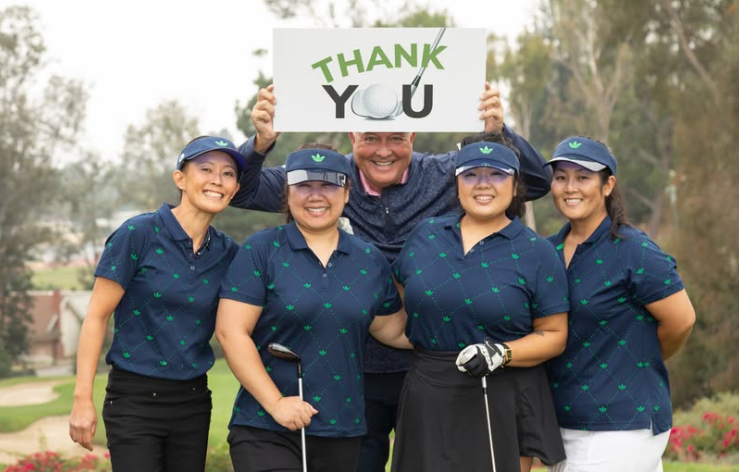
PIH Health Foundation's 2025 golf tournament raised $400,000 to support hospital priorities ranging from medical technology to caregiver support. The Edward Foundation, the fundraising arm of Edward Hospital in Illinois, raised more than $460,000 at its 30th Annual Charity Golf Tournament at Cog Hill Golf & Country Club, with more than 300 golfers contributing through sponsorships, donations, raffles, and games. Since its founding in 1990, that foundation has raised over $57 million for community healthcare initiatives, and the annual golf tournament is a meaningful piece of that total.
These events succeed because they bundle three things: a beautiful course experience, peer recognition (physicians playing alongside major donors), and a clear connection to a hospital service line the donor cares about.
Tying the tournament to a specific disease, program, or population sharpens the emotional pull.
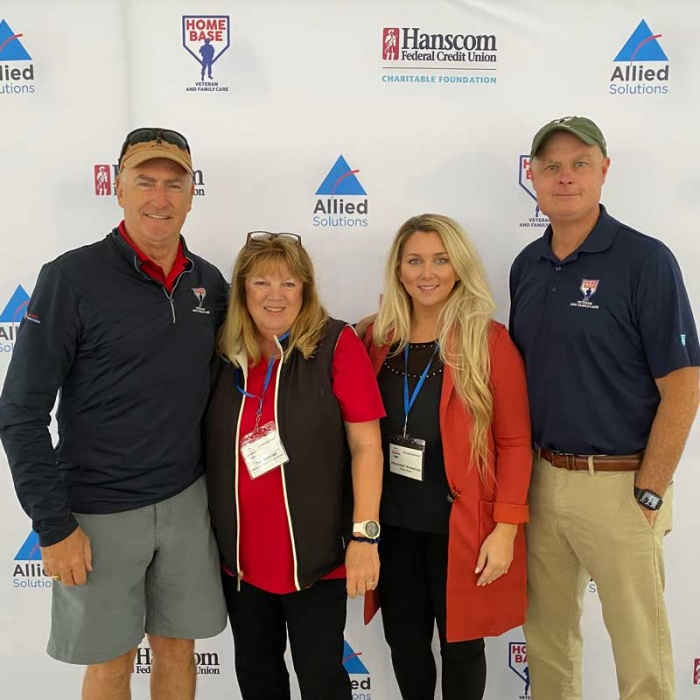
The Hanscom FCU Charitable Foundation's Alan M. Hart Memorial Charity Golf Classic raised $150,000 in a single year for Home Base, a Red Sox Foundation and Mass General Hospital program supporting veterans dealing with the invisible wounds of war. Over time, the tournament has contributed to more than $1.2 million in support for that program.
St. Jude Children's Research Hospital has been the beneficiary of the FedEx St. Jude Championship for more than 50 years, with the event helping raise over $60 million for pediatric cancer and life-threatening disease research.
If your foundation supports multiple service lines, picking one cause per tournament and rotating year by year keeps the storytelling sharp.
A first-ever tournament tied to a specific capital project creates urgency that recurring events lack.
The Seneca Healthcare Foundation in California hosted its inaugural charity golf tournament at Bailey Creek Golf Course and raised more than $85,000 while building awareness for the construction of the new Lake Almanor Community Hospital.
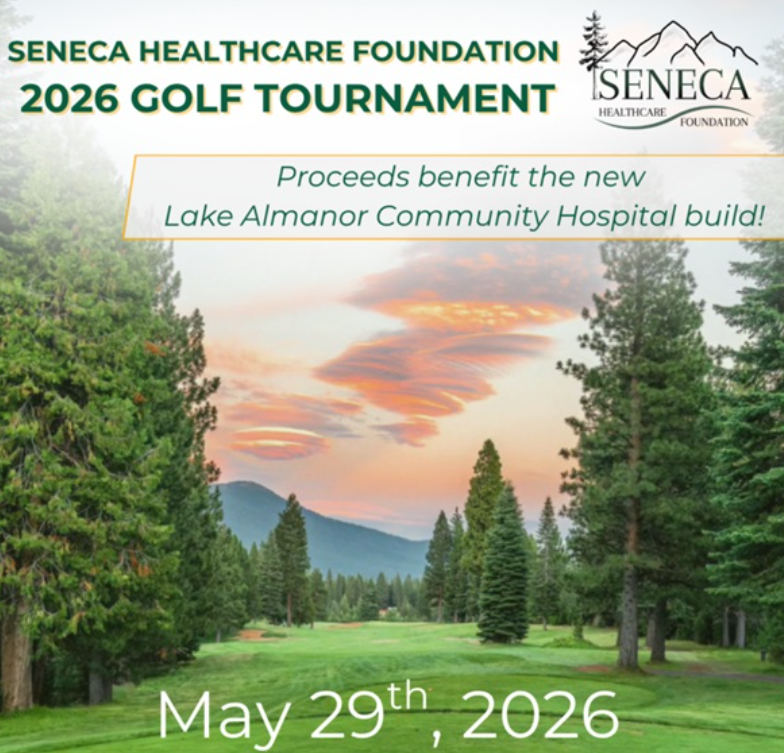
Th event drew over 100 golfers and featured creative touches including a MASH-themed drink station and live stand-up comedy from a group called the Hole Hecklers. Pairing the tournament with a tangible "we're building this" story gives donors something concrete to point to.
For events that already have momentum, layered add-ons are where the real money is. The Edward Foundation's tournament includes a Helicopter Ball Drop in which entrants pay for the chance to have a numbered golf ball dropped from a helicopter and land closest to the flag. Ball drops are particularly effective because they sell to people who aren't golfing, including hospital staff, board members, and community supporters who want to participate without playing 18 holes.
Offering a $10,000 cash prize, a luxury car, or a luxury trip for a hole-in-one creates outsized excitement at relatively low cost. Most foundations partner with a hole-in-one insurance provider to cover the prize, paying a small premium for enormous marketing buzz. Co-sponsoring the prize with a local car dealership turns the sponsorship into a billboard for the dealer at the event.
Schools and universities have one fundraising asset most other organizations would kill for: a built-in, lifelong community of alumni, parents, and boosters who already feel emotionally invested.
The single most reliable model in higher ed is a recurring, branded scholarship tournament that runs every year on the same calendar slot. Take the three below examples:
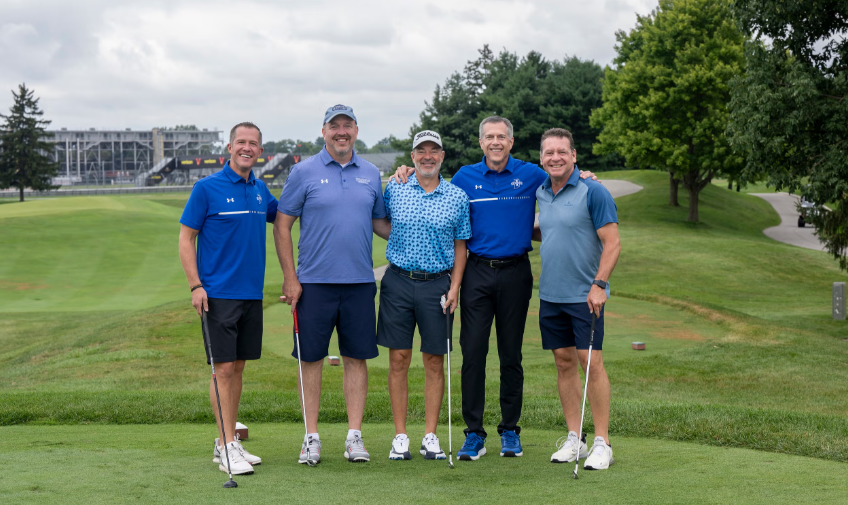
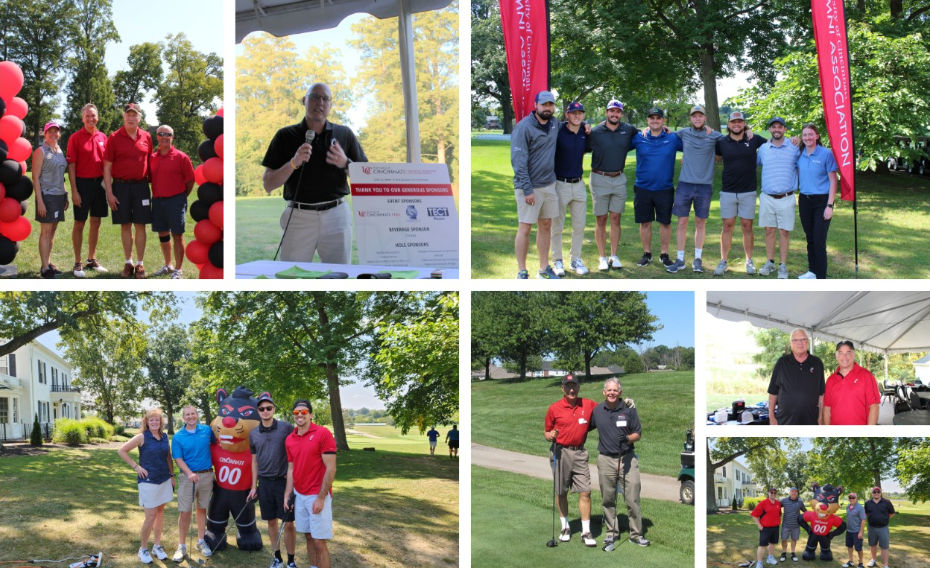
For institutions that have had a rich history of golfing alumni or golf fundraisers in the past, it should be a no brainer. However, the only way tradition gets built is if something gets it started in the first place. So maybe this can be the year where your institution starts to grow that tradition if it already hasn’t?
If your school has lost a beloved coach, professor, or alum, a memorial tournament builds extraordinary loyalty. Freed-Hardeman University's annual tournament honors the legacy of Dr. Cliff Bennett, a 1961 alumnus and former golf coach whose endowed scholarship still supports students. These events draw deeper giving because donors aren't just buying a foursome but also honoring someone who mattered to them.
It also provides a natural storytelling opportunity that builds a strong emotional connection for your next and future golf fundraisers within this frame.
For K-12 and college club teams that don't have a country club or alumni database, one thing you can consider is to sell labor and small experiences.
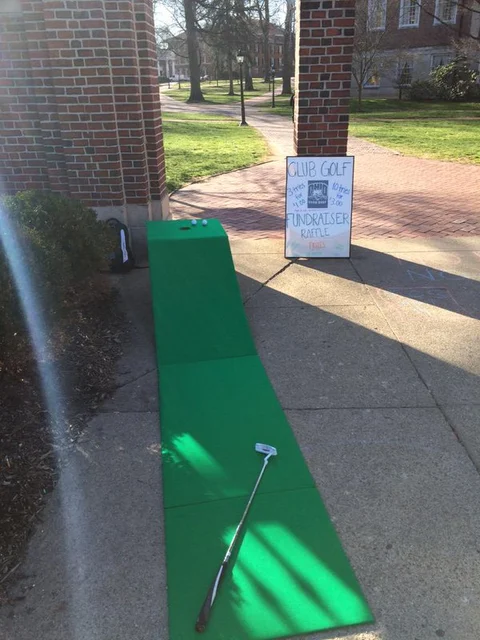
Ohio University's club team brought a putting green carpet to the busy College Green area and sold $1 putts to students for a chance to win a prize.
Similarly, The Citadel's club team works local tournaments in exchange for reduced greens fees and sells mulligans for $1 each on a single hole with the course's permission. These ideas also have the added benefit of almost zero overhead and turn a team into a visible part of campus life.
Smaller, themed tournaments hosted by fraternities, sororities, or specific academic departments can sometimes surprise you and outperform their size.
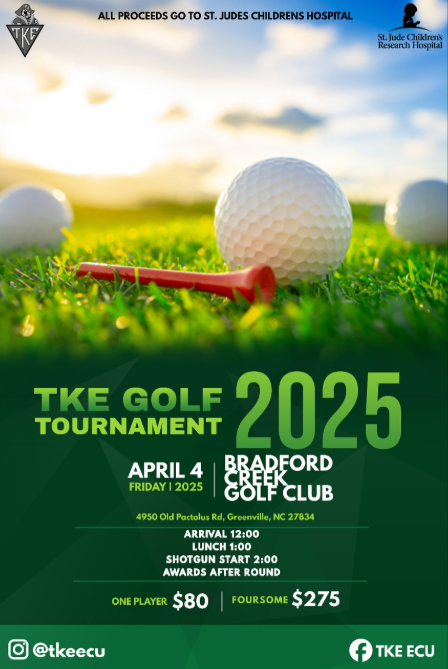
The Tau Kappa Epsilon chapter runs an annual golf tournament to raise funds for St. Jude Children’s Research Hospital. These events benefit from tight-knit communities where attendance feels almost obligatory in the best way.
For schools especially, hole sponsorships are the unsung hero of the budget. Local businesses pay $250 to $1,000 for a sign on a tee box, and parents who own those businesses are an easy first ask. Stacked correctly, sponsorship revenue can easily exceed registration revenue.
Community nonprofits typically have smaller donor lists and tighter budgets than hospital foundations, but they also have more flexibility to experiment. The best ideas in this category lean toward inclusivity (so non-golfers can participate), creativity (so the event is shareable on social media), and modern formats that don't require a 7am tee time at a country club.
The single biggest shift in nonprofit golf fundraising over the past five years has been the move to Topgolf and similar venues. Topgolf events are accessible to people who don't actually play golf, run in 2-3 hour windows instead of full days, and feel more like a party than a tournament.
Avery's Hope, an all-volunteer nonprofit supporting families of pediatric GI patients, hosts an annual Topgolf fundraiser specifically to be more inclusive for patient families and children.

They drive revenue through bay sponsorships, a silent auction, and a raffle.
A glow golf night tournament uses glow-in-the-dark balls, LED-lit flags, and illuminated tee markers across nine holes after sunset.
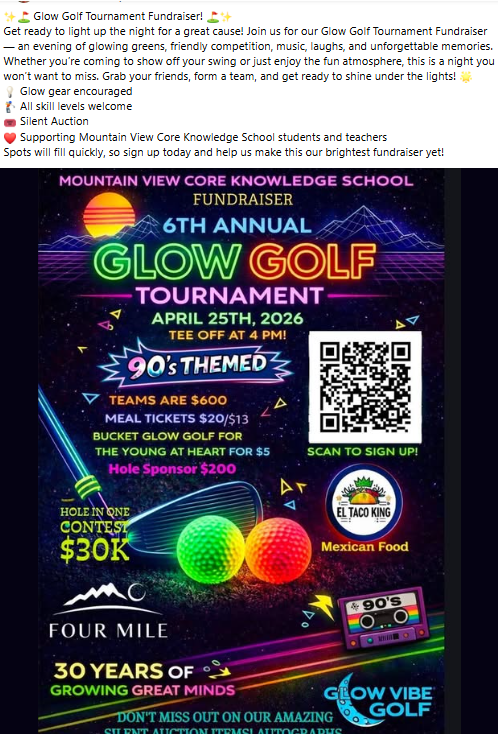
The format is highly photogenic, perfect for social media promotion, and stands out in a market where most prospects have already been invited to half a dozen "traditional" golf scrambles this year. The lower hole count also means a lower entry barrier for casual players.
If your donor base skews younger or has lots of families with kids, a charity mini-golf tournament is a high-yield option. The economics are excellent: course rental is cheap compared to a country club, kids can play, and the whole event runs in an afternoon. This format works especially well for nonprofits serving children, families, or schools.
A golf ball drop doesn't actually require a tournament. Sell numbered balls for $10 to $25 each, drop them from a helicopter or crane over a target, and award prizes to the closest balls. The model is brilliantly simple: supporters who can't golf, won't golf, or live nowhere near the course can still buy a ball and watch the drop on a livestream. Many nonprofits run a ball drop as a low-effort revenue add-on to an existing event.
Indoor golf simulator venues let nonprofits run "tournaments" in November, December, January, and February when outdoor courses are closed in most of the country. Players can compete on famous courses like Pebble Beach or St. Andrews without leaving the building. Because most other nonprofits cluster their fundraising in spring and fall, a winter simulator event lands in a less competitive calendar window for donor attention.
You don't need a full tournament to run a hole-in-one challenge. Some nonprofits set up a single par-3 hole at a community event, charity festival, or even a parking lot driving range and charge $10 to $20 per shot. The prize, again, can be insured for a small premium. It's a strong choice for organizations that want some "golf" energy without the operational complexity of running 18 holes.
For nonprofits already running events, putting contests are an easy revenue layer. Charge $5 per putt at a fundraising gala, festival, or community event with a prize for the longest putt sunk. Operationally simple, instantly fun, and works at almost any venue with 30 feet of flat ground.
Across all three categories, the events that outperform tend to share a few traits.
First, sponsorship is the engine, not the entry fee. A four-person foursome at $600 brings in $600. A title sponsor at $25,000 brings in $25,000. Build a real sponsorship deck with tiered benefits before you ever open registration.
Second, the second year is more important than the first. The most lucrative golf fundraisers in this article are 10th, 20th, and 30th annual events. Therefore, you should be looking to treat year one as the foundation of an institution.
Third, make it easy for non-golfers to participate. Ball drops, raffles, silent auctions, dinner-only tickets, and hole sponsorships all let people give without swinging a club. In most successful events, more than half the revenue comes from these layered components.
Fourth, partner with insurance providers for big prizes. The buzz from a $10,000 hole-in-one prize is wildly disproportionate to the actual insurance premium. Make sure it’s always a consideration.
Finally, pick the format that matches your community. A 70-year-old hospital foundation should not be doing glow golf at midnight, and a 28-year-old founder nonprofit should not be running a stuffy country club tournament for a donor base that mostly lives on Instagram. The best fundraising idea is the one that fits the people you're actually asking.
The greens are waiting. Pick the format that fits, plan for the long game, and you'll be writing your own "raised $400,000" press release soon enough.
Golf fundraisers will likely continue to be an important part of fundraising culture, especially in the US. With their added advantage of flexibility across institutions and nonprofit organizations, they also serve as one of the more flexible options (provided a golf course is geographically practical).
All that said, we hope we’ve given you plenty of ideas for your next (or first) golf fundraiser! And if you are looking for a platform to help you host your fundraiser, engage donors, and raise funds, book a personalized demo with us and we’d love to know how we can help!

15+ Golf Fundraising Ideas for Healthcare, Educational, and Nonprofit Fundraising
If you're planning a charity golf event, we've rounded up 17 fun, creative golf fundraiser ideas bring people together and help your cause raise more.
Healthcare

Almabase
May 29, 2026
12 minutes
A well run reunion event offers a seamless experience to your attendees. They register once, select a few events for the weekend, receive timely reminders, check in and move smoothly from one gathering to the next. From their perspective, the whole thing only takes a few seconds and minimal effort.
Behind the scenes, however, is an enormous amount of coordination happening across teams and timelines.
For smaller gatherings, lightweight event tools may still work perfectly well. But once reunions become larger, multi-event set ups, or tied to broader advancement goals, managing registrations or ticketing is just one cog in the wheel. That’s when many alumni and advancement teams eventually move toward platforms designed specifically for reunion and alumni engagement workflows. In this blog, we’ll break down the platforms best suited for different types of reunion events, team structures, and engagement goals.
Many teams begin with the tools already available internally, like spreadsheets for guest tracking, email platforms for outreach, online forms for RSVPs, and a ticketing platform layered on top to handle payments. And that set up works well for a while too.
Most event platforms are designed to handle transactions: collect registrations, process payments, send confirmation emails. While this works just fine for one-off events, reunions call for something more.
Most advancement and alumni teams are already familiar with the friction points:
Individually, none of these problems are unusual. But together, a combination of any of these issues creates significant overhead. This holds especially true for leaner teams, when the issue becomes even more visible after the event ends. They might find themselves having to spend days cleaning spreadsheets, confirming attendance records, updating CRM systems, and piecing together engagement data that should have been captured automatically.
Reunions are complex and involve long-term alumni relationships, donor engagement, segmented outreach, multi-day programming, and post-event reporting that extends well beyond the weekend itself. They require platforms that will understand the context behind why all this needs to be connected.
For example, knowing that 400 people registered for a reunion is useful. But knowing which classes had the strongest turnout, which former volunteers re-engaged, or which lapsed donors attended for the first time in years is significantly more valuable.
The same applies operationally. Generic platforms often require teams to manage communications, reporting, and CRM updates separately, creating duplicate work across systems that don’t naturally connect to one another.
That’s why many institutions eventually move toward platforms designed specifically for alumni engagement and reunion management. It makes a huge difference to reduce manual coordination, improve data continuity, and make reunions easier to manage as part of a larger alumni strategy.
Milestone reunions sit at the intersection of emotional significance and operational intensity. These are your 10th, 25th, 50th year reunions.
You need class-year segmentation for targeted invitations, multi-day session management, integrated giving pages and CRM sync so reunion attendance feeds your donor records. Here are our recommendations:
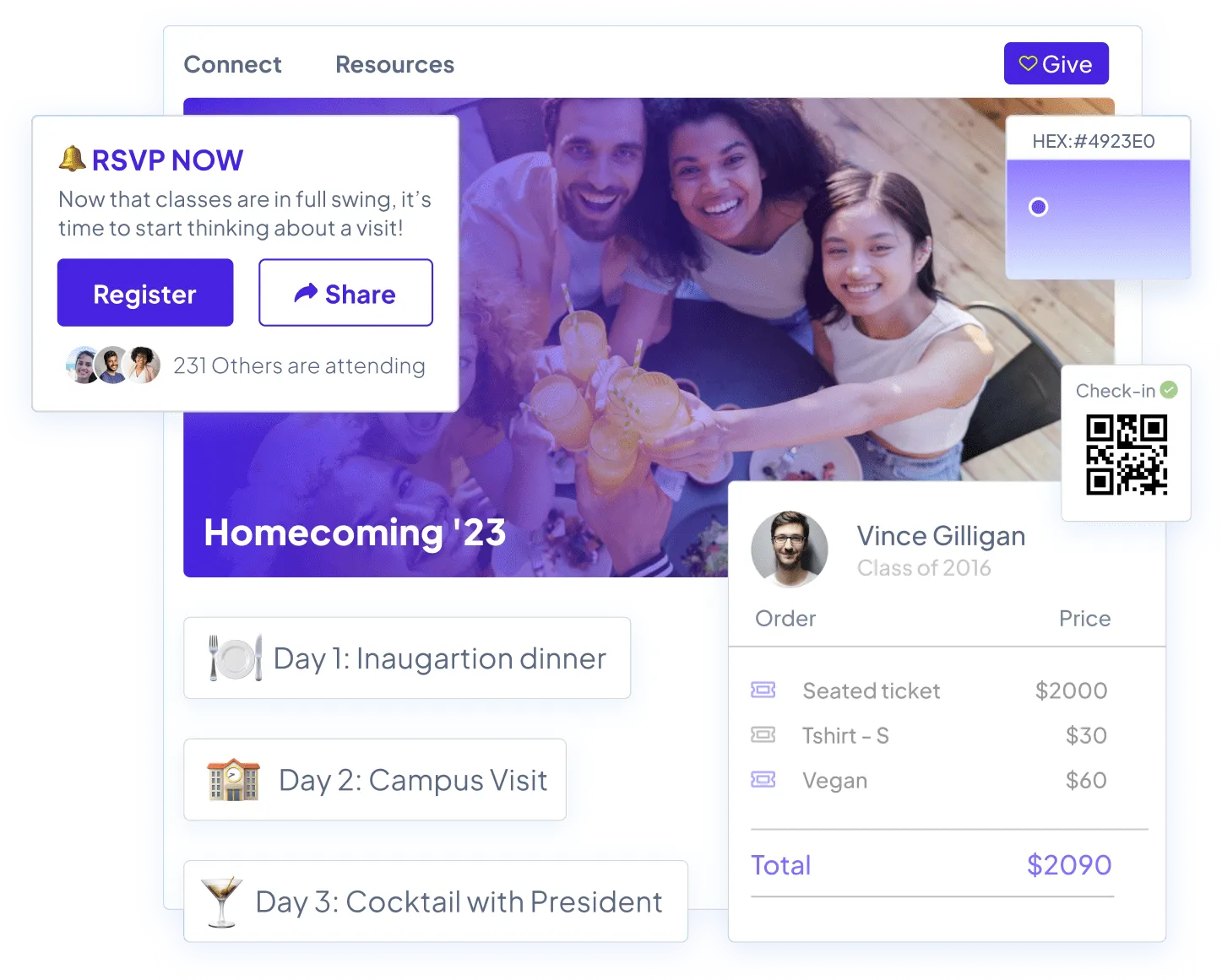
Almabase is particularly well suited for milestone reunions because it brings event management and alumni fundraising into one place. Alumni can sign up for multiple reunion activities, contribute to a class gift campaign, and receive communication tailored to their class year, all within the same experience. On the admin side, QR code check-ins and automatic CRM syncing make it easier to track both attendance and giving, which is especially useful when reunion engagement feeds into long-term donor stewardship efforts. Custom pricing offered.
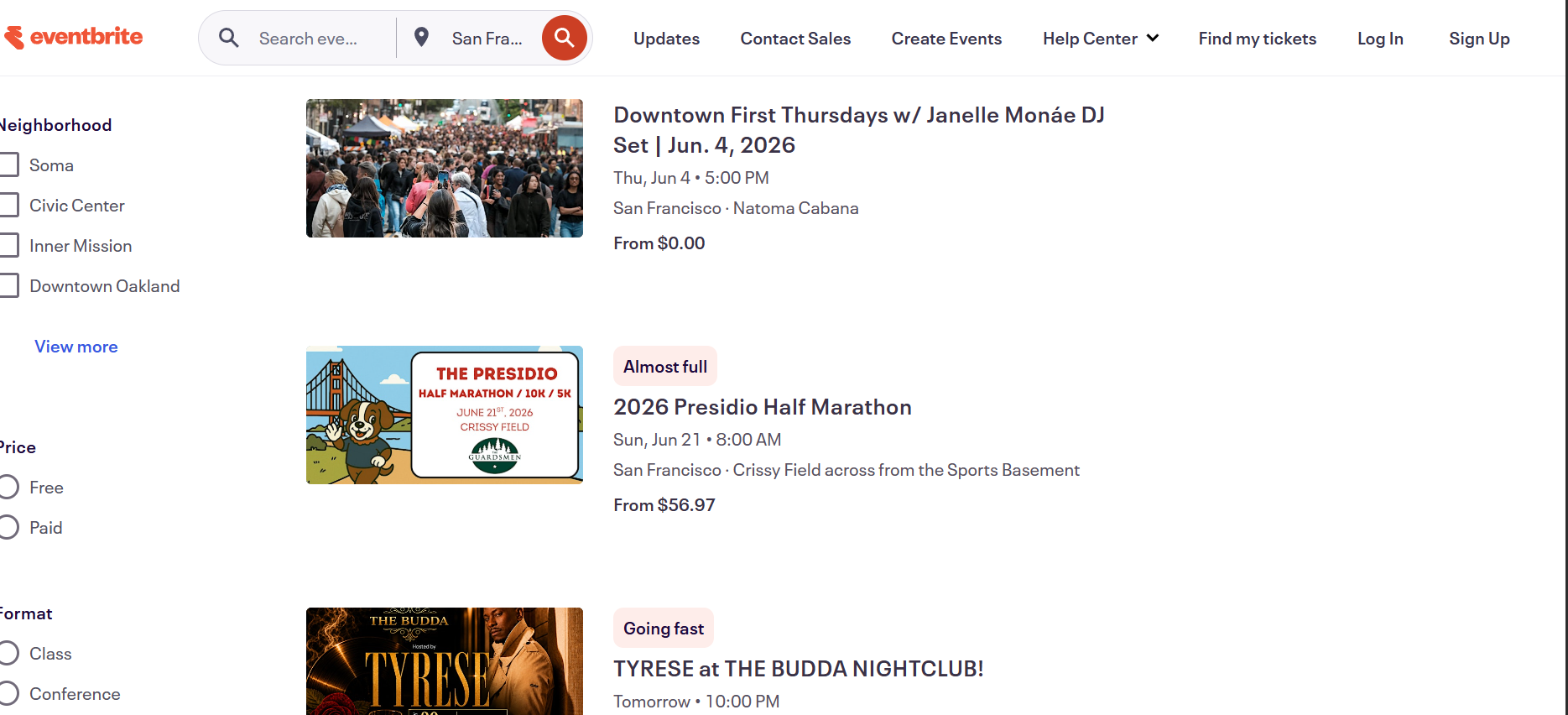
Eventbrite is a practical option for smaller institutions or volunteer-led reunion committees where the goal is mainly registration and payment collection rather than advancement integration. The platform is for free events; and fees apply for paid ticketing, which can be borne by the organizers or passed on to attendees.
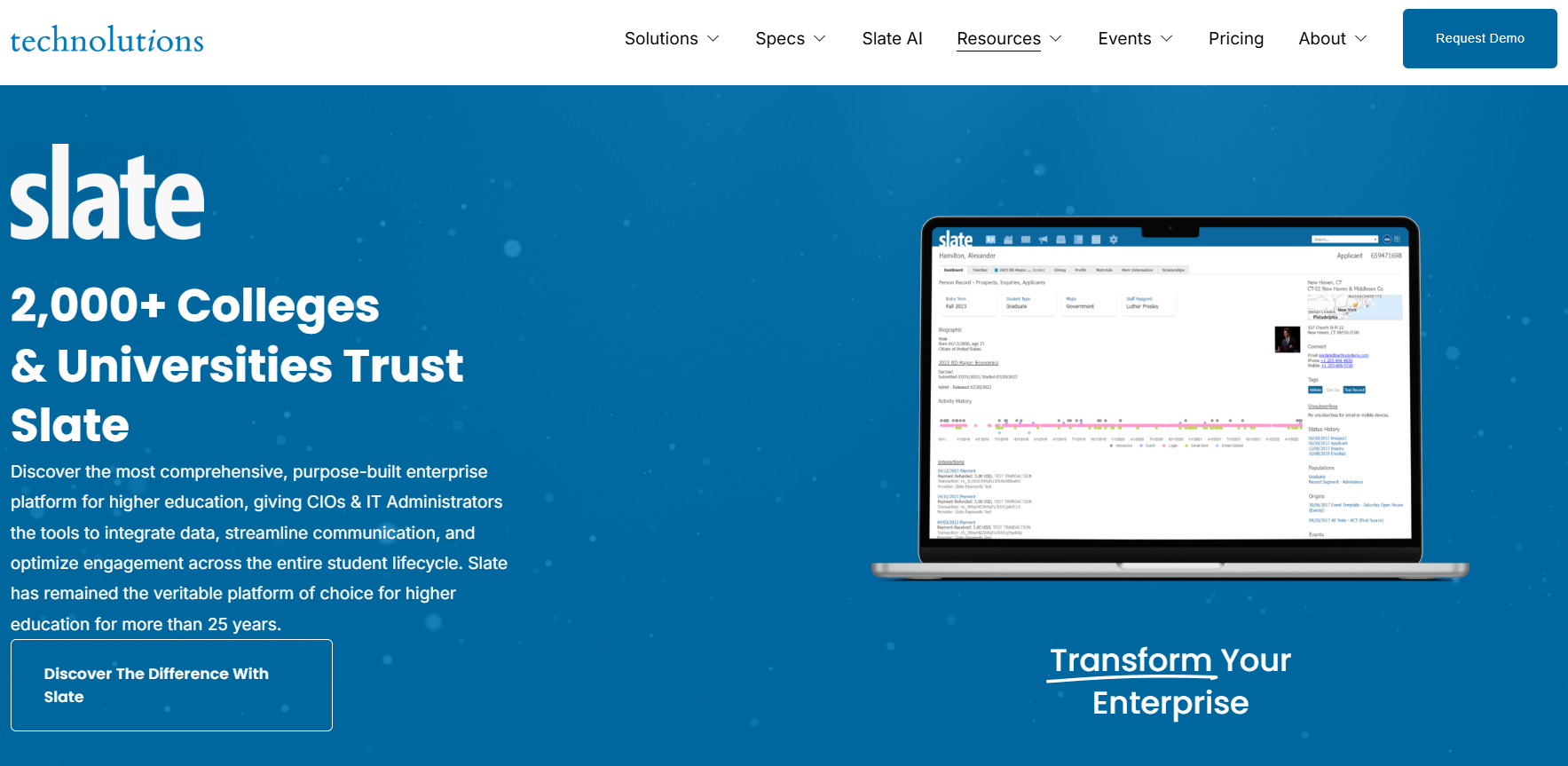
Slate is a unified, enterprise-grade CRM tool built exclusively for educational institutions that manages the entire student-to-alumnus lifecycle within a single database. For institutions already using Slate, reunion data flows natively into existing student-to-alumni records with absolutely no external CRM sync needed. The platform offers heavy-duty fundraising support with dedicated giving portals, customized gift processing, and major gift pipeline management. It’s a great fit for institutions that want a complete ecosystem to bridge admissions, student engagement, and advanced donor stewardship. Base licensing starts at $30,000/year.
Multi-day reunions are a little tricky to coordinate, because they demand seamless coordination across fragmented schedules, multiple venues, and diverse participant needs. Your platform should be able to handle sub-events, inventory management for ticketed activities, provide attendees with scheduling tools so they can build their own agenda, and give organizers visibility into logistics in real time.
Almabase brings event management and multi-day scheduling into one place. This means attendees can sign-up for personalized itineraries across sessions, receive real-time updates about capacity and changes, and organizers track attendance by session and segment. Capacity management, dietary tracking, and tiered pricing (full weekend vs. individual days) are straightforward to configure. Another great feature is the CRM sync which captures which alumni attended which sessions, giving organisers a comprehensive picture of attendance.
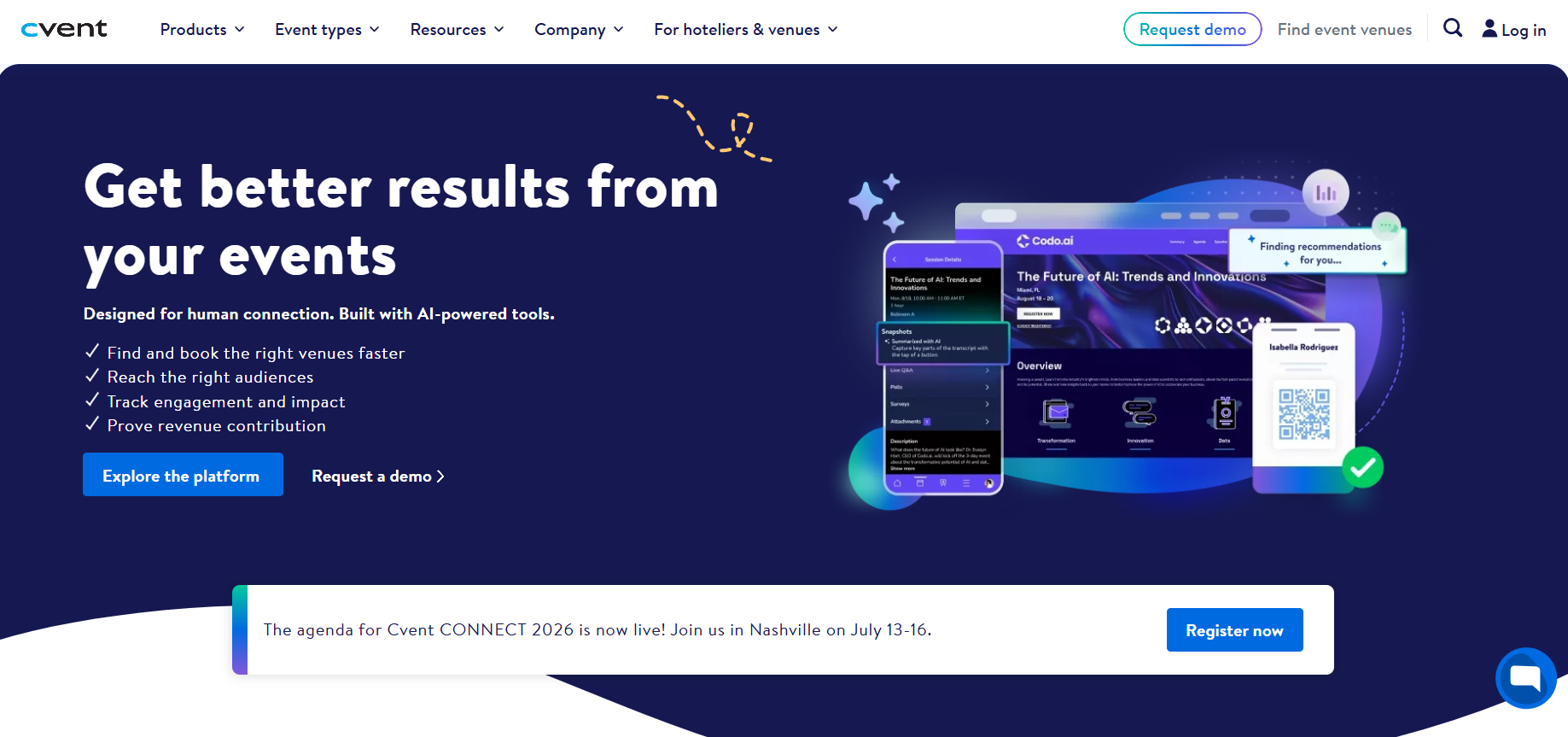
Cvent is purpose-built for multi-venue, multi-day events with precision logistics. Its session management capabilities include capacity limits, waitlists, and real-time room changes. Attendees can even use a mobile app to build schedules; while organizers see live dashboards by session and venue. It also offers venue integration, dietary management, badge printing, and check-in workflows, which are all native to the platform. The pricing for Cvent is based on event size and features.
These are the more happening, lively events: Homecoming weekends, sports alumni reunions, performing arts gatherings, and these are usually built around movement and participation rather than a single formal gathering.
Almabase is a strong fit for institutions running reunion weekends with multiple parallel events and alumni segments. You can create separate registration flows, send targeted communication to different affinity groups, track attendance across activities, and connect participation back to alumni engagement records. It works especially well when the reunion weekend also includes fundraising or volunteer engagement initiatives. Almabase offers custom pricing.
Swoogo is best suited for highly programmed reunion weekends with complex schedules and session tracks. Teams can use the platform to build personalized agendas, move between activities, and manage multi-day itineraries through one system. Their pricing starts around $11,800 a year for a single-user license.
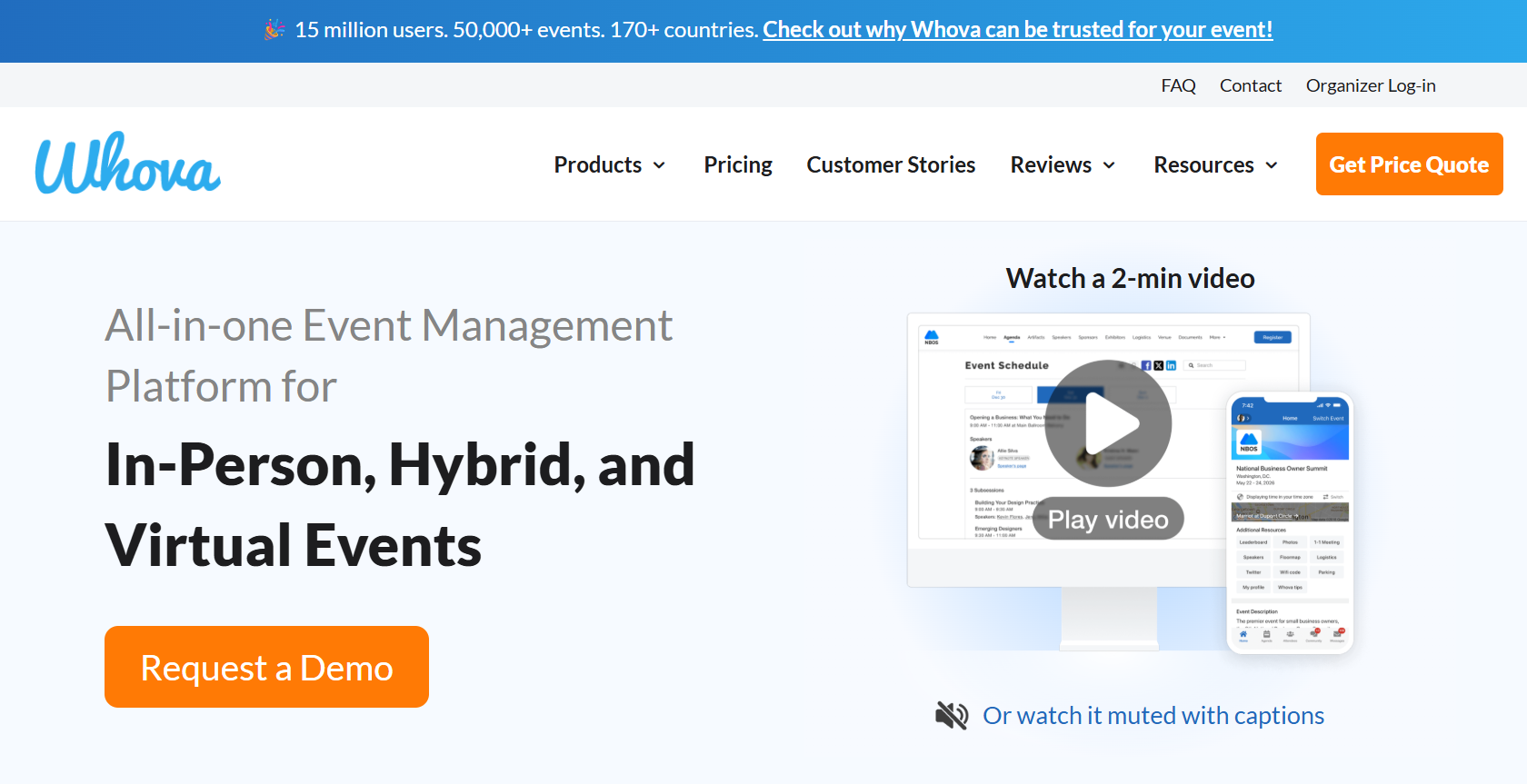
Whova is a useful option for highly social reunions where interaction between attendees is part of the experience itself. Features like attendee networking, live messaging, digital photo galleries, and mobile directories make it well suited for homecoming-style events. Custom pricing is offered based on requirements.
Many reunions are designed to bring entire alumni communities together, including spouses, children, volunteers, and local alumni chapters. These events usually require flexible registrations, family-friendly ticketing, and simple communication workflows.
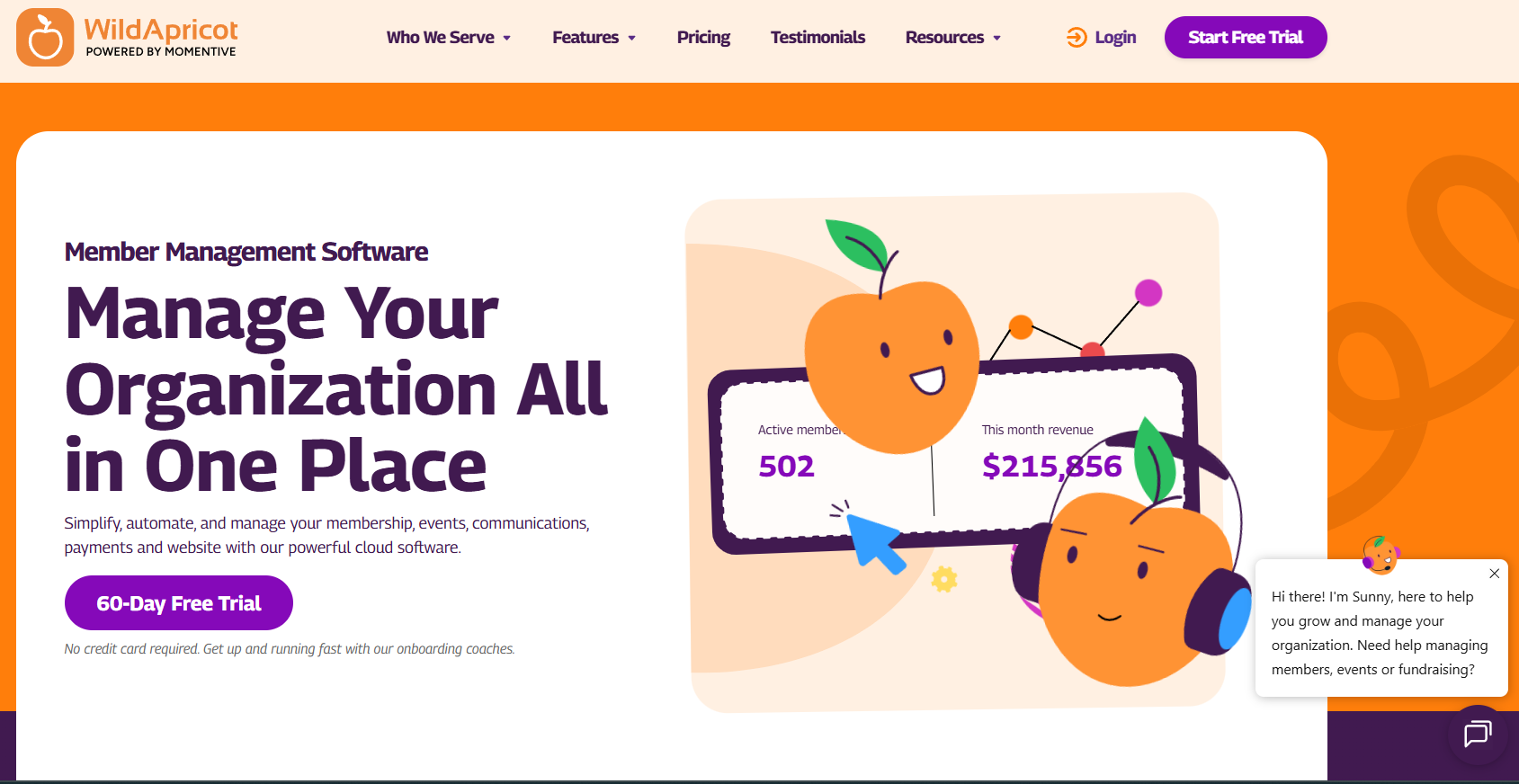
WildApricot is a natural fit for community-oriented reunions because it combines event management with membership and volunteer coordination. Family registrations, recurring events, and simple payment collection make it particularly useful for alumni associations and smaller institutions trying to manage ongoing community engagement beyond a single reunion weekend. Pricing starts around $60/month.
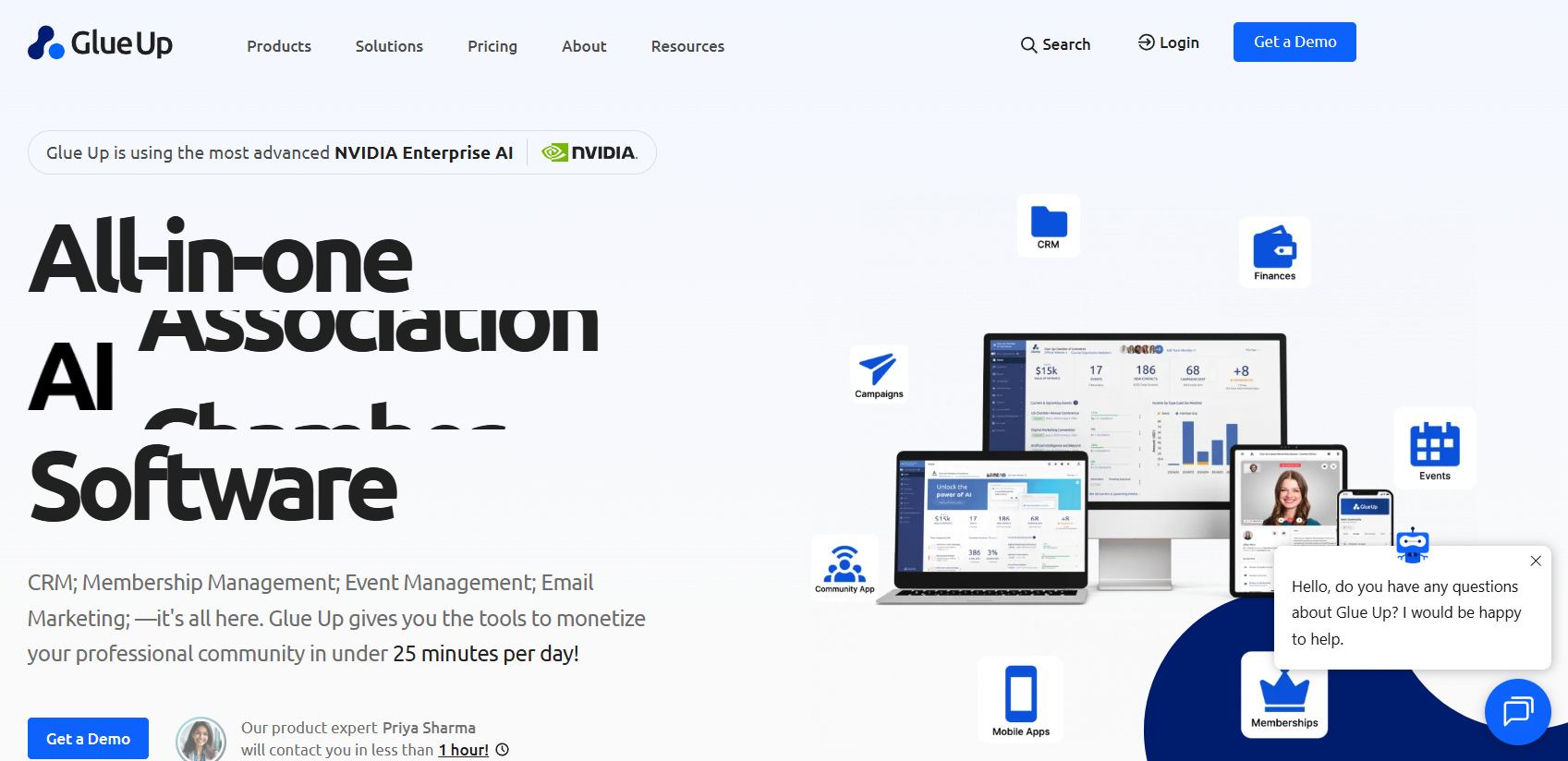
Glue Up works well for alumni associations with active local chapters and recurring community events. The platform focuses heavily on member engagement and ongoing relationship management over one-off events. Custom pricing is offered for enterprise level subscriptions, while the ‘Plus’ tier is priced at $4500 a year.
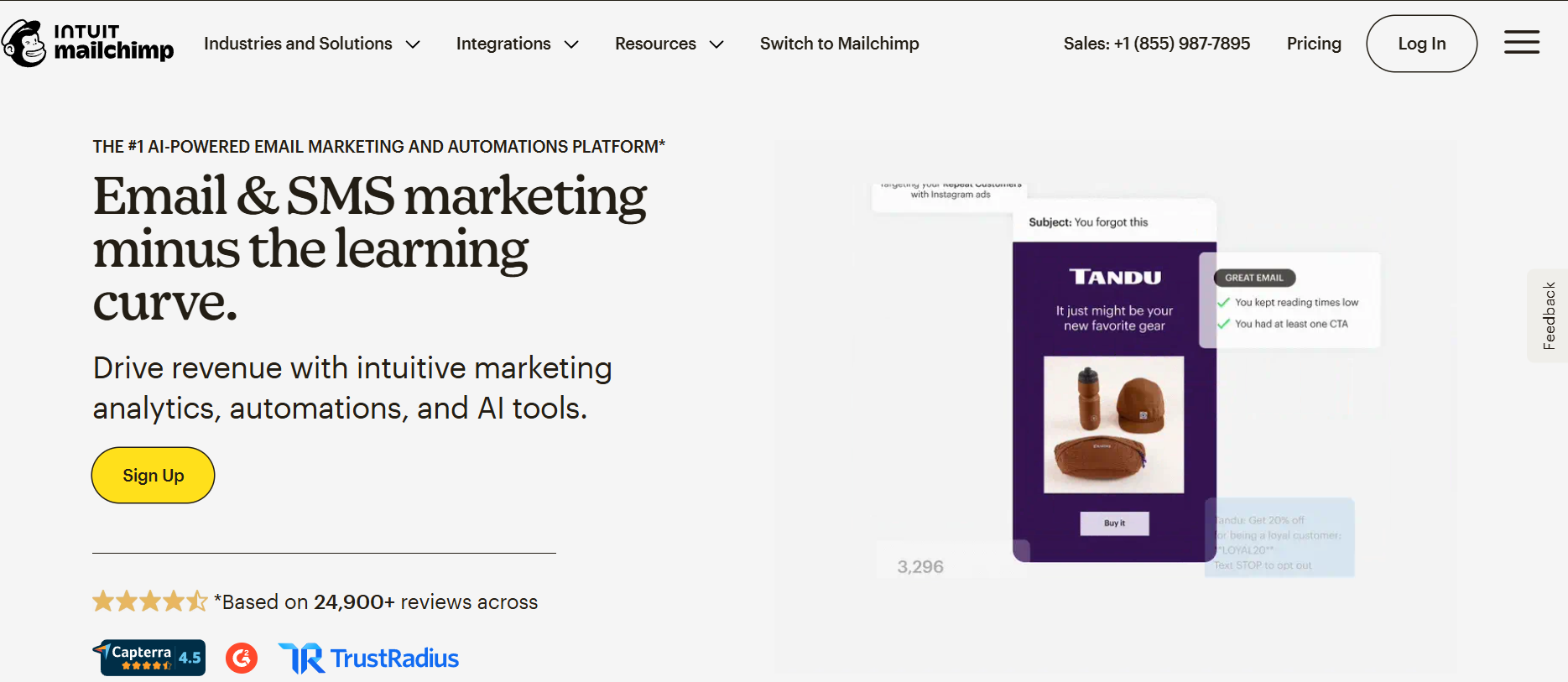
Using Mailchimp and Google Forms together is a practical setup for smaller reunion teams with limited budgets. This combination makes for a nifty set up when the reunion is simple enough that teams mainly need RSVP collection, reminder emails, and attendee exports. Mailchimp is free for up to 250 contacts; paid plans start at $13/month and scale based on your chosen features.
Reunions under the five-year milestone and professional networking events for recent graduates have a different priority: career connection and networking over nostalgia. Attendees want a professional directory, session selection (panels, workshops, speaker talks), and a way to connect with people in their industry after the event.
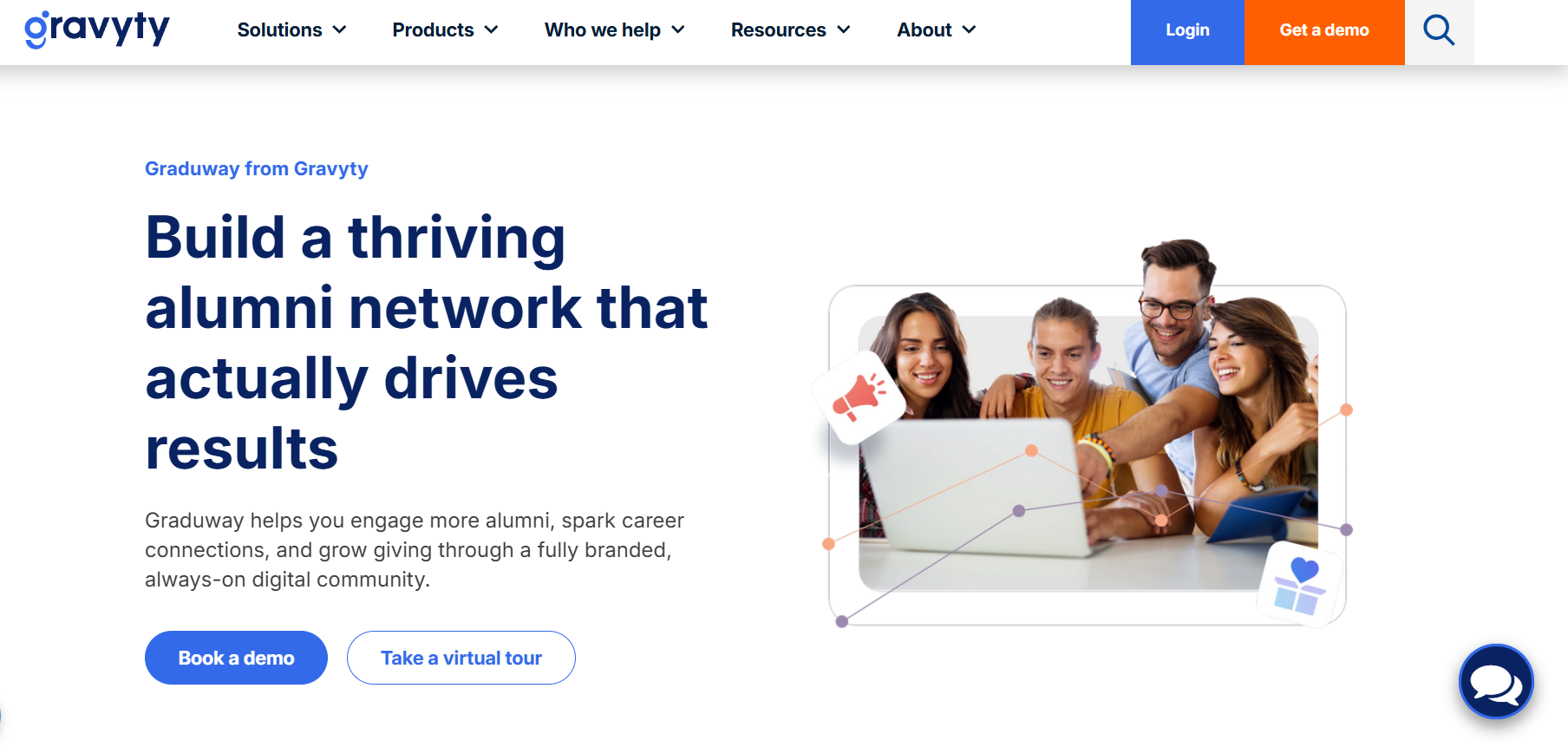
Graduway is designed specifically for career-focused alumni engagement. Its tools are geared toward helping alumni build meaningful professional connections through mentorship programs, networking communities, alumni directories, and ongoing career engagement initiatives. The platform offers custom enterprise pricing.
Almabase is particularly useful when institutions want professional reunions to feed into broader alumni engagement and advancement efforts. Teams can segment alumni by industry or graduation year, manage multiple networking sessions, track attendee engagement, and continue communication after the event through the same platform. Custom pricing.
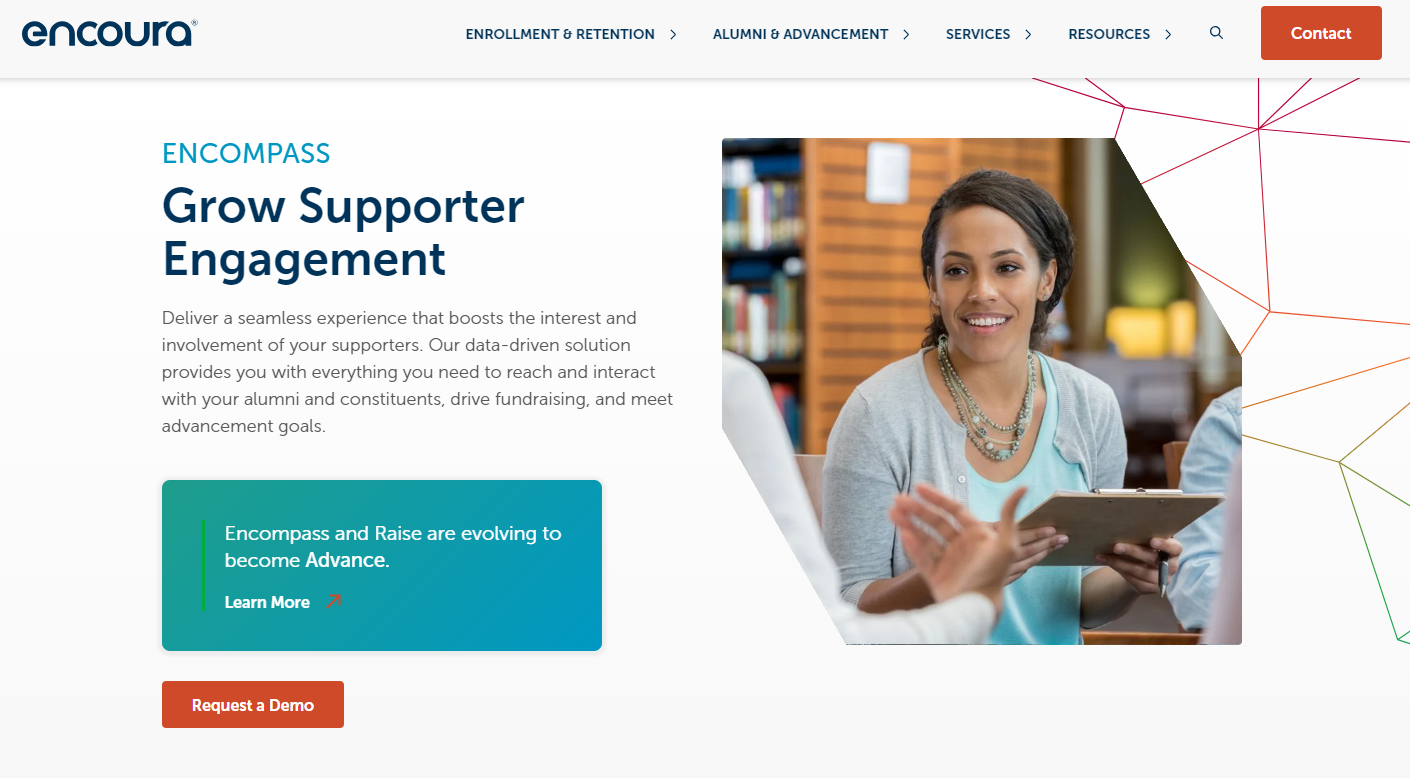
Built for institutional database workflows, Encompass (formerly iModules) is a great fit for professional reunions with multiple panels, workshops, or speaker tracks. Attendees can register for individual sessions, while its built-in capacity controls help manage high-demand events more smoothly. It also automatically logs attendance and engagement data back into advancement records. Pricing for the platform depends on the broader institutional enterprise license.
Not every alumnus can fly back to campus. You need virtual and/or hybrid attendance registration separate from in-person, live streaming or integration with a streaming tool, the ability to capture virtual check-ins for your CRM, and post-event recordings so remote alumni can watch sessions they missed.
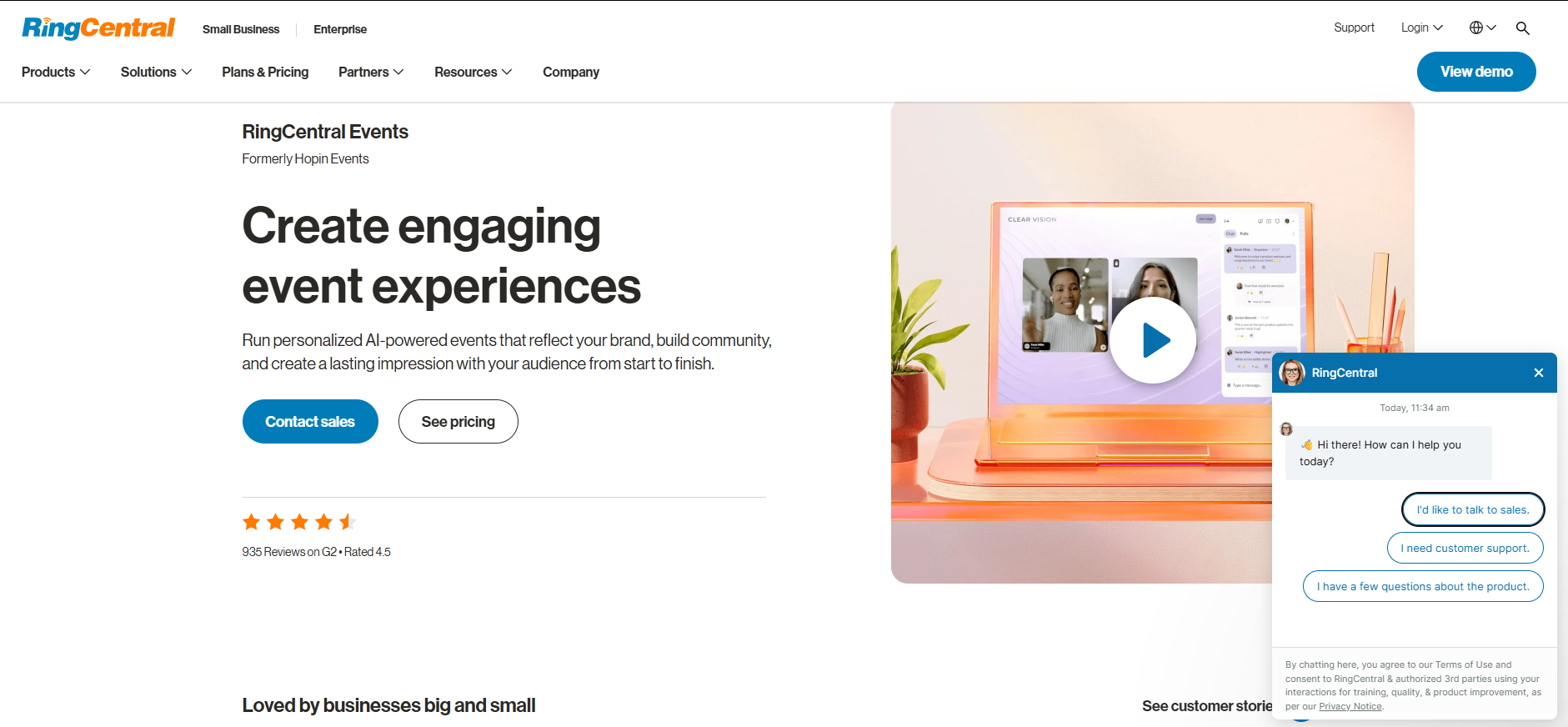
Hopin is best suited for large hybrid reunion experiences with multiple simultaneous sessions and networking layers. Features like virtual expo halls, breakout spaces, and structured networking make it work more like a digital conference than a webinar being held with minimal interaction. Pricing starts at $99/month per organizer.
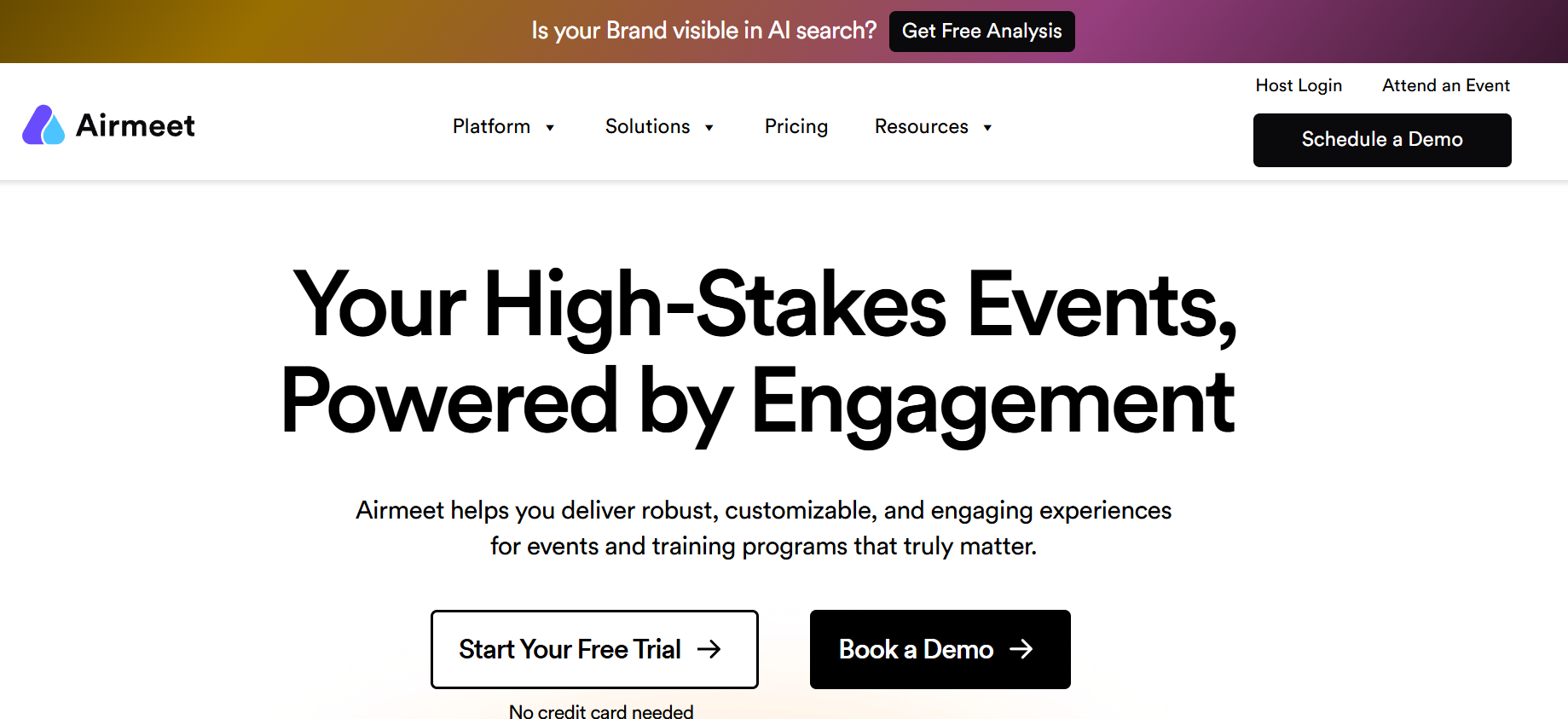
Airmeet is a good option if you have an interaction-heavy virtual reunion in mind. Social lounges and networking tables create smaller conversational spaces, which helps remote attendees participate more actively instead of simply watching a stream. Entry tiers start around $167/month.
As reunions have evolved over the years, so too have the platforms that they are hosted on. However, there are always new as well as persistent issues for which you will want the right features to fit your needs. Here are a few features worth looking into:
Especially when the reunion is a large one, registrations, check-ins, and RSVP management is often a big headache both for staff and attendees if not done well. When platforms aren’t built for that complexity, your staff end up having to compensate with manual work: tracking waitlists in spreadsheets, reconciling duplicate records before CRM uploads, or maintaining separate documents just to manage attendee data accurately.
A strong reunion platform keeps all of your ticketing, payments, and gifts connected in a single system, handling pricing, refunds, add-ons, as well as reporting together so staff aren’t left reconciling records after the event ends.
Reunion communication begins long before the event itself. A reunion platform should be able to keep communication connected to registration data, allowing updates and messaging to adjust automatically based on schedules, roles, and attendee preferences.
Mobile check-in reduces friction by allowing volunteers to scan QR codes, process attendees quickly, and log attendance automatically in real time.
A reunion platform becomes even more relevant for large, multi-day reunions because it keeps attendance connected directly to attendee records from the start, making it easier to understand who attended, which sessions saw engagement, and where follow-up should happen next.
Reunions offer institutions a rare opportunity to understand alumni behavior in real time. A strong reunion platform integrates cleanly with systems like Raiser's Edge NXT, Salesforce, or HubSpot so reunion engagement becomes part of the institution’s larger alumni record instead of remaining isolated event data.
Don’t start by comparing feature lists side by side. The decision usually becomes clearer once the event objectives and operational constraints are visible. Think about what the reunion is trying to achieve, who is running it, and how much of the work needs to connect back into long-term alumni data.
In practice, the “right” platform is the one that reduces the most friction in your specific setup, rather than the one with the most capabilities on paper.
Reunions that are focused on increasing attendance depend heavily on segmentation and communication. Getting the right message to the right cohort at the right time has more impact than any individual feature in the registration flow.
For teams focused on reducing administrative load, the issue is not necessarily the event itself, but the amount of manual reconciliation required afterward. If reunion data doesn’t flow back into the CRM, the operational work doesn’t disappear but moves to a later stage in the process.
Allow your team size and structure to shape platform choice! Smaller alumni teams need systems that can be set up quickly and managed without dedicated technical support. In those environments, simplicity and speed matter more than deep configuration options, because the same person managing the reunion is often also handling communications, donor outreach, and reporting.
Larger advancement teams operate under a different set of constraints. They have larger targets tied to advancement goals which require deeper CRM integration, more structured data flows, and systems that can support multiple stakeholders working in parallel.
Data requirements are one of the main deciding factors. Some institutions need full CRM synchronization, where registrations, attendance, and gift activity flow automatically into systems like Raiser's Edge NXT.
Other teams operate with simpler needs: clean registration exports, basic attendance tracking, and manual uploads into existing systems. In those cases, lighter platforms can be perfectly sufficient without introducing unnecessary complexity.
Confusing registration flows, unclear session structures, or poorly timed communication show up quickly in abandonment rates. In case alumni have not interacted with institutional systems in years, clarity and simplicity in the registration process will go a long way.
The same applies at check-in: a smooth entry experience sets a very different tone compared to visible queues or manual lookups at the door.
What happens afterward is just as likely to determine whether the event contributes to long-term engagement or remains an isolated activity in the calendar. Attendance data, donor participation, volunteer sign-ups, and communication history all become more valuable when they can be carried forward into future outreach.
In practice, the most useful systems make post-event work feel like a continuation of the same workflow. When reunion data feeds cleanly into CRM records and follow-up communications, each event builds on the last.
Yes, particularly for institutions on Raiser's Edge NXT. Almabase covers registration, ticketing, segmented email, mobile check-in, peer-to-peer fundraising, and CRM sync in one system. The bi-directional RE NXT integration means reunion attendance flows into constituent records automatically. Request a demo to see how the event and CRM workflows connect.
They can handle basic ticketing. They can't segment alumni by class year, sync attendance to an advancement CRM, or connect the event to a giving campaign. For a small, informal reunion without advancement goals, a generic platform works. Once class-year data, giving campaigns, or donor stewardship are involved, purpose-built tools are worth it.
Mostly in how success gets measured. Institutional reunions typically include a fundraising component tracked against engagement and giving metrics in a CRM. Nonprofit reunions center on volunteer engagement and cause-based giving. The platform features that matter shift accordingly.
Not for simple events. A Google Form and Venmo can get 40 people to a dinner. The complexity scales when you're managing class-year segmentation, multi-day scheduling, tiered pricing, CRM data requirements, and post-event reporting. At that scale, doing it manually costs more in staff hours than the platform does.
Choosing the right reunion platform comes down to the goals of the event and the challenges your team is trying to solve.
For smaller reunions with simple registration and communication needs, lightweight tools like WildApricot or Eventbrite are quite enough. They work well for straightforward ticketing, RSVPs, community events, and recurring alumni gatherings without adding unnecessary complexity.
As reunions become more activity-driven or networking-focused, platforms like Almabase, Whova, and Graduway offer stronger support for multi-day programming, attendee engagement, and professional networking experiences.
For advancement teams running milestone reunions with a fundraising component, Almabase is one of the strongest options because registration, communication, check-ins, reunion giving, segmentation, and CRM sync all work together in one system. Instead of becoming isolated event data, reunion participation becomes part of the long-term alumni engagement record.
If you want to see how Almabase can power your next reunion, feel free to request a personalized demo, or if you want a self-guided look, head over to our product tour!

Top Platforms for A Successful Reunion Event
Find the right platform to host your reunion events whether it's a multi-day, professional, activity-based, or milestone reunion. Find your best fit.
Events

Anwesha Kiran
May 29, 2026
12 minutes
The annual giving campaign was once the primary window for alumni fundraising. Institutions could send a few emails with a year-end giving appeal, and still see support from alumni who felt a strong sense of loyalty to the institution.
That approach is harder to rely on today, as alumni are now asked to support many causes outside their alma mater. If the institution reaches out only during fundraising season, the appeal can feel disconnected.
Despite this, the opportunity to grow alumni donations remains strong. CASE’s latest findings show that giving to U.S. colleges and universities reached $78.8 billion in FY2025, up 4% from the previous year.
In this blog, we’ll cover how to keep alumni engaged before the ask and plan campaigns that make giving timely, relevant, and easier to repeat.
Alumni donations today depend on the relationship alumni have with the institution before a campaign goes live. Loyalty still matters, but it carries more weight when alumni hear from the institution regularly and understand why their support is needed.
Here are the shifts shaping alumni giving today:
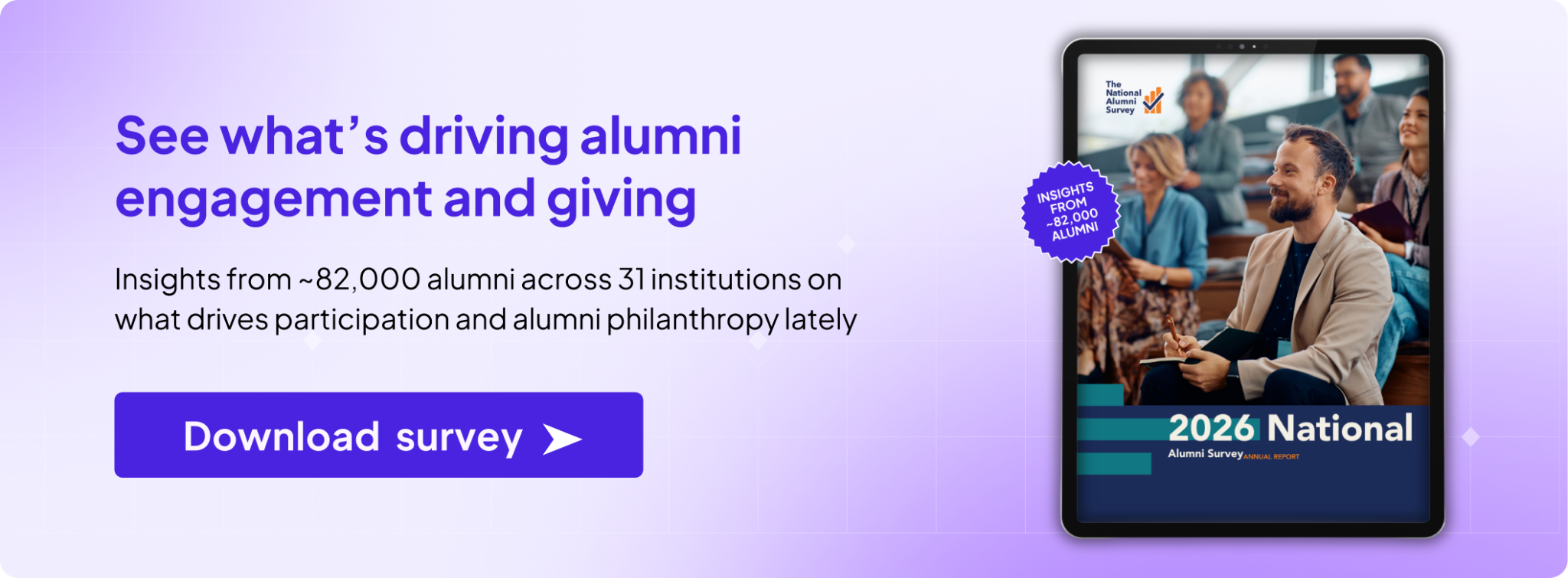
Increasing alumni donations starts with making the ask feel earned. Alumni are more likely to participate when the institution has stayed relevant before the campaign begins.
The sections below focus on the parts institutions can improve directly.
A donation request works better when alumni already feel involved with the institution. Regular communication helps maintain that connection.
For example, a useful alumni newsletter can keep alumni connected between campaigns. It can share student stories, highlight meaningful campus updates, and point alumni toward ways to participate.
Institutions can strengthen alumni engagement by:
Teams that need more practical alumni engagement ideas can start with programs that give alumni a reason to participate before the donation ask. The goal is to make giving feel like a continuation of the relationship.
A strong campaign can still lose participation if the giving page is difficult to use. This is especially important on mobile. Many alumni will arrive from an email, text message, social post, or event reminder. If the page is slow or the form asks for too much information, the donor may leave before completing the gift.
A better giving experience should make the next step obvious:
The point is to remove friction. Once alumni have decided to give, the donation flow should not make them rethink the decision.
Alumni campaigns work better when people can see activity around them. A time-bound campaign gives alumni a reason to act soon. An event gives the ask a natural moment. Peer outreach can make the invitation feel more personal because it comes from someone alumni recognize.
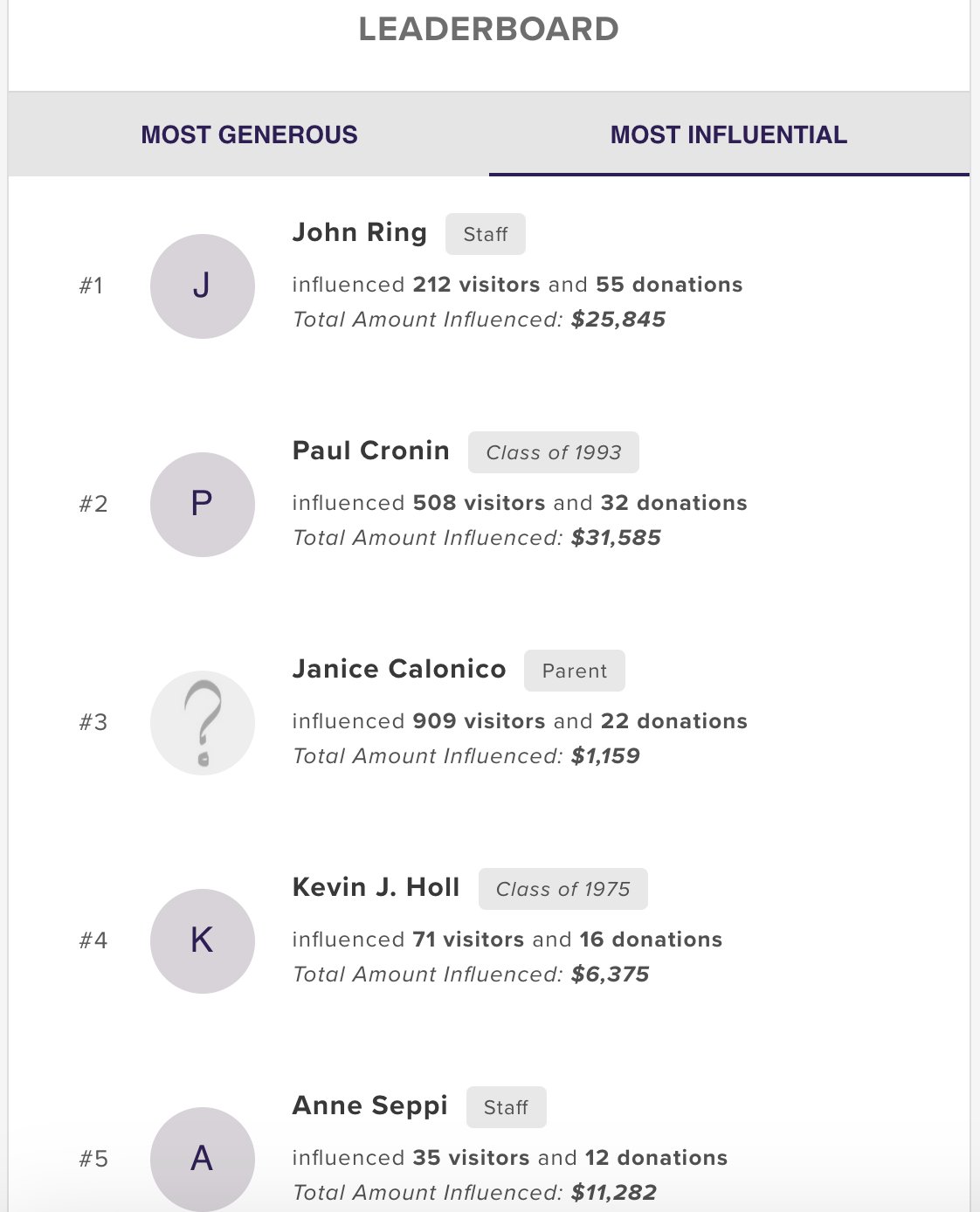
Cornell University’s 2026 Giving Day shows how peer activity can strengthen a short campaign window. In 24 hours, the campaign brought together 17,011 donors and raised $11.3 million. Cornell also had 704 Giving Day champions. Their personal outreach helped bring in more than 4,037 gifts.

To build momentum, every campaign element should give alumni a reason to act:
First-time donors help institutions grow alumni participation beyond the same group of regular contributors. A first gift may be modest, but it gives the institution a real starting point for a longer donor relationship.
Institutions can encourage first-time alumni donors by:
Campaign framing also matters here. If the message only emphasizes dollars raised, smaller donors may feel their gift will not make a difference. A better approach is to frame the campaign around participation as well as revenue.
For example, instead of only saying “Help us raise $100,000,” the campaign can also say “Help us bring 500 alumni donors together for student scholarships.”
Matching gifts can make the impact of a donation easier to understand. When alumni know their gift can go further within a specific window, they have a stronger reason to act. Giving challenges work in a similar way by giving alumni a clear goal to rally around.
Good challenge structures include:
The challenge should be simple enough for alumni to understand quickly. They should know what the goal is, what their gift helps unlock, and why taking part now makes a difference.
Recurring giving helps institutions build steadier alumni support after a campaign ends. It gives donors a simple way to continue contributing without waiting for the next appeal.
Recurring giving works best when donors understand why it matters:
That message should continue after sign-up. Regular updates, thank-you notes, and impact stories help recurring donors see that their support is still active and appreciated. This gives them more reason to keep giving over time.
Alumni are more likely to give when the outcome is clear. Institutions should show how donations are used in practical terms. The more specific the connection, the easier it is for alumni to understand the value of giving.
Impact communication should help donors see what happened because they gave:
Follow-up matters just as much as the appeal. After the campaign ends, alumni should hear what happened. Share the result, thank donors clearly, and explain what comes next. This closes the loop and gives alumni a stronger reason to participate again.
Data helps institutions see how alumni are responding to a campaign. It can show where interest is building, where follow-up is needed, and which parts of the campaign are helping alumni take action.
The most useful signals often come from activity the institution already tracks. Event attendance can show which alumni are already involved. Email engagement can show which messages are getting attention. Giving history can help teams separate new donors from lapsed or repeat donors.
Digital tools make these signals easier to use. Institutions can:
Platforms like Almabase help institutions streamline alumni donations and improve visibility into donor engagement. They bring the work around alumni giving into one connected system. Teams can see engagement, event activity, and online giving in one place, which makes follow-up easier to manage.
For example, Archbishop Riordan High School used Almabase to improve its giving day experience. The team could customize campaigns with less dependence on IT and see gift activity in real time. The school reported a 550% increase in giving day donations, from $60,646 to $338,724.
A good alumni donation campaign starts before the first appeal goes out. The team needs to know what the campaign is trying to achieve. It should also be clear which alumni groups matter most and why the timing feels relevant.
Start with the result the campaign needs to achieve. A financial target sets a revenue goal, while a donor target indicates whether the campaign is increasing alumni participation.
Past campaign data can help keep both targets realistic. If one class year, department, or program performed well earlier, that group can receive a focused goal rather than being treated like the entire alumni base.
Setting clear fundraising goals helps the team decide what to measure before the campaign begins and what to improve after it ends.
A useful goal plan should answer five questions:
Segmentation helps institutions avoid sending the same appeal to every alum. The message should reflect what each group already knows, values, or has done with the institution. The question is simple: what does this group already care about, and what would make this campaign feel relevant to them?
Institutions can group alumni by relationship stage and recent activity:
The campaign format should make the goal easier to act on. A participation-focused campaign needs urgency. It also needs visible progress so alumni can see others getting involved. But if alumni attention is already close to an event, the giving ask should connect naturally to that moment.
Here are a few ways to choose the right format:
Promotion should build attention before the ask becomes urgent. Alumni may not give after the first message, so the campaign needs a steady rhythm across the full timeline.
Email can carry the main story. SMS can support short reminders. Social posts can show progress, and peer outreach can make the ask feel more personal.
A simple campaign timeline can include:
Stronger alumni donations come from the work institutions do before the appeal goes out. Regular engagement keeps alumni connected before the appeal. Clear campaign goals give the ask a reason to exist. A smooth giving experience helps donors complete the gift.
Each campaign should also improve the next one. Teams can look at which alumni responded, which messages worked, and where follow-up was needed. That insight helps institutions make future campaigns more relevant instead of repeating the same appeal with a new deadline.
Over time, this builds a healthier alumni giving program. First-time donors have a clearer path into participation. Repeat donors see why continued support matters. Recurring donors stay connected to the impact their gifts make possible.
Almabase helps institutions bring alumni engagement, fundraising campaigns, and events into one connected place. For teams trying to grow alumni donations without adding more manual work, that connected view makes it easier to focus on participation and results.
Book a demo today to see how Almabase can support your alumni giving strategy.
The best way to increase alumni donations is to keep alumni engaged before the campaign begins. A donation request is easier to act on when alumni already understand the institution’s priorities and feel connected to its community.
Start with regular communication that gives alumni a reason to stay involved. The message should not always be about giving. It can share student stories that show impact. It can also invite alumni into events, mentoring, or other ways to stay involved before the next campaign.
Effective alumni donation strategies give alumni a clear reason to participate. A giving day works well when the campaign needs urgency. A matching gift can help donors see how their contribution goes further. Recurring giving gives alumni a way to continue their support after the campaign ends.
Giving days work because they focus attention within a short time frame. Alumni can see the campaign’s progress as it unfolds, which makes participation feel more active and easier to join.
First-time donors are more likely to give when the ask feels approachable. A smaller suggested gift can help, especially when it is tied to a clear outcome such as student support or scholarships.
Institutions can improve participation by staying connected with alumni between campaigns. When the appeal arrives, the purpose should be clear, and the donation process should be easy to complete.

How To Increase Alumni Donations And Grow Participation
See how institutions can increase alumni donations by keeping alumni engaged, planning stronger campaigns, and making the giving experience easier.
Fundraising
Almabase
May 27, 2026
12 minutes

.svg)
.png)
.png)
%20(1).png)