Alumni can be your university’s biggest supporters. Target alumni on social media using these four strategies to engage with donors and raise more funds

Many of your university’s alumni are on social media every day, making it one of the most convenient tools for keeping their alma mater top-of-mind and spurring continued support.
However, alumni giving trends reveal that institutions are increasingly moving beyond simply asking for donations. Instead, these universities position their requests for support as an invitation to be part of a continued journey of progress and shared achievement.
This shift means universities must revisit their social media strategies to deeply engage their audiences. In this guide, we’ll review how you can do just that by implementing four effective tips.

Recent graduates are among the most supportive of your alumni. Filled with school spirit after a bittersweet farewell at their graduation ceremony, these individuals likely take pride in their alma mater.
Cultivating these relationships is crucial to securing long-term support. While most recently graduated students won’t have the capacity to give major gifts yet, continued engagement over time can turn them into avid event attendees and advocates for your school. Younger generations are also the most active social media users, meaning they likely account for the majority of your university’s social media audience.
Try these tactics to engage young alumni on social media:
Remember that every social media channel has unique strengths when implementing these strategies. For example, TikTok is ideal for video storytelling, while Facebook is a better platform for text-based posts. Adjusting your content to leverage these strengths will maximize the success you see across channels.
One of the simplest ways to increase your fundraising potential on social media is to raise awareness of mobile giving methods.
Alumni are less likely to donate if they have to jump through multiple hoops to find your donation page. Text-to-give makes it easy to donate by texting a keyword to a designated phone number. Alumni will then receive a text with a direct link to your donation page. If your online donation platform includes text-to-give functionality, make sure your supporters are aware of this opportunity to give more easily.
To promote mobile giving on social media, Snowball Fundraising’s text-to-give guide recommends:
Additionally, some social media channels offer fundraising tools within the platform itself. For example, Facebook fundraisers allow users to donate to a cause without leaving Facebook, making it an easy way for alumni to give as soon as they feel compelled by your posts.

Thanking your supporters is an important part of any donor retention strategy. For universities, alumni often feel gratitude for their educational experiences, and showing appreciation for their generosity fosters a mutual sense of community and respect.
Start by segmenting your alumni audience to determine which groups your appreciation messages should target. After all, one alumnus in the larger student population won’t feel appreciated by generic messages such as, “We love all our students!” or “Thank you for attending our university!”
Use social media to emphasize the impact of alumni involvement and contributions. Recognize specific contributions when possible and celebrate broader donation milestones. For example, create a shout-out post on Instagram when the class of 2002 reaches $50,000 raised. Include a photo from their graduation ceremony to remind them of their fond memories of your school.
Showing appreciation on social media can inspire increased donations, but don’t forget to thank your donors often and in a variety of ways. Social media marketing works best when you supplement it with other communication methods, such as a personalized eCard or virtual donor wall.
Tracking social media metrics alongside fundraising data can help your university draw correlations between your posts and alumni engagement. Your team can go directly to its social media accounts to find relevant data, such as likes, shares, views, and follows.
Consult any fundraising solutions you may use, such as an auction website or event management platform, for fundraising data. These tools track key performance indicators (KPIs) such as attendance rates and donation amounts.
Analyze this data, extract insights from it, and apply your findings to your social media strategy. For example, did a post with educational infographics and credible statistics garner more support? Consider posting similar content in the future, especially when promoting specific fundraising campaigns.

Be creative with the content you post and the fundraisers you promote. For example, alumni entering the workforce for the first time may be newly eligible for (but unaware of) matching gift opportunities. Encourage alumni to explore this new form of involvement with your institution.
Above all, highlight your alumni’s unique role in supporting the university moving forward and improving their alma mater for other students. After all, your university’s success depends on theirs, both inside the classroom and after they leave.
Subscribe
See how modern advancement teams bring alumni engagement and fundraising together.
Plan faster. Execute better
Explore free templates designed for alumni and fundraising teams.
.png)

.avif)
You understand the best ways to communicate with your supporters. After working hard over the years to build personal relationships with your donors, alumni or members, you know the messages and tones that will best catch their interest and keep them engaged on social media.
If you’re promoting a fundraising product on your social media pages, there are a few essential best practices that go beyond the content or tone of your messages.
While we won’t dictate exactly what promotional content you should create, these best practices ensure that you’ll engage followers with your product, maximize overall user experience and boost your online giving.
The key to effectively marketing your fundraising products on social media is to unify your entire online message and engagement strategy.
Use these best practices to boost the impact of your social media promotions:
1. Put your best foot forward on every content outlet
2. Generate some cross-campaign traffic
3. Target your email strategies to boost social media awareness
4. Streamline your online forms for social media users
5. Optimize your entire site for mobile viewing
While perfect for increasing the effectiveness of your online fundraising ideas, these best practices for your social media will more specifically support your fundraising product campaigns!
Remember, you don't need a half-hearted presence on every social media platform out there! Focus your efforts on the platforms you already have, with emphasis on the #1 and #2 platforms for your specific community.
If you conduct product fundraising often, focus on Instagram. As a purely visual platform, Instagram is ideal for promoting brands and products in appealing ways without necessarily advertising them.
For example, check out our Bonfire account on Instagram. As a t-shirt fundraising platform that lets users design and sell products in crowdfunding-style campaigns, we use our Instagram content to share successful fundraising campaigns that we’ve hosted. We also highlight some cool designs that users create.
In social media product promotions, visuals are crucial for raising awareness not just of your products but also of your brand. This is true for every digital content outlet that you use to engage your followers and donor base.
To foster strong online donor engagement and brand awareness, incorporate elements of strong design anywhere you can. Let’s say you designed a beautiful branded t-shirt and have begun promoting it to your followers. Use that design (or elements of it) elsewhere, like:
1. In your emails - Headers, signatures, and newsletter elements could be ideal spots for new design accents
2. On other website elements - incorporate your design into page headers and on your donation form
3. In your photos - these might be promotional photos to model the shirts themselves or they might be of staff and volunteers wearing the shirt while working
Of course, you’re not trying to sell your product on every piece of digital content you produce, but you can promote its image, align its design elements with your brand and strengthen the association between them for your followers.
Creating cross-campaign traffic involves linking all of your online fundraising and marketing in ways that feel natural for donors and visitors. Encouraging them to explore your work will boost both web traffic and completed product orders.
Streamline the link structure between all of your online campaigns. To do this, you’ll need to create and maintain a single, dedicated location for each campaign or marketing outlet:
1. Your online fundraising campaigns: Crowdfunding and peer-to-peer fundraising campaigns are reliable choices for nonprofits, schools and advocacy groups of any size. Some social media platforms offer their own fundraising tools, but these can be limiting in scope. Check out some GoFundMe alternatives designed especially for nonprofits and link to your campaign page directly in your social media posts.
2. Your product fundraising pages: Your website might already have its own e-commerce capabilities, but if not, use a product fundraising platform like Bonfire to host the products you design and provide a single, organized outlet for donors to purchase them. Most product fundraising platforms include social media tools to simplify promoting your products and directing followers to order forms.
3. Your other online marketing or communications channels: These might include email campaigns, more general social media posts, or digital ads. Focus the purpose of each specific message to boost user experience and create clear traffic flows. This strategy will vastly improve your ability to track key analytics for each campaign, too.
For instance, don’t link to all of your online campaigns in one email push; rather, use a single email to promote your fundraising product or crowdfunding project.
Likewise, provide a single link on your product page to your homepage or donation form and link your crowdfunding campaign to both your product page and homepage.
This focuses the purpose of each page while making it easy to track the effectiveness of your messages and streamline user experience across all of your online campaigns.
When promoting your fundraising products on social media, refining your email strategy might not immediately come to mind. However, email is a great way to boost social media engagement since it lets you reach your followers without the hindrance of newsfeed algorithms.
Strong email marketing strategies let you double down on your message and raise awareness of your product without needing to flood your social media page with promotional posts.
Your email recipients have already expressed interest in supporting your work, so reminding them to keep an eye out for your social media posts is a smart move.
A well-targeted and perfectly drafted email campaign can make a crucial difference in engaging existing supporters and building authority. Even if a user doesn’t read your entire email, your message (or even subject line!) will keep your work in mind when they come across your social media content later.
There are a number of email best practices that will not only increase your open rates but also boost the effectiveness of your fundraising product marketing :
1. Use your organization’s or school’s name as the sender, not an individual’s. Recipients are more likely to ignore an email from an unknown name.
2. Always be direct. Never mislead readers as to the purpose of your message, as this will erode the relationship that you’ve worked to build with them.
3. Provide clear links. What is your email asking the reader to do? Provide that next step and make it easy with a direct link or actionable request.
4. Focus heavily on your subject line. Tailor your introductory line to the tone and exact purpose of your full message as well as the relationship that recipients have with you.
Optimizing your email strategies can be incredibly effective for boosting your social media promotions, especially when it comes to mobile users. These readers are more likely to bounce between email, social media, and other digital activities, so it’s essential that you make a memorable and positive impression whenever possible!
Online forms, including fundraising product order forms and more general donation forms, are a crucial element of any fundraising campaign.
Particularly for schools or other institutions that build lifelong relationships with their supporters, it’s important that all their fundraising ideas and strategies involve updating and promoting their donation forms.
This is especially true if you actively promote your fundraising projects on social media pages. A fully optimized donation and order form will create a single, unified destination into which you can funnel all of your converted social media traffic.
An ideal nonprofit donation page should have these key characteristics :
1. Simplicity: Include no unnecessary elements or fields to complete. Ask for the bare minimum amount of information that you’ll need to process their payment.
2. Tidy design: Don’t neglect thoughtful or appealing design on your form, but never overwhelm it with visual elements that aren’t immediately relevant.
3. ‘Single clickability’: Create a form that lets your donor or customer complete a transaction with only one click across the entire input process.
4. Provide relevant options that don’t clutter the form. Keep it simple. For example, intuitive product add-ons or recurring donation options are great features.
Creating a streamlined, user-friendly online form that can accept donations and product orders will go a long way to simplify your social media marketing strategies. With a single, unified destination, it’ll be easier to plan and structure your product promotions.
If your organization’s or school’s donation or order form needs a more comprehensive overhaul, check out Donately’s customized donation forms for some great models of the efficiency and design that you should emulate.
Our final best practice for maximizing the impact of your social media promotions focuses solely on improving the experience of your mobile viewers.
The previous steps have touched on this point, but it’s worth reiterating since your mobile viewers represent an increasingly large percentage of your total online engagement. Poor mobile user experience is now inexcusable.
Never link to un-optimized content on your social media posts! Since a huge proportion of social media views are from mobile browsers, linking to a clunky or slow-loading website (even if it’s an external site of a third party) will cause your bounce rates to spike.
Before linking, always look for these elements that indicate a page has been mobile-optimized :
1. Vertical-oriented layout
2. Quick load times
3. Clean organization and menu
4. Simple, bold design
5. No immediate pop-ups
6. No unnecessary interactive elements
A smart move for your organization, school, or group is to host your fundraising products through a platform designed for optimal product fundraising.
For instance, here at Bonfire, we design mobile-first to ensure the best experiences for anyone trying to purchase a t-shirt.
Additionally, a great product fundraising platform will provide you with intuitive design and campaign analytics tools that can ease the entire process of starting, managing, and promoting your product fundraising campaigns.
When promoting your fundraising products on social media platforms, it’s important to follow some best practices that will strengthen your entire online marketing strategy.
Keeping your digital content tightly organized, mobile optimized and thoughtfully streamlined will make a crucial difference not only for your social media engagement and click-through rates but also for your user experience as a whole!

Perfecting Product Fundraising: 5 Social Media Best Practices
Lorem ipsum dolor sit amet, consectetur adipiscing elit. Suspendisse varius enim in eros elementum tristique. Duis cursus, mi quis viverra ornare, eros dolor interdum nulla, ut commodo diam libero vitae erat. Aenean faucibus nibh et justo cursus id rutrum lorem imperdiet. Nunc ut sem vitae risus tristique posuere.
Back in 2020, advancement teams across the country had to shift to rethink their programming to find unique ways of engaging alumni and donors. Fundraising professionals have since leveraged virtual platforms to engage donors through more accessible programs and events. With the fall spirit of giving upon us, now's the right time to start thinking about ways to boost donations at your Fall Giving Day 2024.
Giving Day is a powerful online fundraising campaign conducted for 24 hours with the purpose of raising money and finding new donors. Giving Days provide alumni with the ideal opportunity to serve their alma mater by helping the institution in a time of need.
As the pandemic continues, it's evident that Giving Day 2026 will be unlike any of the previous traditional Giving Days. With advancement teams shifting their focus to raising money online at their fall Giving Day and upcoming Giving Tuesday, here are 5 innovative strategies to help them get started.
It's always a best practice to start promoting your Giving Day as early as possible and build-up to the day of the event. While you can't invite your alumni to campus to let them know about your fall Giving Day, countdown posts on social media are a great way to spread the word.
Instead of merely creating posters or event notifications at intervals like, say, 15, 10, and 5 days before the Giving Day, think of ways to incentivize donors to participate. For instance, along with every countdown post, you can also share testimonials of past donors on social media. Seeing a friend believe in your institution’s cause can be a strong motivator for more alumni to donate.
Including photos and videos of how your institution has utilized funds raised at past fundraising events is another great way to motivate potential donors. Scranton Preparatory School's fundraising campaign is an excellent example of how they leveraged countdowns to their benefit.

As the pandemic forces us to be confined to our homes, now more than ever, is the perfect time for your institution to invest greatly in building and growing an online community that your constituents can benefit from.
While an online community is great for driving engagement, not all potential donors will react the same way to your fundraising asks. For instance, an alum who's been working as an investment banker for 10 years might be more receptive to your fundraising ask this Giving Day than a young alum who's just graduated college and is still reeling under the pressure of repaying his student loan.
Personalizing your fundraising asks, therefore, plays a crucial role in building a unique connection with each constituent and paving the way for lasting relationships. Check out Archbishop Riordan High School's campaign that encouraged alumni to contribute towards improving their school campus.
Use dynamic segmentation to segregate your constituents based on class year, location, donation history, interests, etc. and personalize your emails right from the first message to the final thank you.

While promoting your Giving Day via in-person events does not look likely this fall, an increasing number of advancement teams are contemplating virtual events.
In the past couple of years, the industry has seen a ton of successful virtual events being implemented by institutions, big and small. Many have seen a steady rise in participation at virtual events because they're easily accessible irrespective of location or time. Virtual events, therefore, can help you tap into a wider network of donors and be a valuable addition to your marketing plan for Giving Day 2026.
As an added tip, you can use virtual event management software to engage alumni and drive participation at your fall Giving Day 2026.

As online engagement becomes pivotal for a successful Giving Day campaign in 2026, it is equally important to make the best use of the channels at your disposal.
Social media is the ideal place to meet and connect with new people, with platforms like LinkedIn and Facebook enabling you to explore potential donors. Calvert Hall College's picture slideshow on Facebook went viral to help them boost their fundraising campaign.
While you may already be connected with some of your donors on shared groups, use the network of your existing supporters to influence new donors. In addition to social media, emails and personal one-on-one calls are popular channels employed by most institutions for fundraising asks. If you are worried that alumni might ignore your email requests, here are some tips for you.
While driving more donors online may be your priority, also ensure that the online giving experience is smooth and flexible.

Now that you have done your bit to promote the campaign, how can you leverage your supporters to maximize the impact? Your donors are the ones who can carry your fundraising campaign forward by spreading the word through their networks.
You can find ways to make social sharing easy for donors and create more incentives for them to influence others in their network. For example, encourage your supporters to broadcast and share their contributions on social media. Offer them a customized template and prompt them to share this message on social media right after they've completed a gift.
You can also create a filter for Instagram or Facebook that donors can apply to their profile photos. Seeing their peers support their alma mater's cause can act as a strong driving factor for other constituents to contribute to the same cause. Here are other ways to build stronger online communities in today's times.
Gamification techniques like leaderboards, challenges, and tributes are some additional great ways for invoking a healthy sense of competition amongst various constituent groups and amplifying the impact of gifts at your Giving Day. Need more information on how to run crowdfunding campaigns? Learn more here.
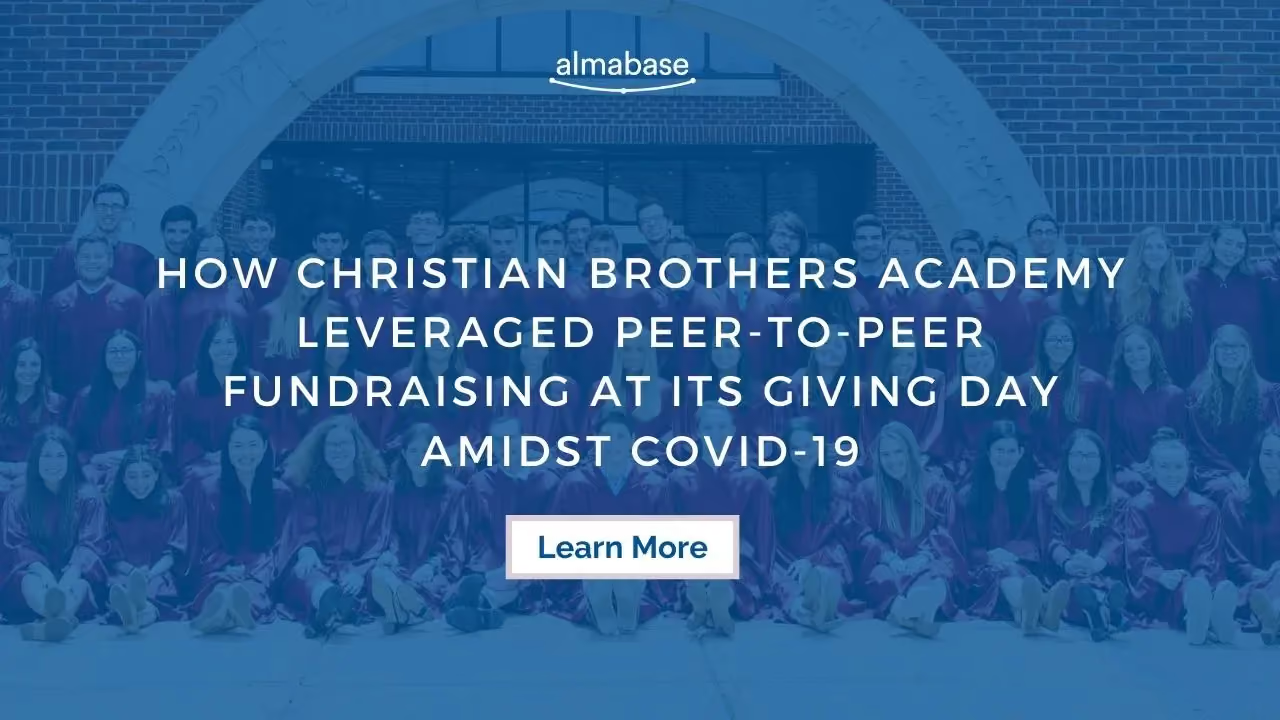
Planning a Giving Day has never been an easy task, but, with the pandemic leaving a majority of institutions around the world with a severe financial crisis, Giving Day 2026 is a big opportunity.

5 Fundraising Tips for Fall Giving Day in 2026
Lorem ipsum dolor sit amet, consectetur adipiscing elit. Suspendisse varius enim in eros elementum tristique. Duis cursus, mi quis viverra ornare, eros dolor interdum nulla, ut commodo diam libero vitae erat. Aenean faucibus nibh et justo cursus id rutrum lorem imperdiet. Nunc ut sem vitae risus tristique posuere.
Having observed over a hundred schools successfully bring attention to their alumni events and reunions via social media, we have sufficient evidence that it is one of the most powerful mediums to promote your alumni reunion successfully. A little creativity and event marketing can go a long way in making sure that the maximum amount of alumni notice and engage with your upcoming reunions.
With that being said, here are 7 tested approaches to promote alumni reunions on social media:
Sharing photos and videos of previous years reunions on your social media page is one of the best ways to attract attention to your alumni reunion event. While alumni may love hearing about wonderful stories about your previous reunions, these stories become all the more engaging when they hear it from their friends or peers. Encouraging alumni to share their own experiences from previous years reunions, has proven to be highly rewarding for reunion success.
If a large amount of your alumni base is still in touch with your faculty or staff, asking faculty members to share updates about upcoming reunions or their experiences at past year reunions is a best practice you should follow.
Another way to encourage alumni engagement and participation is by creating opportunities for alumni to take some action on your post. Here’s an example: create a simple graphic post with the tagline - “Just three days to go!! Tag 3 people you are looking forward to meeting at the reunion.”
Here’s how William Peace University drew the attention of its alumni and got them talking about their upcoming reunion.

It's generally a good idea to see which alumni event ideas are gaining traction. Take for example the widely popular 10-Year Challenge on Facebook where you can request alumni to simply post two photos, side-by-side, taken at least ten years apart. Alternatively, you can use photos from yearbooks and current profiles of alumni to create ‘10-year challenge’ posts. However, in the case of this approach, consent needs to be established before using an alum’s personal photos.
Instead of promoting your alumni event the traditional way, capture the attention of your alumni by constantly staying in their social media feed and reminding them of the wonderful memories they’ve had over their time spent at their school. Here’s how McCarthy Alumni Association gets this right.

Create a campaign asking alumni to respond to “What's something you loved about your Class of 10 Yr Reunion?”. Share the positive feedback you receive from the campaign and from past year reunions on your social media pages, tagging those alumni who’ve provided feedback, thus ensuring a wider reach for your campaign.
Pick images of 3-5 alumni, combine them to create a collage with question marks on top of each image, and then post it as a challenge for alumni to guess the names of the people mentioned in the post. To make it more interesting, provide hints. For example, if one of the names to be guessed is "Sarah", you can drop the letters ‘S’, ‘R’, and ‘H’ as a clue. Such campaigns not only get you visibility but also encourage your alumni to take action by responding to the challenge you’ve thrown at them.
To effectively promote alumni reunions, institutions today have a good variety of social media platforms, each offering distinct advantages for outreach and engagement.
When it comes to promoting your alumni reunions, there’s no limit to all that you can do. Here’s a list of techniques for increasing alumni participation to your reunions that have brought success to over a hundred institutions.

7 Tested Ideas To Promote Alumni Reunions On Social Media
Lorem ipsum dolor sit amet, consectetur adipiscing elit. Suspendisse varius enim in eros elementum tristique. Duis cursus, mi quis viverra ornare, eros dolor interdum nulla, ut commodo diam libero vitae erat. Aenean faucibus nibh et justo cursus id rutrum lorem imperdiet. Nunc ut sem vitae risus tristique posuere.
%201.svg)
%201.svg)
%204.svg)


.svg)